العربية
 Español
 Français
 中文
 हिन्दी
How to Make Wudu: A Simple Step-by-Step Guide

Before every prayer, Muslims pause for a few minutes at a tap or basin and wash in a particular order. To an onlooker it may look like an ordinary wash. For a Muslim it is a quiet moment of preparation: the hands, face and feet are cleaned, and the heart turns towards God before standing in front of Him.
Why wudu matters
Wudu (ablution) is a condition for the prayer to be valid. The Qur’an itself lays out its essential parts:
يَٰٓأَيُّهَا ٱلَّذِينَ ءَامَنُوٓا۟ إِذَا قُمْتُمْ إِلَى ٱلصَّلَوٰةِ فَٱغْسِلُوا۟ وُجُوهَكُمْ وَأَيْدِيَكُمْ إِلَى ٱلْمَرَافِقِ وَٱمْسَحُوا۟ بِرُءُوسِكُمْ وَأَرْجُلَكُمْ إِلَى ٱلْكَعْبَيْنِ ۚ وَإِن كُنتُمْ جُنُبًۭا فَٱطَّهَّرُوا۟ ۚ وَإِن كُنتُم مَّرْضَىٰٓ أَوْ عَلَىٰ سَفَرٍ أَوْ جَآءَ أَحَدٌۭ مِّنكُم مِّنَ ٱلْغَآئِطِ أَوْ لَٰمَسْتُمُ ٱلنِّسَآءَ فَلَمْ تَجِدُوا۟ مَآءًۭ فَتَيَمَّمُوا۟ صَعِيدًۭا طَيِّبًۭا فَٱمْسَحُوا۟ بِوُجُوهِكُمْ وَأَيْدِيكُم مِّنْهُ ۚ مَا يُرِيدُ ٱللَّهُ لِيَجْعَلَ عَلَيْكُم مِّنْ حَرَجٍۢ وَلَٰكِن يُرِيدُ لِيُطَهِّرَكُمْ وَلِيُتِمَّ نِعْمَتَهُۥ عَلَيْكُمْ لَعَلَّكُمْ تَشْكُرُونَ ﴿٦﴾ O you who have believed, when you rise to [perform] prayer, wash your faces and your forearms to the elbows and wipe over your heads and wash your feet to the ankles. And if you are in a state of janabah, then purify yourselves. But if you are ill or on a journey or one of you comes from the place of relieving himself or you have contacted women and do not find water, then seek clean earth and wipe over your faces and hands with it. Allah does not intend to make difficulty for you, but He intends to purify you and complete His favor upon you that you may be grateful.
Couldn't load — please try again.
The Prophet ﷺ made the same point clearly: a person who has broken their state of purity should renew it before praying.
…The prayer of a person who does Hadath (passes urine, stool or wind) is not accepted till he performs the ablution.…
Couldn't load — please try again.
Wudu is not only about hygiene. The Prophet ﷺ described it as a means of spiritual cleansing too:
Uthman b. 'Affan reported:The Messenger of Allah (way peace be upon him) said: He who performed ablution well, his sins would come out from his body, even coming out from under his nails
Couldn't load — please try again.
Wudu step by step
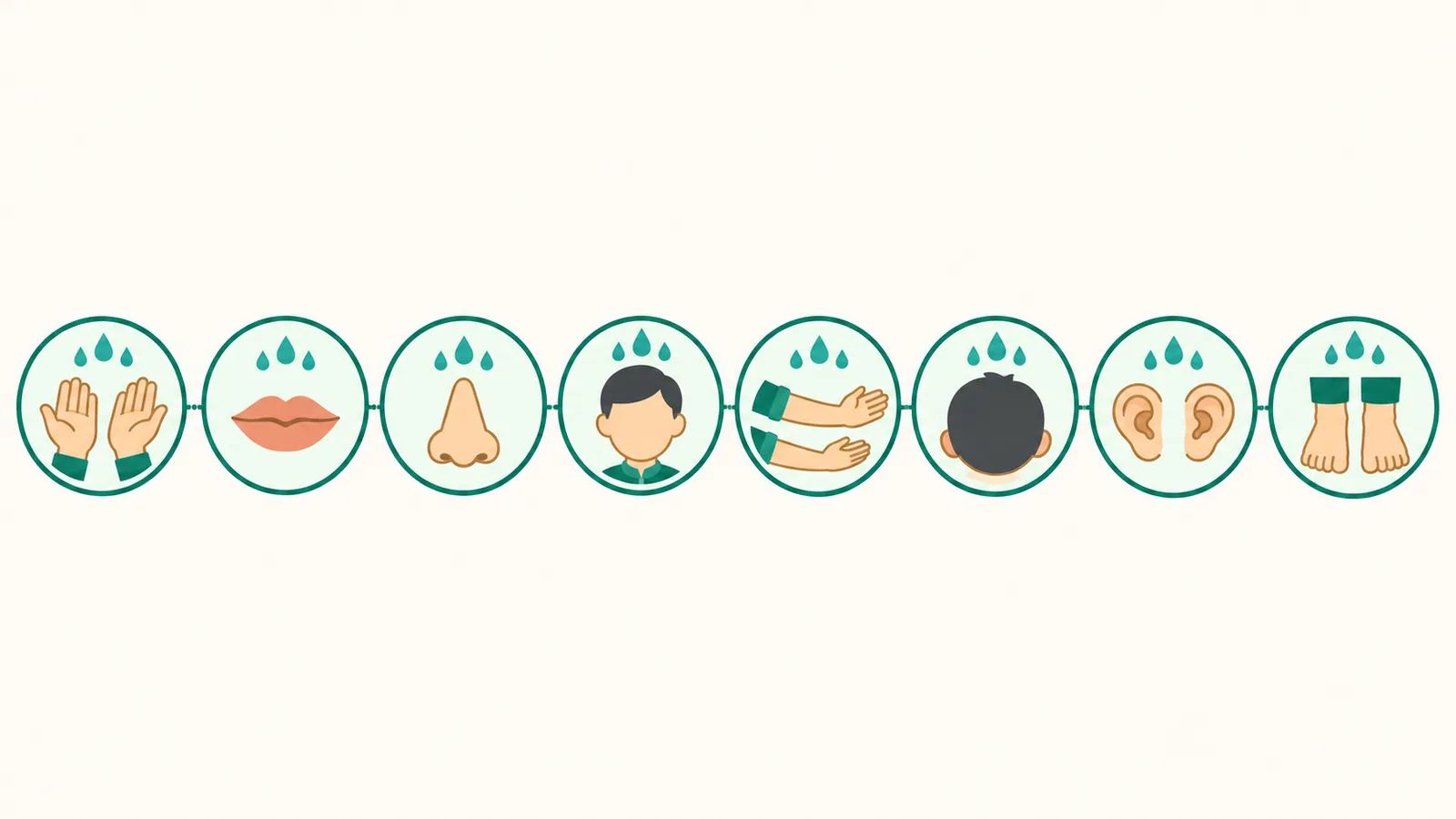
This is the form most widely taught, based on how the Prophet’s companions described his wudu (Sahih al-Bukhari 159). Use clean water, and try not to waste it — even a small amount is enough.
- Intention. Intend in your heart that you are making wudu for prayer. No spoken words are needed.
- Say Bismillah — “in the name of God”.
- Wash your hands up to the wrists, making sure water reaches between the fingers.
- Rinse your mouth. Take water in your right hand, swirl it around your mouth and spit it out.
- Rinse your nose. Draw a little water into your nose with your right hand and blow it out, helping with your left hand.
- Wash your face from the hairline to the chin and from ear to ear.
- Wash your arms from the fingertips up to and including the elbows — first the right, then the left.
- Wipe your head. Pass your wet hands over your head, from the front to the back and back again.
- Wipe your ears. With wet fingers, wipe the inside of the ears with your index fingers and the back with your thumbs.
- Wash your feet up to and including the ankles, between the toes too — first the right, then the left.
The Prophet ﷺ sometimes washed each part once, sometimes twice and often three times (Sahih al-Bukhari 157, 158 and 159). Once is enough; three times is the fuller practice. The wiping of the head and ears is done once.
Afterwards, it is recommended to bear witness to your faith. The Prophet ﷺ promised a great reward for it:
…If anyone amongst you performs the ablution, and then completes the ablution well and then says: I testify that there is no god but Allah and that Muhammad is the servant of Allah and His Messenger, the eight gates of Paradise would be opened for him and he may enter by whichever of them he wishes…
Couldn't load — please try again.
What all Muslims agree on — and where they differ
All the schools of Islamic law agree on the core named in the Qur’an: washing the face, washing the arms to the elbows, wiping the head and washing the feet to the ankles. They differ on some smaller points — for example, whether the intention, the order or rinsing the mouth and nose is strictly required, and how much of the head must be wiped. These are honest differences between scholars, each following the evidence as they understand it. If you follow the steps above, you are doing what all of them accept. A local mosque can show you the details of the school it follows, and Where Muslims Differ explains why such differences exist.
How long does wudu last?
You do not need a new wudu for every prayer. It stays valid until something breaks it. Scholars agree that it is broken by using the toilet, passing wind and falling into a deep sleep. On some other things — such as bleeding or touching certain parts of the body — the schools differ, and a teacher can explain the details.
A few other points that make life easier:
- Socks. If you put on suitable socks or leather footwear after a complete wudu, you may later wipe over them instead of washing your feet, for a limited time. The Prophet ﷺ did this, as many companions reported. Ask at a mosque about the conditions.
- No water, or illness. If you cannot find water, or water would harm you, the same verse above allows tayammum: a symbolic wiping of the face and hands with clean earth. It also reminds us that God does not wish to make things hard for us (Qur’an 5:6).
- A full bath. After marital relations, and after menstruation or post-natal bleeding ends, a full bath (ghusl) is needed rather than wudu alone.
A small habit with a big meaning
At first you may need to read the steps from your phone, and that is perfectly fine. Within a week or two it becomes natural, and many Muslims find wudu one of the most calming parts of the day: a few minutes of cool water, slowing down, letting go of what came before.
When you are ready, continue with How to Pray: A Step-by-Step Guide. And if you are new to all of this, How to Become Muslim is a gentle place to start.
Key takeaways
- Wudu is a short washing that prepares body and heart for prayer.
- The Qur'an names its core parts — face, arms to the elbows, head and feet to the ankles.
- Washing each part once is enough; three times follows the Prophet's fuller practice.
- The schools of law differ on small details, so a local mosque can show you the details it follows.