العربية
 Español
 Français
 中文
 हिन्दी
How to Pray: A Step-by-Step Guide for Beginners

For many people, the first time they see Muslims pray is unforgettable: rows of people standing shoulder to shoulder, bowing together, then placing their foreheads on the ground in silence. If you are new to Islam, learning to pray may feel daunting. It need not be. This guide walks you through the basics, one step at a time.
Why Muslims pray
Prayer (salah) is the second pillar of Islam and the most important daily act of worship after the declaration of faith. It is a direct, personal meeting with God, five times a day:
إِنَّنِىٓ أَنَا ٱللَّهُ لَآ إِلَٰهَ إِلَّآ أَنَا۠ فَٱعْبُدْنِى وَأَقِمِ ٱلصَّلَوٰةَ لِذِكْرِىٓ ﴿١٤﴾ Indeed, I am Allah. There is no deity except Me, so worship Me and establish prayer for My remembrance.
Couldn't load — please try again.
The Prophet Muhammad ﷺ taught the prayer mainly by example. He told his companions:
…Pray as you have seen me praying…
Couldn't load — please try again.
That is why the form of the prayer is remarkably similar everywhere in the world. The schools of Islamic law differ on some details — such as where to place the hands, or when to raise them — but they share the same basic structure. This guide follows the form most widely taught, without the finer points on which the schools differ; a local mosque can show you the details of the school it follows. For more on why such differences exist, see Where Muslims Differ.
The five daily prayers
| Prayer | Time | Units (rak’ahs) |
|---|---|---|
| Fajr | From dawn until sunrise | 2 |
| Dhuhr | After midday | 4 |
| Asr | Afternoon | 4 |
| Maghrib | Just after sunset | 3 |
| Isha | Night | 4 |
Local prayer times change through the year and are easy to find on a mosque timetable or a prayer-time app.
Before you pray: wudu
Before praying, a Muslim makes wudu, a short ritual washing. The Qur’an names its essential parts:
يَٰٓأَيُّهَا ٱلَّذِينَ ءَامَنُوٓا۟ إِذَا قُمْتُمْ إِلَى ٱلصَّلَوٰةِ فَٱغْسِلُوا۟ وُجُوهَكُمْ وَأَيْدِيَكُمْ إِلَى ٱلْمَرَافِقِ وَٱمْسَحُوا۟ بِرُءُوسِكُمْ وَأَرْجُلَكُمْ إِلَى ٱلْكَعْبَيْنِ ۚ وَإِن كُنتُمْ جُنُبًۭا فَٱطَّهَّرُوا۟ ۚ وَإِن كُنتُم مَّرْضَىٰٓ أَوْ عَلَىٰ سَفَرٍ أَوْ جَآءَ أَحَدٌۭ مِّنكُم مِّنَ ٱلْغَآئِطِ أَوْ لَٰمَسْتُمُ ٱلنِّسَآءَ فَلَمْ تَجِدُوا۟ مَآءًۭ فَتَيَمَّمُوا۟ صَعِيدًۭا طَيِّبًۭا فَٱمْسَحُوا۟ بِوُجُوهِكُمْ وَأَيْدِيكُم مِّنْهُ ۚ مَا يُرِيدُ ٱللَّهُ لِيَجْعَلَ عَلَيْكُم مِّنْ حَرَجٍۢ وَلَٰكِن يُرِيدُ لِيُطَهِّرَكُمْ وَلِيُتِمَّ نِعْمَتَهُۥ عَلَيْكُمْ لَعَلَّكُمْ تَشْكُرُونَ ﴿٦﴾ O you who have believed, when you rise to [perform] prayer, wash your faces and your forearms to the elbows and wipe over your heads and wash your feet to the ankles. And if you are in a state of janabah, then purify yourselves. But if you are ill or on a journey or one of you comes from the place of relieving himself or you have contacted women and do not find water, then seek clean earth and wipe over your faces and hands with it. Allah does not intend to make difficulty for you, but He intends to purify you and complete His favor upon you that you may be grateful.
Couldn't load — please try again.
In practice, following the Prophet’s example:
- Make the intention in your heart and say Bismillah (in the name of God).
- Wash your hands.
- Rinse your mouth and nose.
- Wash your face.
- Wash your arms up to and including the elbows, right then left.
- Wipe your wet hands over your head (and, in most schools, your ears).
- Wash your feet up to and including the ankles, right then left.
Also make sure your body, clothes and place of prayer are clean, and that you are modestly covered — for men at least from the navel to the knees, for women the whole body except the face and hands. Then face the qibla, the direction of the Ka’bah in Mecca.
The prayer, step by step
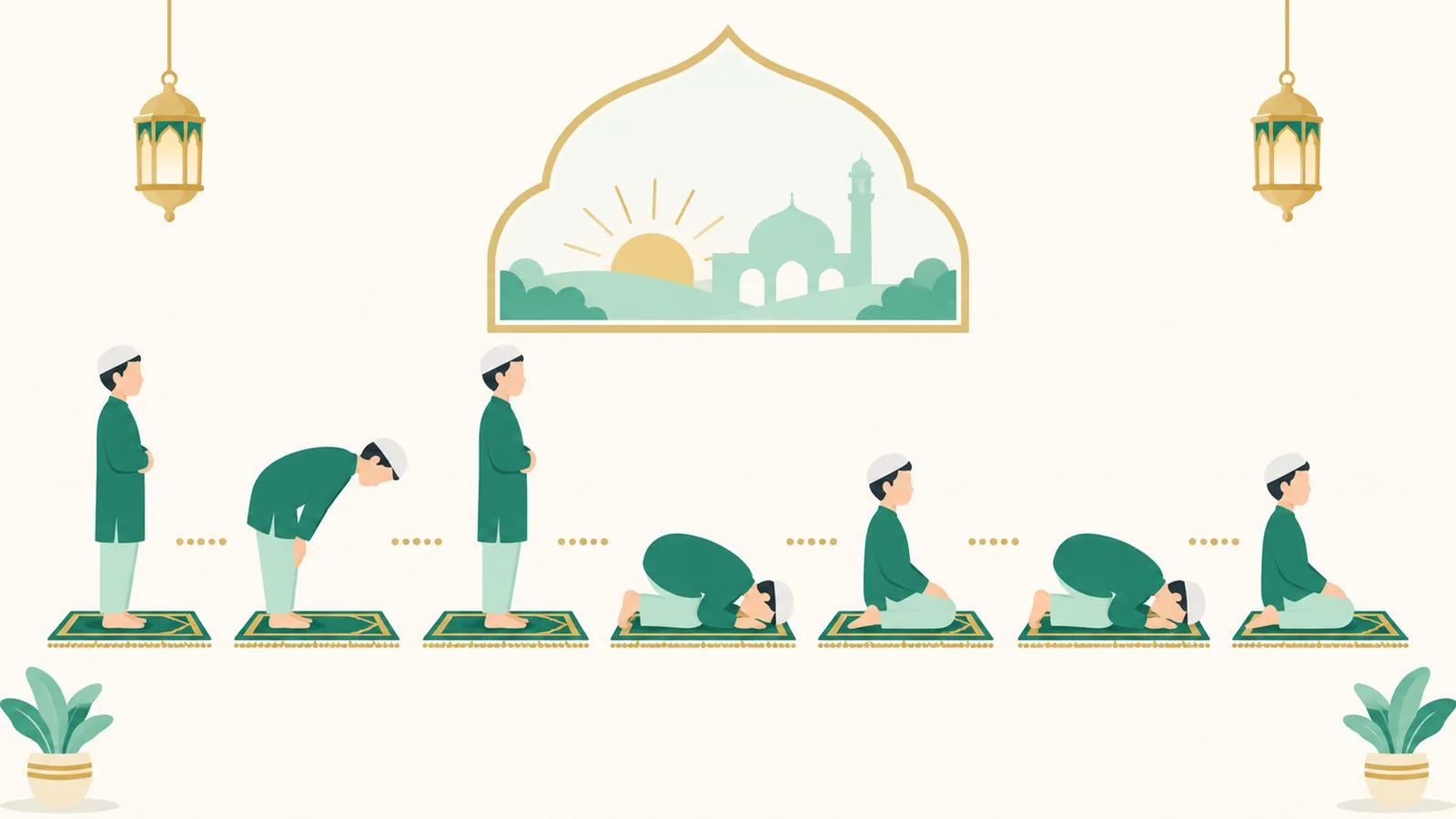
Here is a two-unit prayer, such as Fajr.
- Intention. Stand facing the qibla and intend in your heart which prayer you are praying. No words are needed for this.
- Begin with Allahu Akbar. Raise your hands near your ears or shoulders and say Allahu Akbar (God is the Greatest). You are now in prayer.
- Recite. Standing, recite the opening chapter of the Qur’an, Al-Fatiha. After it, you may recite any other short passage you know.
- Bow (ruku’). Say Allahu Akbar and bow, hands on your knees, back straight. Say Subhana Rabbiyal-Azim (Glory be to my Lord, the Most Great), usually three times.
- Rise. Stand up straight, saying Sami’a Allahu liman hamidah (God hears whoever praises Him), then Rabbana wa lakal-hamd (Our Lord, to You be all praise).
- Prostrate (sujud). Say Allahu Akbar and go down to the ground, with your forehead and nose, palms, knees and toes touching the floor. Say Subhana Rabbiyal-A’la (Glory be to my Lord, the Most High), usually three times.
- Sit briefly. Say Allahu Akbar and sit up, resting calmly for a moment.
- Prostrate again. Say Allahu Akbar and make a second prostration, just like the first. This completes one unit (rak’ah).
- Second unit. Say Allahu Akbar and stand up. Repeat steps 3 to 8.
- Final sitting. After the second prostration of the second unit, remain sitting and recite the tashahhud, a short testimony of faith and greeting, followed by a prayer of blessing on the Prophet ﷺ. A teacher, a mosque or a reliable app can help you learn these words.
- End with peace. Turn your head to the right and say As-salamu alaykum wa rahmatullah (Peace and God’s mercy be upon you), then to the left and say it again. The prayer is complete.
For a three- or four-unit prayer, sit for the tashahhud after the second unit, then stand up and complete the remaining unit or units, reciting only Al-Fatiha in them, before the final sitting and greeting.
This is the opening chapter recited in every unit:
بِسْمِ ٱللَّهِ ٱلرَّحْمَٰنِ ٱلرَّحِيمِ ﴿١﴾ ٱلْحَمْدُ لِلَّهِ رَبِّ ٱلْعَٰلَمِينَ ﴿٢﴾ ٱلرَّحْمَٰنِ ٱلرَّحِيمِ ﴿٣﴾ مَٰلِكِ يَوْمِ ٱلدِّينِ ﴿٤﴾ إِيَّاكَ نَعْبُدُ وَإِيَّاكَ نَسْتَعِينُ ﴿٥﴾ ٱهْدِنَا ٱلصِّرَٰطَ ٱلْمُسْتَقِيمَ ﴿٦﴾ صِرَٰطَ ٱلَّذِينَ أَنْعَمْتَ عَلَيْهِمْ غَيْرِ ٱلْمَغْضُوبِ عَلَيْهِمْ وَلَا ٱلضَّآلِّينَ ﴿٧﴾ 1In the name of Allah, the Entirely Merciful, the Especially Merciful. 2[All] praise is [due] to Allah, Lord of the worlds - 3The Entirely Merciful, the Especially Merciful, 4Sovereign of the Day of Recompense. 5It is You we worship and You we ask for help. 6Guide us to the straight path - 7The path of those upon whom You have bestowed favor, not of those who have evoked [Your] anger or of those who are astray.
Couldn't load — please try again.
The heart of it: calm and presence
When a man once prayed hastily, the Prophet ﷺ taught him the essentials of prayer — and the emphasis was on calm:
…When you stand for Prayer say Takbir and then recite from the Holy Qur'an (of what you know by heart) and then bow till you feel at ease. Then raise your head and stand up straight, then prostrate till you feel at ease during your prostration, then sit with calmness till you feel at ease (do not hurry) and do the same in all your prayers…
Couldn't load — please try again.
If you are just starting
Do not wait until you have memorised everything. Many new Muslims begin by praying with a printed card or by following someone at the mosque. The Prophet ﷺ was gentle with those who could not yet recite:
…I cannot memorise anything from the Qur'an: so teach me something which is sufficient for me. He said: Say Glory be to Allah, and praise be to Allah, and there is no god but Allah, and Allah is most great, and there is no might and no strength but in Allah.…
Couldn't load — please try again.
Learn Al-Fatiha a line at a time, ask a Muslim friend to pray beside you, and be patient with yourself. God knows your effort. For the bigger picture, see How to Become Muslim and The Five Pillars.
Key takeaways
- Muslims pray five times a day — at dawn, midday, afternoon, sunset and night.
- Before praying, you make wudu, a short washing of the face, arms, head and feet.
- Each prayer is made of units (rak'ahs) of standing, bowing, prostrating and sitting.
- The schools of law differ on small details; all follow the same basic form.
- Beginners can learn step by step — it is fine to start simple.