العربية
 Español
 Français
 中文
 हिन्दी
Tawhid: The Oneness of God in Islam

If you asked a Muslim to sum up their whole faith in one word, many would choose tawhid. The word comes from an Arabic root meaning “to make one” — and it describes the conviction that God is one, in every sense that matters.
A belief Muslims say every day
Tawhid is not an abstract idea saved for theology books. Muslims affirm it every time they declare their faith, bearing witness that there is no god but God, and they repeat it in every unit of every prayer, when they recite the opening chapter of the Qur’an and say:
إِيَّاكَ نَعْبُدُ وَإِيَّاكَ نَسْتَعِينُ ﴿٥﴾ It is You we worship and You we ask for help.
Couldn't load — please try again.
That short verse holds the heart of tawhid: worship goes to God alone, and help is sought from God alone. Our article God Is One looks at what this rules out; here we look at what it includes.
Three ways of seeing God’s oneness
To help people understand tawhid, many scholars explain it from three angles. This is a teaching framework rather than three separate beliefs, and different schools of theology organise the details in their own ways, but the core is shared by all Muslims.
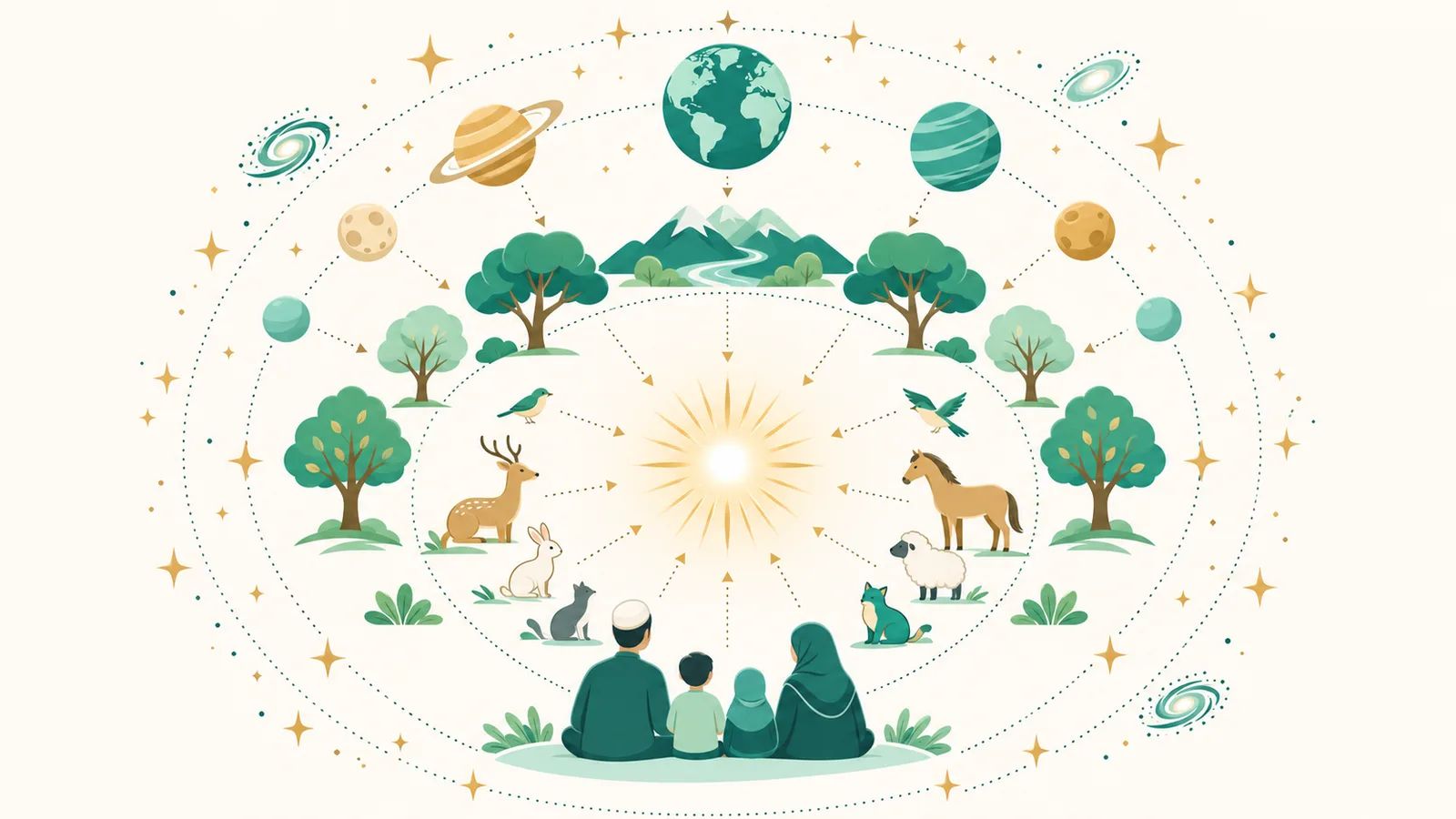
- Oneness of lordship. God alone creates, sustains, gives life and causes death. Nothing in the universe runs independently of Him.
- Oneness of worship. Because God alone is Lord, He alone deserves prayer, devotion, sacrifice and ultimate love and trust.
- Oneness of names and attributes. God is described by beautiful names — the Most Merciful, the All-Knowing, the Just — and none of His qualities is shared by anything in creation in the same way. As the Qur’an says, there is nothing like Him (Qur’an 42:11).
The most celebrated verse of the Qur’an, often called the Verse of the Throne, draws these threads together:
ٱللَّهُ لَآ إِلَٰهَ إِلَّا هُوَ ٱلْحَىُّ ٱلْقَيُّومُ ۚ لَا تَأْخُذُهُۥ سِنَةٌۭ وَلَا نَوْمٌۭ ۚ لَّهُۥ مَا فِى ٱلسَّمَٰوَٰتِ وَمَا فِى ٱلْأَرْضِ ۗ مَن ذَا ٱلَّذِى يَشْفَعُ عِندَهُۥٓ إِلَّا بِإِذْنِهِۦ ۚ يَعْلَمُ مَا بَيْنَ أَيْدِيهِمْ وَمَا خَلْفَهُمْ ۖ وَلَا يُحِيطُونَ بِشَىْءٍۢ مِّنْ عِلْمِهِۦٓ إِلَّا بِمَا شَآءَ ۚ وَسِعَ كُرْسِيُّهُ ٱلسَّمَٰوَٰتِ وَٱلْأَرْضَ ۖ وَلَا يَـُٔودُهُۥ حِفْظُهُمَا ۚ وَهُوَ ٱلْعَلِىُّ ٱلْعَظِيمُ ﴿٢٥٥﴾ Allah - there is no deity except Him, the Ever-Living, the Sustainer of [all] existence. Neither drowsiness overtakes Him nor sleep. To Him belongs whatever is in the heavens and whatever is on the earth. Who is it that can intercede with Him except by His permission? He knows what is [presently] before them and what will be after them, and they encompass not a thing of His knowledge except for what He wills. His Kursi extends over the heavens and the earth, and their preservation tires Him not. And He is the Most High, the Most Great.
Couldn't load — please try again.
Knowing God by His names
Muslims come to know God mainly through the names He has given Himself in the Qur’an, and they are encouraged to call on Him by them:
وَلِلَّهِ ٱلْأَسْمَآءُ ٱلْحُسْنَىٰ فَٱدْعُوهُ بِهَا ۖ وَذَرُوا۟ ٱلَّذِينَ يُلْحِدُونَ فِىٓ أَسْمَٰٓئِهِۦ ۚ سَيُجْزَوْنَ مَا كَانُوا۟ يَعْمَلُونَ ﴿١٨٠﴾ And to Allah belong the best names, so invoke Him by them. And leave [the company of] those who practice deviation concerning His names. They will be recompensed for what they have been doing.
Couldn't load — please try again.
A person who is struggling calls on Ar-Rahman, the Most Merciful. A person who has done wrong calls on Al-Ghafur, the Forgiving. Tawhid, in other words, is not only a belief about God — it is a relationship with Him.
The opposite of tawhid
The opposite of tawhid is shirk: giving a share of what belongs to God to anyone or anything else — praying to an idol, a saint or a prophet, or believing that some created thing controls our fate independently of God. The Qur’an calls this a great injustice (Qur’an 31:13), because it gives the Creator’s right to the created.
The Prophet Muhammad ﷺ once explained the relationship between God and His servants in a simple question and answer:
Narrated Mu`adh bin Jabal: The Prophet (ﷺ) said, "O Mu`adh! Do you know what Allah's Right upon His slaves is?" I said, "Allah and His Apostle know best." The Prophet (ﷺ) said, "To worship Him (Allah) Alone and to join none in worship with Him (Allah). Do you know what their right upon Him is?" I replied, "Allah and His Apostle know best." The Prophet (ﷺ) said, "Not to punish them (if they do so)
Couldn't load — please try again.
Notice the balance: God’s right is to be worshipped alone, and His promise to those who honour that right is mercy.
Why tawhid sets people free
For Muslims, tawhid is deeply liberating. If God alone controls benefit and harm, then no boss, ruler, trend or fear has the final word over your life. If God alone deserves worship, then no human being — however rich or powerful — stands above another except in goodness. Tawhid makes all people equal servants of one Lord.
It also brings unity to the inner life. Instead of chasing many masters — money, status, approval — a person who lives by tawhid has one direction: to please the One who made them.
Muslims believe this was the message of every prophet, including Abraham, Moses and Jesus (peace be upon them). Read more in All Prophets Brought the Same Message.
A belief worth exploring
Tawhid is simple enough for a child to grasp and deep enough to fill a lifetime of reflection. If you would like to go further, Who Is Allah? introduces God as Muslims know Him, and Is Allah the Same God? explores the common ground with Jews and Christians.
Key takeaways
- Tawhid means affirming that God is one — in His lordship, in worship, and in His names and attributes.
- Its opposite, shirk, is giving any share of what belongs to God to someone or something else.
- Tawhid frees a person from fearing or serving anything other than God.
- Muslims see tawhid as the message of every prophet, from Adam to Muhammad ﷺ.