العربية
 Español
 Français
 中文
 हिन्दी
The Five Pillars of Islam

A building needs strong pillars to stand. The Prophet Muhammad ﷺ used that same image to describe the practice of Islam:
Narrated Ibn 'Umar: Allah's Messenger (ﷺ) said: Islam is based on (the following) five (principles): 1. To testify that none has the right to be worshipped but Allah and Muhammad is Allah's Messenger (ﷺ). 2. To offer the (compulsory congregational) prayers dutifully and perfectly. 3. To pay Zakat (i.e. obligatory charity) . 4. To perform Hajj. (i.e. Pilgrimage to Mecca) 5. To observe fast during the month of Ramadan
Couldn't load — please try again.
If the six articles of faith describe what a Muslim believes in the heart, the five pillars describe how that faith is lived out — every day, every year and once in a lifetime.
1. Shahadah — the declaration of faith
The first pillar is the shahadah, the testimony that there is no god but God, and that Muhammad ﷺ is His messenger. In Arabic it begins ash-hadu an la ilaha illallah — “I bear witness that there is no god but God”.
These words are the doorway into Islam: a person becomes a Muslim by sincerely believing and declaring them. They are also repeated throughout a Muslim’s life, in every call to prayer and in every prayer. The first half rejects worshipping anything other than God; the second accepts Muhammad ﷺ as the messenger whose example shows how to worship Him. See The Meaning of the Shahada.
2. Salah — the five daily prayers
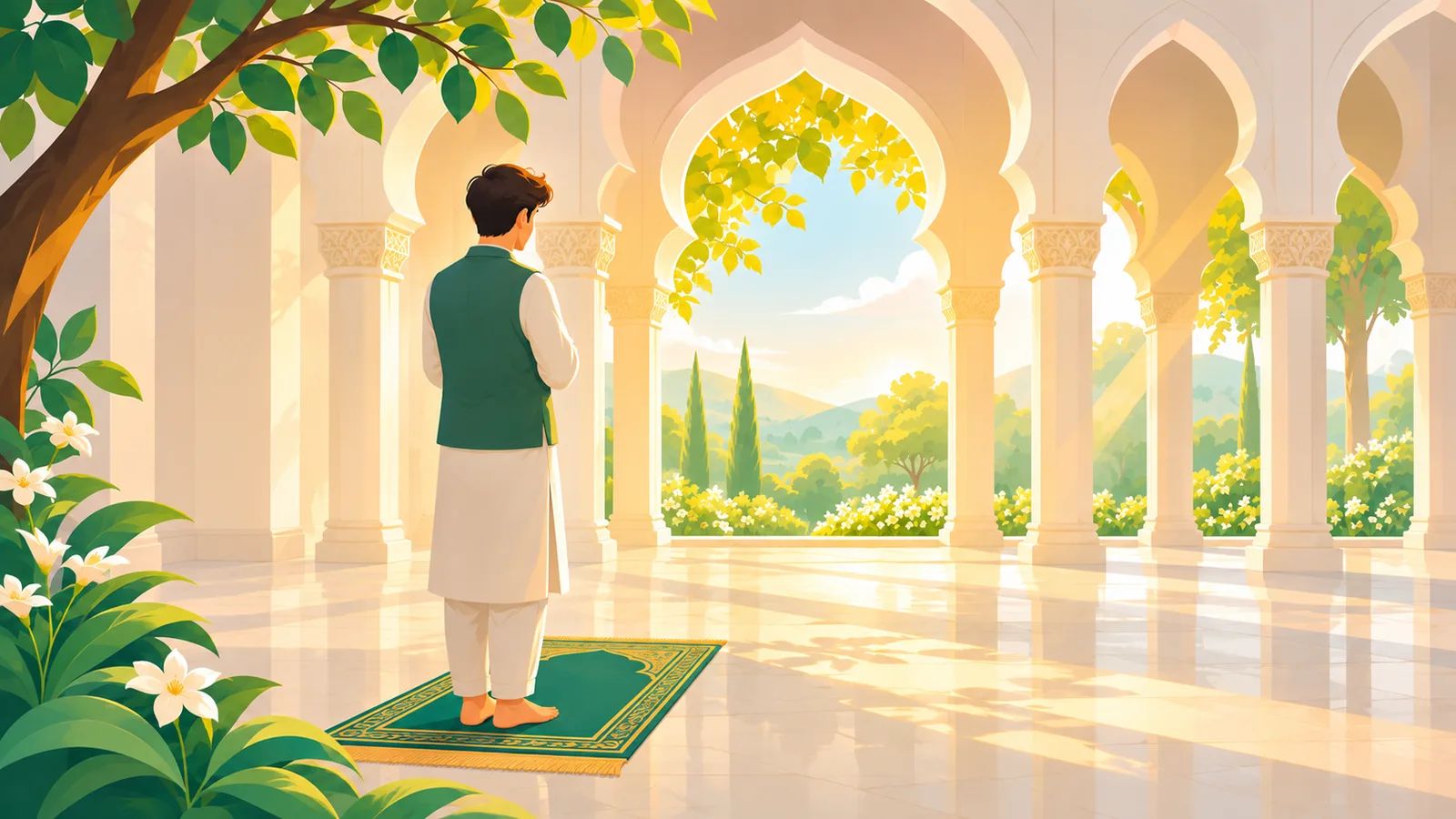
Muslims pray five times a day: at dawn, midday, afternoon, sunset and night. Each prayer takes only a few minutes and includes standing, bowing, prostrating with the forehead on the ground, and reciting parts of the Qur’an — all facing the Kaaba in Mecca.
Prayer is a Muslim’s direct conversation with God, with no priest or go-between. Spread throughout the day, it keeps a person connected to God amid work and daily life. The Qur’an says it also shapes character:
ٱتْلُ مَآ أُوحِىَ إِلَيْكَ مِنَ ٱلْكِتَٰبِ وَأَقِمِ ٱلصَّلَوٰةَ ۖ إِنَّ ٱلصَّلَوٰةَ تَنْهَىٰ عَنِ ٱلْفَحْشَآءِ وَٱلْمُنكَرِ ۗ وَلَذِكْرُ ٱللَّهِ أَكْبَرُ ۗ وَٱللَّهُ يَعْلَمُ مَا تَصْنَعُونَ ﴿٤٥﴾ Recite, [O Muhammad], what has been revealed to you of the Book and establish prayer. Indeed, prayer prohibits immorality and wrongdoing, and the remembrance of Allah is greater. And Allah knows that which you do.
Couldn't load — please try again.
Muslims can pray almost anywhere that is clean — at home, at work or in a park — and many also gather in the mosque, especially for the Friday congregational prayer. See How to Pray.
3. Zakah — giving to those in need
Zakah means “purification” and “growth”. Each year, Muslims whose savings are above a minimum amount give a fixed portion of their wealth — commonly 2.5% of savings held for a year — to people in need. The Qur’an lists who should receive it, beginning with the poor and the needy (Qur’an 9:60).
Zakah is not seen as a favour to the poor but as their right. It reminds Muslims that wealth is a trust from God, purifies the heart from greed, and helps close the gap between rich and poor. On top of zakah, Muslims are encouraged to give voluntary charity (sadaqah) at any time — even a kind word or a smile counts.
4. Sawm — fasting in Ramadan
Every year, during the ninth month of the Islamic calendar, Ramadan, healthy adult Muslims fast from dawn until sunset: no food, no drink and no marital relations during daylight hours. The Qur’an explains that fasting is meant to build taqwa — God-consciousness:
يَٰٓأَيُّهَا ٱلَّذِينَ ءَامَنُوا۟ كُتِبَ عَلَيْكُمُ ٱلصِّيَامُ كَمَا كُتِبَ عَلَى ٱلَّذِينَ مِن قَبْلِكُمْ لَعَلَّكُمْ تَتَّقُونَ ﴿١٨٣﴾ O you who have believed, decreed upon you is fasting as it was decreed upon those before you that you may become righteous -
Couldn't load — please try again.
Fasting teaches self-control, gratitude and empathy for those who are hungry. Ramadan is also a month of extra prayer, reading the Qur’an, generosity and family meals at sunset. People who are ill or travelling are excused and make up the days later, and those for whom fasting is too great a hardship may instead feed a poor person for each day (Qur’an 2:184-185). Scholars also excuse the elderly, and pregnant and nursing women, with details that depend on their situation.
5. Hajj — the pilgrimage to Mecca
Once in a lifetime, every Muslim who is physically and financially able must make the pilgrimage, hajj, to Mecca:
فِيهِ ءَايَٰتٌۢ بَيِّنَٰتٌۭ مَّقَامُ إِبْرَٰهِيمَ ۖ وَمَن دَخَلَهُۥ كَانَ ءَامِنًۭا ۗ وَلِلَّهِ عَلَى ٱلنَّاسِ حِجُّ ٱلْبَيْتِ مَنِ ٱسْتَطَاعَ إِلَيْهِ سَبِيلًۭا ۚ وَمَن كَفَرَ فَإِنَّ ٱللَّهَ غَنِىٌّ عَنِ ٱلْعَٰلَمِينَ ﴿٩٧﴾ In it are clear signs [such as] the standing place of Abraham. And whoever enters it shall be safe. And [due] to Allah from the people is a pilgrimage to the House - for whoever is able to find thereto a way. But whoever disbelieves - then indeed, Allah is free from need of the worlds.
Couldn't load — please try again.
Each year, millions of pilgrims from every nation gather there. Men wear the same two simple white cloths, and women wear simple modest clothing, so that rich and poor, king and labourer, stand together as equals before God. The rites of hajj recall the faith and sacrifice of the Prophet Abraham (peace be upon him) and his family.
More than rituals
The five pillars are not meant to be empty routines. Each one links a person to God and to other people: prayer builds discipline and humility, zakah builds a fairer society, fasting builds empathy, and hajj builds a sense of one human family. Notice also how merciful they are: no one is asked to do what they cannot. Those who are poor do not pay zakah, those who cannot afford hajj are excused, and the sick and travellers are given concessions.
If you would like to know how a person begins this journey, read How to Become Muslim, or return to What Is Islam?

Key takeaways
- The five pillars are the declaration of faith, prayer, charity, fasting and pilgrimage.
- They come from a well-known saying of the Prophet ﷺ — Islam is built on five.
- Each pillar connects a person to God and to other people.
- God never asks more than a person can bear — there are exemptions for illness, travel and poverty.