العربية
 Español
 Français
 中文
 हिन्दी
Who Are the Prophets in Islam?

Many people are surprised to learn that Muslims love and honour Abraham, Moses and Jesus. Their stories fill the pages of the Qur’an, and Muslim children grow up hearing about Noah’s ark, Joseph’s coat and Jonah in the belly of the whale. For a Muslim, these are not “other people’s prophets” — they are part of one family of messengers sent by the same God.
Why God sent prophets
Islam teaches that God did not create human beings and then leave them without guidance. Out of His mercy, He chose good and truthful people from among humanity and sent them with His message. The Qur’an says that no community was left out:
وَلَقَدْ بَعَثْنَا فِى كُلِّ أُمَّةٍۢ رَّسُولًا أَنِ ٱعْبُدُوا۟ ٱللَّهَ وَٱجْتَنِبُوا۟ ٱلطَّٰغُوتَ ۖ فَمِنْهُم مَّنْ هَدَى ٱللَّهُ وَمِنْهُم مَّنْ حَقَّتْ عَلَيْهِ ٱلضَّلَٰلَةُ ۚ فَسِيرُوا۟ فِى ٱلْأَرْضِ فَٱنظُرُوا۟ كَيْفَ كَانَ عَٰقِبَةُ ٱلْمُكَذِّبِينَ ﴿٣٦﴾ And We certainly sent into every nation a messenger, [saying], "Worship Allah and avoid Taghut." And among them were those whom Allah guided, and among them were those upon whom error was [deservedly] decreed. So proceed through the earth and observe how was the end of the deniers.
Couldn't load — please try again.
Taghut here means anything worshipped instead of God. In other words, every prophet came to free people from serving false gods — whether idols, rulers or their own desires — and to guide them back to their Creator.
The Qur’an also says that God sent many messengers whose stories it does not tell (Qur’an 40:78). So Muslims believe there were prophets among many peoples whose names we simply do not know.
One message, many messengers
The prophets lived in different times and places and spoke different languages, and some brought laws suited to their people. But the heart of their message never changed: there is one God, worship Him alone, and live with justice and kindness. The Prophet Muhammad ﷺ described this with a family image:
Narrated Abu Huraira: Allah's Messenger (ﷺ) said, "Both in this world and in the Hereafter, I am the nearest of all the people to Jesus, the son of Mary. The prophets are paternal brothers; their mothers are different, but their religion is one
Couldn't load — please try again.
The picture is of brothers who share one father but have different mothers: the details of each prophet’s law differed, but the faith itself was one. You can read more in One Message, All Prophets.
In one passage the Qur’an mentions many prophets in a single breath, describing them as guided, righteous and chosen:
وَتِلْكَ حُجَّتُنَآ ءَاتَيْنَٰهَآ إِبْرَٰهِيمَ عَلَىٰ قَوْمِهِۦ ۚ نَرْفَعُ دَرَجَٰتٍۢ مَّن نَّشَآءُ ۗ إِنَّ رَبَّكَ حَكِيمٌ عَلِيمٌۭ ﴿٨٣﴾ وَوَهَبْنَا لَهُۥٓ إِسْحَٰقَ وَيَعْقُوبَ ۚ كُلًّا هَدَيْنَا ۚ وَنُوحًا هَدَيْنَا مِن قَبْلُ ۖ وَمِن ذُرِّيَّتِهِۦ دَاوُۥدَ وَسُلَيْمَٰنَ وَأَيُّوبَ وَيُوسُفَ وَمُوسَىٰ وَهَٰرُونَ ۚ وَكَذَٰلِكَ نَجْزِى ٱلْمُحْسِنِينَ ﴿٨٤﴾ وَزَكَرِيَّا وَيَحْيَىٰ وَعِيسَىٰ وَإِلْيَاسَ ۖ كُلٌّۭ مِّنَ ٱلصَّٰلِحِينَ ﴿٨٥﴾ وَإِسْمَٰعِيلَ وَٱلْيَسَعَ وَيُونُسَ وَلُوطًۭا ۚ وَكُلًّۭا فَضَّلْنَا عَلَى ٱلْعَٰلَمِينَ ﴿٨٦﴾ 83And that was Our [conclusive] argument which We gave Abraham against his people. We raise by degrees whom We will. Indeed, your Lord is Wise and Knowing. 84And We gave to Abraham, Isaac and Jacob - all [of them] We guided. And Noah, We guided before; and among his descendants, David and Solomon and Job and Joseph and Moses and Aaron. Thus do We reward the doers of good. 85And Zechariah and John and Jesus and Elias - and all were of the righteous. 86And Ishmael and Elisha and Jonah and Lot - and all [of them] We preferred over the worlds.
Couldn't load — please try again.
The 25 prophets named in the Qur’an
The Qur’an mentions 25 prophets by name. Most of them will be familiar to Jewish and Christian readers under their biblical names.
| # | Name in the Qur’an | Known in the Bible as |
|---|---|---|
| 1 | Adam | Adam |
| 2 | Idris | Often identified with Enoch |
| 3 | Nuh | Noah |
| 4 | Hud | — (sent to the people of ‘Ad in Arabia) |
| 5 | Salih | — (sent to the people of Thamud) |
| 6 | Ibrahim | Abraham |
| 7 | Lut | Lot |
| 8 | Isma’il | Ishmael |
| 9 | Ishaq | Isaac |
| 10 | Ya’qub | Jacob |
| 11 | Yusuf | Joseph |
| 12 | Ayyub | Job |
| 13 | Shu’ayb | — (sent to the people of Madyan) |
| 14 | Musa | Moses |
| 15 | Harun | Aaron |
| 16 | Dhul-Kifl | — |
| 17 | Dawud | David |
| 18 | Sulayman | Solomon |
| 19 | Ilyas | Elijah |
| 20 | Al-Yasa’ | Elisha |
| 21 | Yunus | Jonah |
| 22 | Zakariyya | Zechariah |
| 23 | Yahya | John the Baptist |
| 24 | ‘Isa | Jesus |
| 25 | Muhammad ﷺ | — |
Muslims say “peace be upon him” after the name of each of these prophets. Scholars have discussed a few details — for example, whether Dhul-Kifl was a prophet or a righteous man, and exactly which biblical figure Idris corresponds to — but the list itself is drawn directly from the Qur’an.
Revelation from Abraham to Muhammad ﷺ
The Qur’an presents the revelation given to Muhammad ﷺ as part of the same chain that reached Noah, Abraham, Jesus and the others. It also mentions that God gave David the Psalms and spoke directly to Moses:
۞ إِنَّآ أَوْحَيْنَآ إِلَيْكَ كَمَآ أَوْحَيْنَآ إِلَىٰ نُوحٍۢ وَٱلنَّبِيِّۦنَ مِنۢ بَعْدِهِۦ ۚ وَأَوْحَيْنَآ إِلَىٰٓ إِبْرَٰهِيمَ وَإِسْمَٰعِيلَ وَإِسْحَٰقَ وَيَعْقُوبَ وَٱلْأَسْبَاطِ وَعِيسَىٰ وَأَيُّوبَ وَيُونُسَ وَهَٰرُونَ وَسُلَيْمَٰنَ ۚ وَءَاتَيْنَا دَاوُۥدَ زَبُورًۭا ﴿١٦٣﴾ وَرُسُلًۭا قَدْ قَصَصْنَٰهُمْ عَلَيْكَ مِن قَبْلُ وَرُسُلًۭا لَّمْ نَقْصُصْهُمْ عَلَيْكَ ۚ وَكَلَّمَ ٱللَّهُ مُوسَىٰ تَكْلِيمًۭا ﴿١٦٤﴾ رُّسُلًۭا مُّبَشِّرِينَ وَمُنذِرِينَ لِئَلَّا يَكُونَ لِلنَّاسِ عَلَى ٱللَّهِ حُجَّةٌۢ بَعْدَ ٱلرُّسُلِ ۚ وَكَانَ ٱللَّهُ عَزِيزًا حَكِيمًۭا ﴿١٦٥﴾ 163Indeed, We have revealed to you, [O Muhammad], as We revealed to Noah and the prophets after him. And we revealed to Abraham, Ishmael, Isaac, Jacob, the Descendants, Jesus, Job, Jonah, Aaron, and Solomon, and to David We gave the book [of Psalms]. 164And [We sent] messengers about whom We have related [their stories] to you before and messengers about whom We have not related to you. And Allah spoke to Moses with [direct] speech. 165[We sent] messengers as bringers of good tidings and warners so that mankind will have no argument against Allah after the messengers. And ever is Allah Exalted in Might and Wise.
Couldn't load — please try again.
The last verse explains the purpose: the prophets brought good news to those who believe and do good, and warnings to those who do wrong, so that no one could say they were never told. Muslims also believe in the scriptures these prophets brought — including the Torah given to Moses, the Psalms given to David and the Gospel given to Jesus — as they were originally revealed.
What Muslims believe about the prophets
A few points are agreed upon by Muslims everywhere:
- They were human beings, not gods or divine. They ate, slept, married and suffered like other people. Their greatness was in their faith, honesty and devotion.
- They were chosen and protected by God in delivering His message faithfully, and they are the best examples of good character.
- Believing in all of them is part of faith. The Qur’an describes believers as people who make no distinction between any of God’s messengers (Qur’an 2:285). Rejecting even one prophet is not acceptable in Islam.
- They are deeply respected. Out of reverence, Muslims traditionally avoid portraying the prophets in pictures, films or statues.
- Muhammad ﷺ is the last of them. Muslims believe he completed the line of prophethood and that his message is for all people. See Muhammad ﷺ, the Final Messenger.
Explore their stories
The prophets’ lives are full of courage, patience, doubt overcome by trust, and mercy. You can begin with Abraham, the Friend of God, follow Moses from the river to the parted sea, read the story of Jesus and his mother Mary in the Qur’an, and finish with the life of Prophet Muhammad ﷺ. For Muslims, each story is a reminder that God has always been close to those who seek Him.
Key takeaways
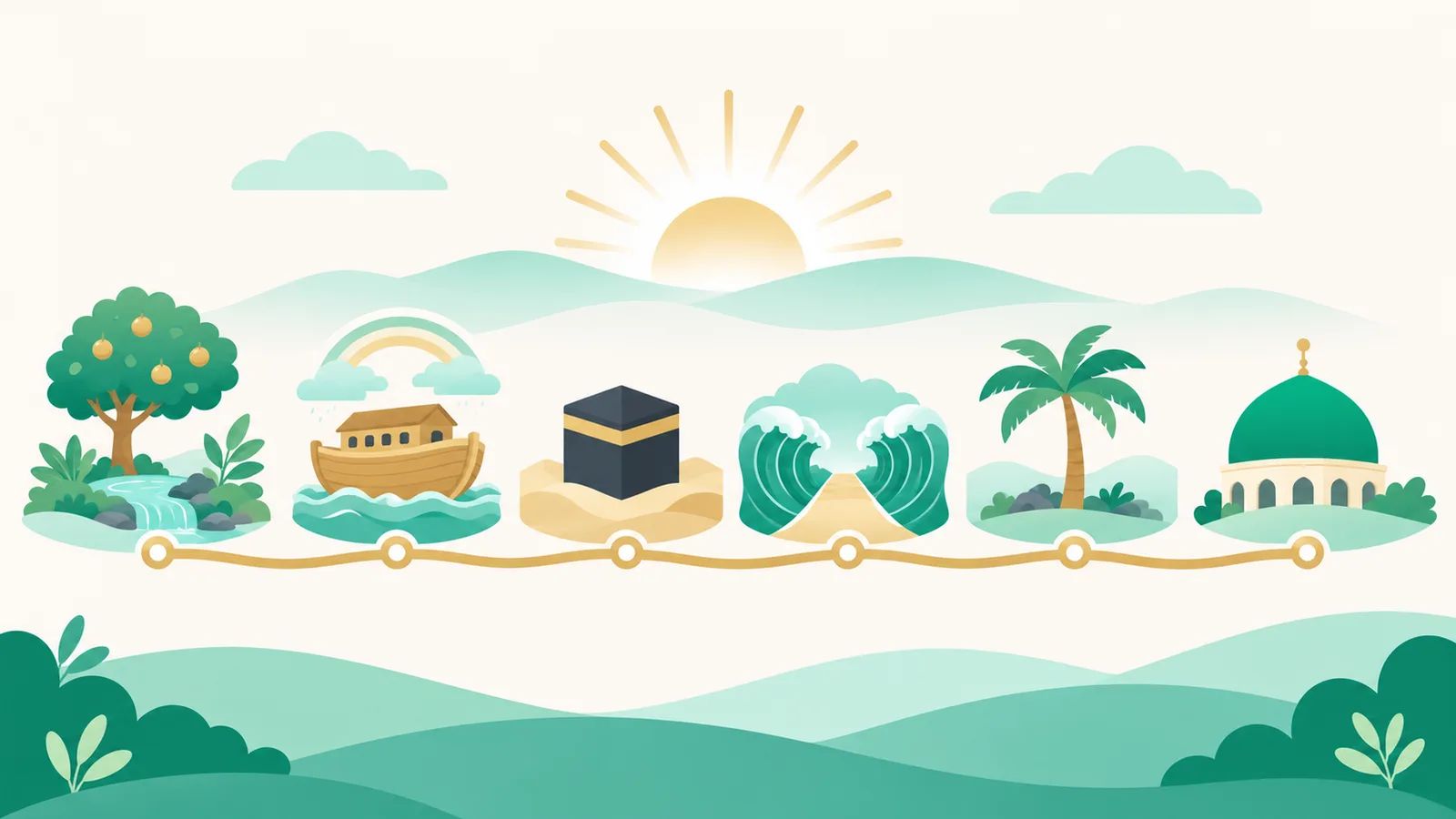
- Muslims believe God sent messengers to every nation throughout history.
- The Qur'an names 25 prophets, most of whom also appear in the Bible.
- All prophets brought one core message — worship the One God and do good.
- A Muslim must believe in all of God's prophets and honour every one of them.
- Muhammad ﷺ is believed to be the last prophet in this long line.