العربية
 Español
 Français
 中文
 हिन्दी
Is Sharia Law Dangerous?

Few words make people as nervous as “sharia”. In news headlines it usually appears beside images of public punishment. So it is worth asking plainly: what is sharia, what does it actually require, and should anyone be afraid of it?
What sharia actually is
The Arabic word sharia originally means a path to a watering place, the road that leads to life. In Islam it means the guidance God has given for how to live. Most of it has nothing to do with courts. It tells Muslims how to pray, fast and give charity; how to treat parents, spouses, children and neighbours; how to trade honestly, keep promises and avoid cheating; what to eat and drink; and how to be just.
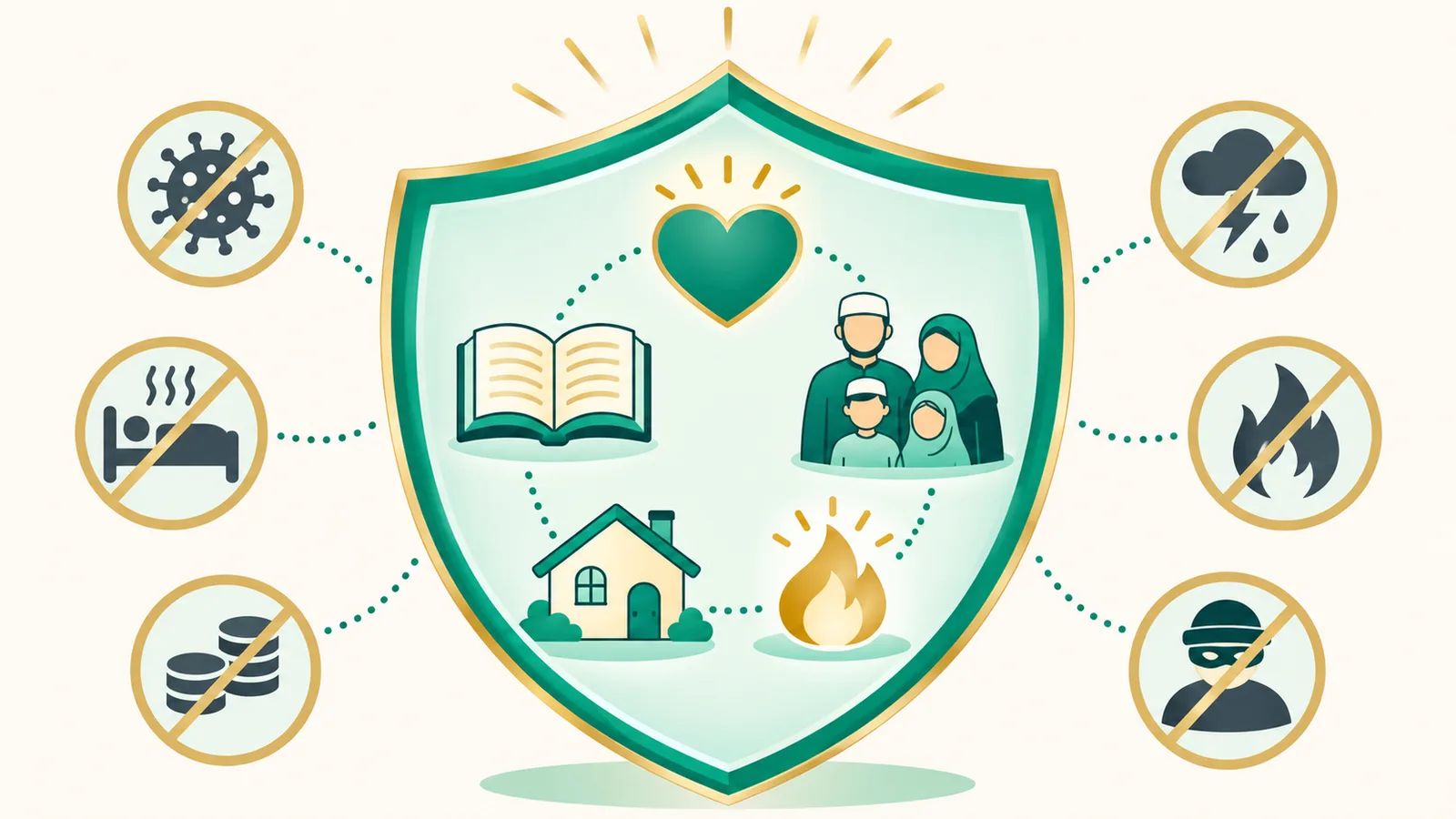
When a Muslim says “I follow sharia”, they usually mean they pray five times a day, avoid alcohol and pork, give to the poor and try to be honest. Muslim scholars summarised the purpose of the whole system as the protection of five things: religion, life, the mind, family and lineage, and property. Its foundation is justice:
۞ إِنَّ ٱللَّهَ يَأْمُرُكُمْ أَن تُؤَدُّوا۟ ٱلْأَمَٰنَٰتِ إِلَىٰٓ أَهْلِهَا وَإِذَا حَكَمْتُم بَيْنَ ٱلنَّاسِ أَن تَحْكُمُوا۟ بِٱلْعَدْلِ ۚ إِنَّ ٱللَّهَ نِعِمَّا يَعِظُكُم بِهِۦٓ ۗ إِنَّ ٱللَّهَ كَانَ سَمِيعًۢا بَصِيرًۭا ﴿٥٨﴾ Indeed, Allah commands you to render trusts to whom they are due and when you judge between people to judge with justice. Excellent is that which Allah instructs you. Indeed, Allah is ever Hearing and Seeing.
Couldn't load — please try again.
The punishments: real, but tightly limited
It would be dishonest to pretend that sharia has no criminal law. A small number of serious crimes carry fixed punishments, called hudud, some of which are severe. Muslims do not deny or apologise for what God has revealed. But anyone who looks at how these laws work finds a striking pattern: they are surrounded by conditions that make them very hard to apply.
Extremely high standards of proof. An accusation of adultery requires four upright eyewitnesses to the act itself, something almost impossible in practice. Anyone who makes the accusation without them is himself punished for slander:
وَٱلَّذِينَ يَرْمُونَ ٱلْمُحْصَنَٰتِ ثُمَّ لَمْ يَأْتُوا۟ بِأَرْبَعَةِ شُهَدَآءَ فَٱجْلِدُوهُمْ ثَمَٰنِينَ جَلْدَةًۭ وَلَا تَقْبَلُوا۟ لَهُمْ شَهَٰدَةً أَبَدًۭا ۚ وَأُو۟لَٰٓئِكَ هُمُ ٱلْفَٰسِقُونَ ﴿٤﴾ And those who accuse chaste women and then do not produce four witnesses - lash them with eighty lashes and do not accept from them testimony ever after. And those are the defiantly disobedient,
Couldn't load — please try again.
Strict conditions for theft. The punishment for theft applies only above a minimum value, and jurists added further conditions: the goods must have been properly secured, and the thief must not have had any claim to them or been driven by need. The Prophet ﷺ set the minimum:
Narrated `Aisha: The Prophet (ﷺ) said, "The hand should be cut off for stealing something that is worth a quarter of a Dinar or more
Couldn't load — please try again.
A preference for repentance over confession. When a man named Ma’iz came to the Prophet ﷺ confessing a sin that carried a fixed punishment, the Prophet ﷺ repeatedly sent him away:
…Messenger of Allah, purify me, whereupon he said: Woe be upon you, go back, ask forgiveness of Allah and turn to Him in repentance.…
Couldn't load — please try again.
Only after Ma’iz insisted again and again, and the Prophet ﷺ had asked whether he was of sound mind, was the punishment, which for a married person was stoning, carried out; and the Prophet ﷺ then praised his repentance. The lesson scholars drew is that the law exists mainly to deter; the Prophet ﷺ also taught that whoever covers a fellow Muslim’s fault, God will cover his on the Day of Resurrection (Bukhari 2442). Jurists developed the principle that any genuine doubt cancels a fixed punishment.
This is why, across long stretches of Islamic history, such punishments were rarely carried out. Their main purpose was to declare how serious certain crimes are.
Who has the right to apply it
Islamic law gives the power to judge and punish only to a legitimate court following due process. No individual, family or militia may apply it. A father who harms his daughter in the name of “honour”, or a group that seizes territory and stages public executions, is not applying sharia; it is breaking it. Mainstream scholars around the world have condemned such abuses clearly.
Where some modern states or groups have applied punishments without the safeguards, without fair trials, or while ignoring the justice and welfare that sharia demands of rulers, the problem is not too much sharia. It is too little of it.
Muslims living under other laws
Most Muslims in Europe, the Americas and elsewhere have no wish to impose criminal law on anyone. The Qur’an commands believers to fulfil their contracts and agreements (Qur’an 5:1), and scholars teach that a Muslim who lives in a country, as a citizen or visitor, is bound by that commitment to obey its laws. For such Muslims, sharia mainly means their personal worship, their ethics and voluntary matters such as Islamic marriage contracts or wills, within the law of the land.
The common misunderstanding
The misunderstanding is to reduce sharia to its harshest punishments, and to judge it by those who abuse it. Read as a whole, it is mostly a guide to prayer, honesty, family and fairness. Its penalties are real but hedged with mercy, and its first demand of any ruler is justice. Scholars do discuss in detail how these laws apply today, and they do not all agree on every point (see where Muslims differ). To understand its foundations, read justice in Islam and what sharia means.
Key takeaways
- Sharia means God's guidance for the whole of life; most of it concerns worship, ethics and everyday dealings.
- Its aim, as scholars summarised it, is to protect religion, life, intellect, family and property.
- The fixed punishments exist, but require very high standards of proof, and the Prophet ﷺ encouraged private repentance over confession.
- Applying them is the role of a legitimate court, never of individuals or self-appointed groups.
- Muslims living in other countries are religiously bound to keep their agreements and obey the law of the land.