العربية
 Español
 Français
 中文
 हिन्दी
Why Do Muslim Women Wear the Hijab?

For many people, the headscarf is the most visible sign of Islam — and the most debated. Some see it as a symbol of oppression; many of the women who wear it describe it as an expression of faith, identity and dignity. Here is what it is, where it comes from, and why women choose it.
What the hijab is
Hijab literally means a covering or screen. In everyday use it refers to a woman’s headscarf and, more broadly, to modest dress: loose clothing that covers the body, with the hair and neck covered in front of men outside her close family. Styles vary enormously from culture to culture — there is no single “Islamic uniform”.
Whether the face must also be covered is a question on which scholars differ: most hold that the face and hands may be left uncovered, while some hold that covering the face is required. That is a genuine scholarly difference, explained in where Muslims differ, and why it’s okay.
The Qur’anic basis
Two passages of the Qur’an are the foundation. The first instructs believing women to guard their modesty and to draw their head-coverings over their chests:
وَقُل لِّلْمُؤْمِنَٰتِ يَغْضُضْنَ مِنْ أَبْصَٰرِهِنَّ وَيَحْفَظْنَ فُرُوجَهُنَّ وَلَا يُبْدِينَ زِينَتَهُنَّ إِلَّا مَا ظَهَرَ مِنْهَا ۖ وَلْيَضْرِبْنَ بِخُمُرِهِنَّ عَلَىٰ جُيُوبِهِنَّ ۖ وَلَا يُبْدِينَ زِينَتَهُنَّ إِلَّا لِبُعُولَتِهِنَّ أَوْ ءَابَآئِهِنَّ أَوْ ءَابَآءِ بُعُولَتِهِنَّ أَوْ أَبْنَآئِهِنَّ أَوْ أَبْنَآءِ بُعُولَتِهِنَّ أَوْ إِخْوَٰنِهِنَّ أَوْ بَنِىٓ إِخْوَٰنِهِنَّ أَوْ بَنِىٓ أَخَوَٰتِهِنَّ أَوْ نِسَآئِهِنَّ أَوْ مَا مَلَكَتْ أَيْمَٰنُهُنَّ أَوِ ٱلتَّٰبِعِينَ غَيْرِ أُو۟لِى ٱلْإِرْبَةِ مِنَ ٱلرِّجَالِ أَوِ ٱلطِّفْلِ ٱلَّذِينَ لَمْ يَظْهَرُوا۟ عَلَىٰ عَوْرَٰتِ ٱلنِّسَآءِ ۖ وَلَا يَضْرِبْنَ بِأَرْجُلِهِنَّ لِيُعْلَمَ مَا يُخْفِينَ مِن زِينَتِهِنَّ ۚ وَتُوبُوٓا۟ إِلَى ٱللَّهِ جَمِيعًا أَيُّهَ ٱلْمُؤْمِنُونَ لَعَلَّكُمْ تُفْلِحُونَ ﴿٣١﴾ And tell the believing women to reduce [some] of their vision and guard their private parts and not expose their adornment except that which [necessarily] appears thereof and to wrap [a portion of] their headcovers over their chests and not expose their adornment except to their husbands, their fathers, their husbands' fathers, their sons, their husbands' sons, their brothers, their brothers' sons, their sisters' sons, their women, that which their right hands possess, or those male attendants having no physical desire, or children who are not yet aware of the private aspects of women. And let them not stamp their feet to make known what they conceal of their adornment. And turn to Allah in repentance, all of you, O believers, that you might succeed.
Couldn't load — please try again.
According to Aisha, when this verse was revealed, the women of Madinah immediately made head-coverings from their own garments (Bukhari 4759). The second passage tells the Prophet ﷺ to instruct his wives, his daughters and all believing women about their outer garments:
يَٰٓأَيُّهَا ٱلنَّبِىُّ قُل لِّأَزْوَٰجِكَ وَبَنَاتِكَ وَنِسَآءِ ٱلْمُؤْمِنِينَ يُدْنِينَ عَلَيْهِنَّ مِن جَلَٰبِيبِهِنَّ ۚ ذَٰلِكَ أَدْنَىٰٓ أَن يُعْرَفْنَ فَلَا يُؤْذَيْنَ ۗ وَكَانَ ٱللَّهُ غَفُورًۭا رَّحِيمًۭا ﴿٥٩﴾ O Prophet, tell your wives and your daughters and the women of the believers to bring down over themselves [part] of their outer garments. That is more suitable that they will be known and not be abused. And ever is Allah Forgiving and Merciful.
Couldn't load — please try again.
Based on these verses and the practice of the Prophet’s time, the four major Sunni schools of law — Hanafi, Maliki, Shafi’i and Hanbali — agree that covering the hair and body in public is an obligation for adult Muslim women. Some modern writers have argued otherwise, but this site follows the established position of the four schools, while recognising that every person answers to God for her own choices.
Modesty is for men too
It is often forgotten that, just before the verse addressed to women, the Qur’an addresses men:
قُل لِّلْمُؤْمِنِينَ يَغُضُّوا۟ مِنْ أَبْصَٰرِهِمْ وَيَحْفَظُوا۟ فُرُوجَهُمْ ۚ ذَٰلِكَ أَزْكَىٰ لَهُمْ ۗ إِنَّ ٱللَّهَ خَبِيرٌۢ بِمَا يَصْنَعُونَ ﴿٣٠﴾ Tell the believing men to reduce [some] of their vision and guard their private parts. That is purer for them. Indeed, Allah is Acquainted with what they do.
Couldn't load — please try again.
Men are told to lower their gaze, guard their chastity and dress modestly. Islam does not make modesty a woman’s burden alone; it asks the whole society to treat people as more than their bodies.
Why women choose it
Muslim women give many reasons for wearing the hijab. First and foremost, it is worship: a daily act of obedience to God, like prayer or fasting. Many also describe it as freeing — a way of being valued for their mind and character rather than their appearance. Others see it as a visible statement of identity and belonging. The Qur’an reminds everyone that the best garment of all is righteousness itself (Qur’an 7:26): the scarf is meant to reflect an inner modesty, not replace it.
There is common ground here with other faiths. Mary, the mother of Jesus (peace be upon them both), is almost always pictured with her head covered, and many Christian and Jewish women have covered their hair in worship for centuries. The New Testament says: “But every woman that prayeth or prophesieth with her head uncovered dishonoureth her head” (1 Corinthians 11:5, KJV).
A choice of worship, not compulsion
Islam teaches that the hijab is an obligation before God. But an obligation before God is not the same as permission for people to impose it by force. Worship is accepted only when it comes from sincere intention, and the Qur’an declares that there is no compulsion in religion (Qur’an 2:256). Families and communities may encourage with kindness and good example — never with violence, threats or humiliation. A woman who does not wear the hijab is still a Muslim, and her journey of faith is between her and God.
The same principle runs the other way: forbidding a woman from wearing the hijab she has chosen also takes away her freedom.
The common misunderstanding
The common misunderstanding is that the hijab shows a woman is inferior or controlled. Yet millions of women — doctors, teachers, scientists, students, and many converts who grew up without it — wear it by choice and with conviction. The hijab is not a statement about a woman’s worth; it is her answer to God.
To learn more, read Are women oppressed in Islam? and women in Islam.
Key takeaways
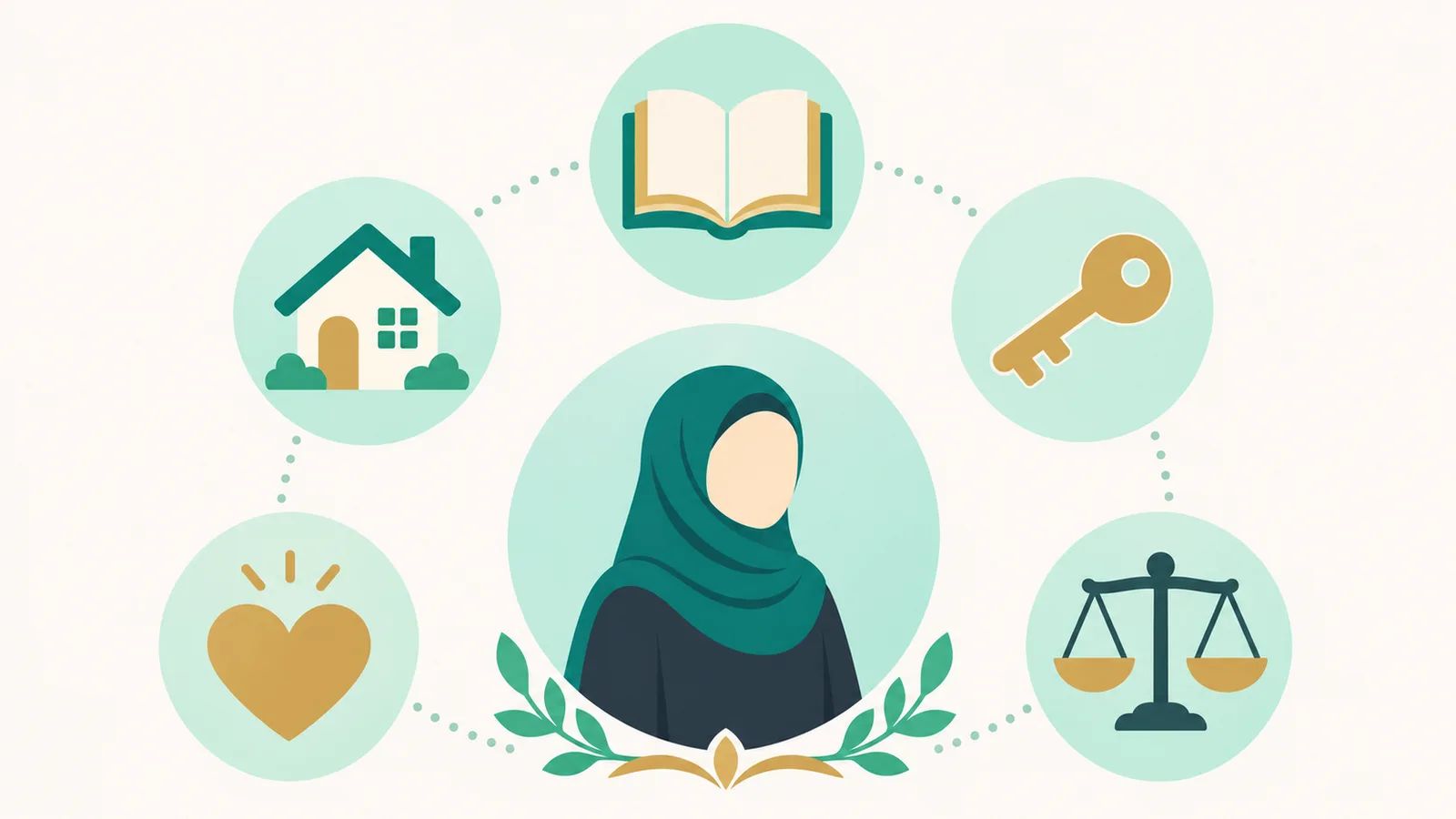
- The hijab is modest dress that covers the hair and body; it is worn as an act of worship.
- Its basis is in the Qur'an (24:31 and 33:59), and the four Sunni schools agree it is obligatory.
- The Qur'an commands modesty for men first — lowering the gaze and guarding chastity.
- Covering the head has long roots in Jewish and Christian tradition too.
- Worship must be sincere; forcing the hijab on a woman is wrong.