العربية
 Español
 Français
 中文
 हिन्दी
Who Are Muslims? Many Peoples, One Faith
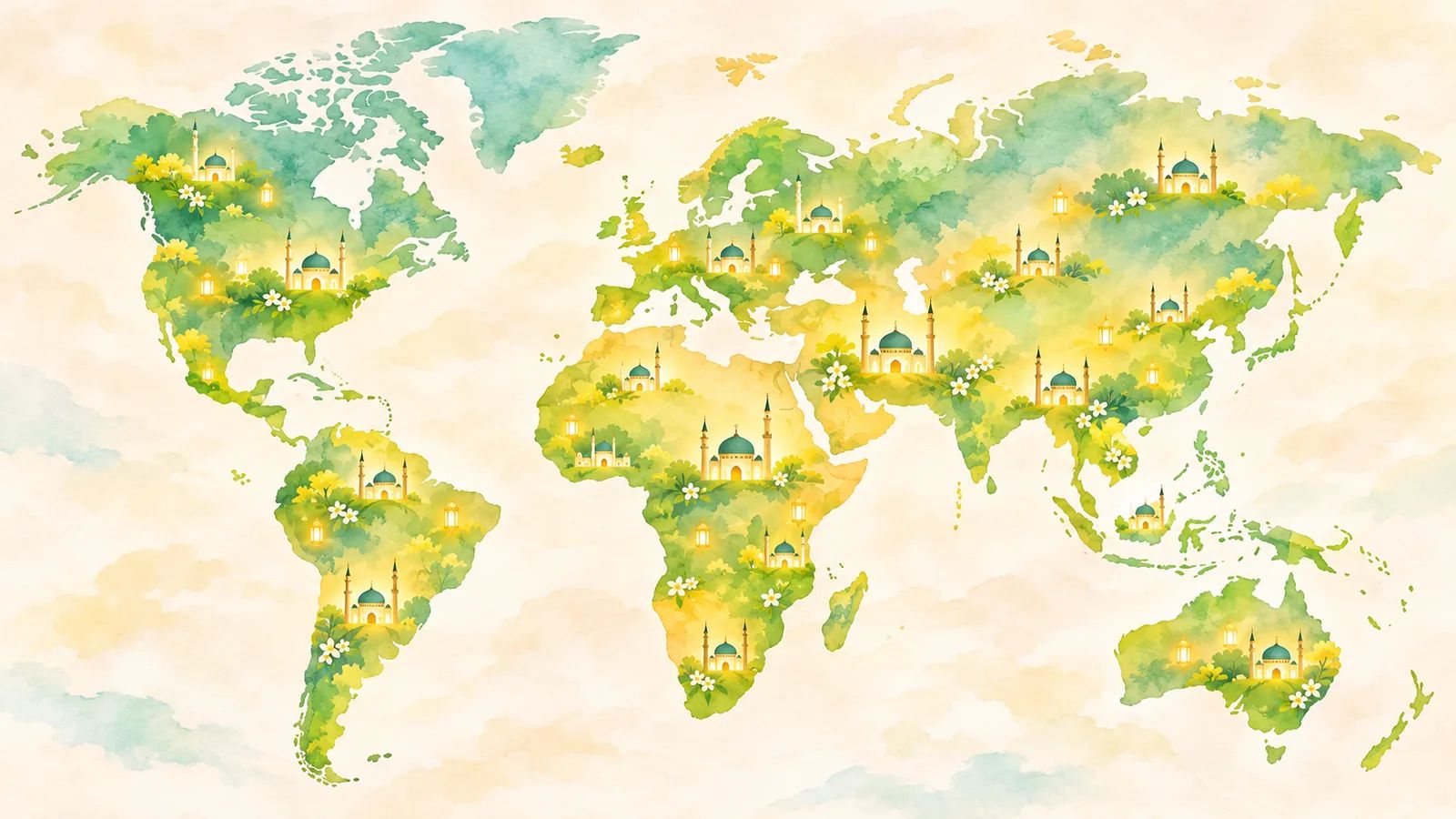
Picture a Muslim. Many people imagine an Arab man in the desert. The reality is far richer: a grandmother in Jakarta, a doctor in Lagos, a farmer in Bangladesh, a student in Istanbul, a convert in Chicago, a shopkeeper in Bosnia, a family in western China. All of them are Muslims.
What makes someone a Muslim?
The word Muslim means “one who submits” to God. A Muslim is anyone who believes that there is no god but God and that Muhammad ﷺ is His messenger, and who tries to live by that belief. There is no ethnic requirement, no special bloodline and no membership fee. A person becomes Muslim by sincerely declaring their faith — see How to Become Muslim and Muslim in our glossary.
A global family
Muslims make up nearly a quarter of the world’s population, and they live in almost every country on earth. A few broad facts surprise many people:
- Most Muslims are not Arab. Arabs are only a minority of the world’s Muslims.
- Asia is home to the largest share. The country with the most Muslims is Indonesia, and South Asia — Pakistan, India and Bangladesh — has hundreds of millions more.
- Africa has deep Muslim roots. Islam reached East Africa in the Prophet’s own lifetime, and Muslims have lived across North, West and East Africa for well over a thousand years.
- Muslims are part of the West. There are long-established Muslim communities in the Balkans and Eastern Europe, and growing communities across Western Europe, the Americas and Australia — including many people who chose Islam as adults.
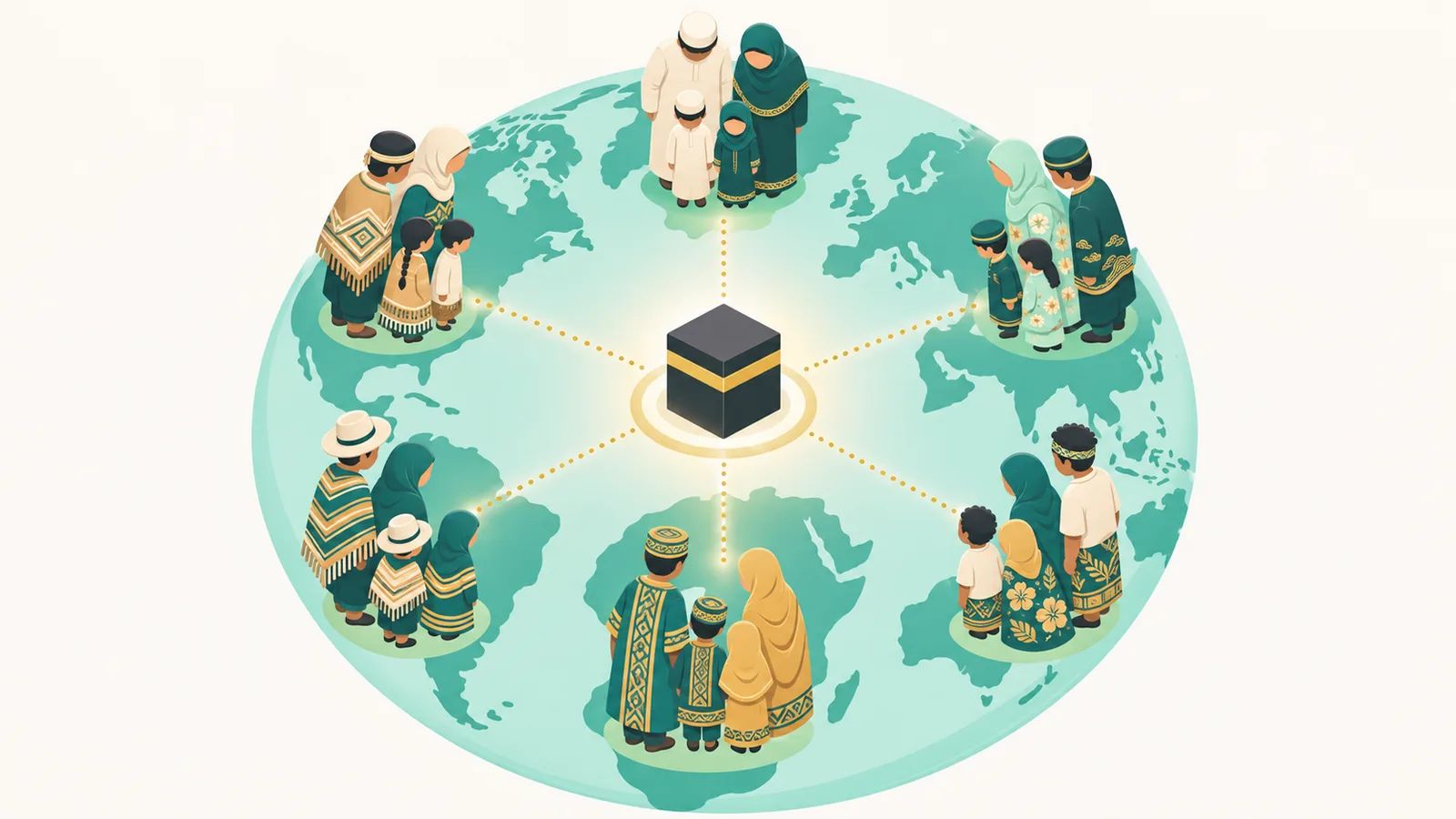
Some Muslims are born into the faith; others embraced it later in life. Some live in Muslim-majority countries; many live as minorities. Some follow different schools of law or theological traditions — see Where Muslims Differ — but they share the same core beliefs and pray towards the same Kaaba in Mecca.
Diversity as a sign of God
Islam does not ask people to give up their language, their clothing styles or their food (as long as it is lawful). A Muslim from Senegal and a Muslim from Malaysia may dress, cook and celebrate quite differently. The Qur’an presents this variety not as a problem but as one of God’s signs:
وَمِنْ ءَايَٰتِهِۦ خَلْقُ ٱلسَّمَٰوَٰتِ وَٱلْأَرْضِ وَٱخْتِلَٰفُ أَلْسِنَتِكُمْ وَأَلْوَٰنِكُمْ ۚ إِنَّ فِى ذَٰلِكَ لَءَايَٰتٍۢ لِّلْعَٰلِمِينَ ﴿٢٢﴾ And of His signs is the creation of the heavens and the earth and the diversity of your languages and your colors. Indeed in that are signs for those of knowledge.
Couldn't load — please try again.
At the same time, none of these differences make one person better than another. The Prophet ﷺ taught where real worth lies:
Abu Huraira reported Allah's Messenger (ﷺ) as saying:Verily Allah does not look to your faces and your wealth but He looks to your heart and to your deeds
Couldn't load — please try again.
You can read more about this in Racism and Equality in Islam.
One body
What turns so many very different people into one community? Muslims call it the ummah — the worldwide family of believers. Every day, Muslims across the planet turn towards the same direction to pray. Each year they fast the same month of Ramadan, and pilgrims from every nation stand side by side at Hajj, dressed alike, rich and poor together. The Prophet ﷺ described the ideal bond between them:
Narrated An-Nu`man bin Bashir: Allah's Messenger (ﷺ) said, "You see the believers as regards their being merciful among themselves and showing love among themselves and being kind, resembling one body, so that, if any part of the body is not well then the whole body shares the sleeplessness (insomnia) and fever with it
Couldn't load — please try again.
See Ummah for more.
Islam and Muslims are not the same thing
Muslims are human beings. Like followers of any faith, some live up to their ideals beautifully and some fall short — sometimes badly. Islam asks to be judged by its own sources, the Qur’an and the authentic Sunnah, not by the behaviour of any individual or government that claims to represent it. We explore this further in Islam vs. Muslims.
Meet your neighbours
Chances are there are Muslims living near you — at work, at school, in your neighbourhood. If you have questions, most will be glad to talk over a cup of tea. And if you want to understand what they believe, start with What Is Islam? or the short tour in Islam in 5 Minutes.
Key takeaways
- A Muslim is simply someone who submits to the one God and follows the Prophet Muhammad ﷺ.
- Muslims are nearly a quarter of humanity, living on every continent.
- Most Muslims are not Arab; the largest Muslim-majority country is Indonesia.
- Islam teaches that race, colour and language are signs of God, not grounds for superiority.
- Islam should be judged by its sources, not by the behaviour of individual Muslims.