العربية
 Español
 Français
 中文
 हिन्दी
What Every Muslim Believes
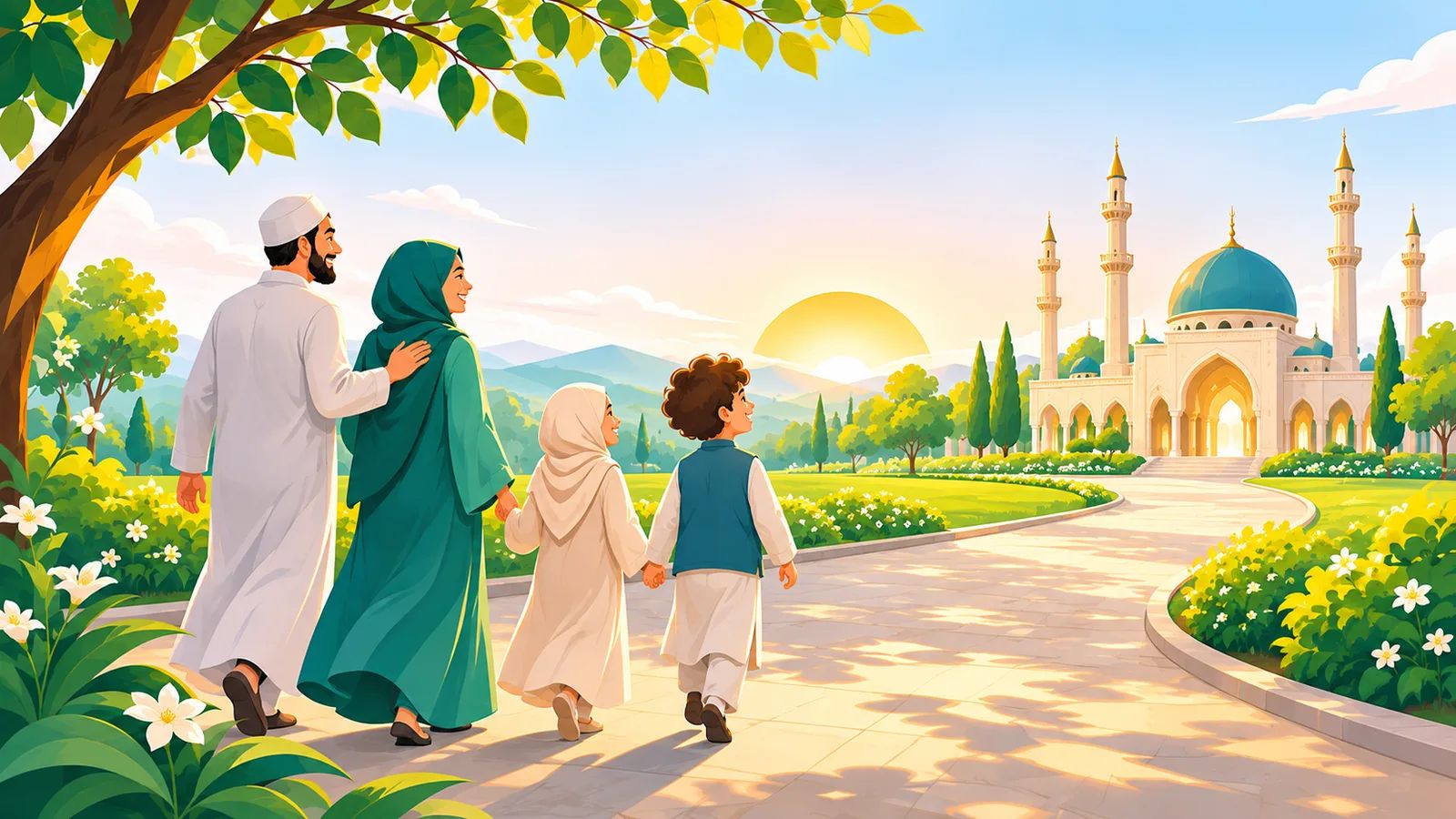
If you visit a mosque in Jakarta, Istanbul, Lagos or London, you will hear the call to prayer in the same Arabic words, see people praying in the same rows, and hear the same Qur’an recited. Behind that shared practice lies a shared set of beliefs. This page sets out that common core in plain words — the things that every Muslim, of every school and background, holds to be true.
This website is built around that core. We try to present what Muslims agree on, and when scholars genuinely differ on a detail, we say so openly.
One God, and nothing like Him
The heart of Islam is tawhid — the oneness of God. Muslims believe that there is one God, the Creator of everything, who has no partner, no son, no rival and no equal. He alone deserves to be worshipped. The Arabic word for God is Allah, the same word Arabic-speaking Christians use in their Bibles.
Muslims believe God is near, all-hearing and all-merciful, yet unlike anything in His creation. We explore this in God Is One: No Partner, No Son, No Equal.
The six articles of faith
When the angel Gabriel came to the Prophet ﷺ in human form and asked him what faith is, the Prophet ﷺ answered with a short list that Muslims have memorised ever since:
…That you affirm your faith in Allah, in His angels, in His Books, in His Apostles, in the Day of Judgment, and you affirm your faith in the Divine Decree about good and evil.…
Couldn't load — please try again.
The Qur’an describes the believers in very similar terms:
ءَامَنَ ٱلرَّسُولُ بِمَآ أُنزِلَ إِلَيْهِ مِن رَّبِّهِۦ وَٱلْمُؤْمِنُونَ ۚ كُلٌّ ءَامَنَ بِٱللَّهِ وَمَلَٰٓئِكَتِهِۦ وَكُتُبِهِۦ وَرُسُلِهِۦ لَا نُفَرِّقُ بَيْنَ أَحَدٍۢ مِّن رُّسُلِهِۦ ۚ وَقَالُوا۟ سَمِعْنَا وَأَطَعْنَا ۖ غُفْرَانَكَ رَبَّنَا وَإِلَيْكَ ٱلْمَصِيرُ ﴿٢٨٥﴾ The Messenger has believed in what was revealed to him from his Lord, and [so have] the believers. All of them have believed in Allah and His angels and His books and His messengers, [saying], "We make no distinction between any of His messengers." And they say, "We hear and we obey. [We seek] Your forgiveness, our Lord, and to You is the [final] destination."
Couldn't load — please try again.
In plain words, every Muslim believes in:
- God — one, unique and merciful.
- His angels — created beings who carry out His commands, including Gabriel, who brought revelation to the prophets.
- His books — the scriptures He revealed, including the Torah given to Moses, the Psalms given to David, the Gospel given to Jesus, and finally the Qur’an.
- His messengers — from Adam and Noah to Abraham, Moses and Jesus (peace be upon them), ending with Muhammad ﷺ.
- The Last Day — that every person will be raised and fairly judged.
- God’s decree — that nothing happens outside God’s knowledge and will, while people remain responsible for their choices.
Notice that the verse describes believers as making no distinction between God’s messengers. A Muslim is required to believe in all of the prophets, not only Muhammad ﷺ. You can read more in All Prophets Brought the Same Message and The Six Articles of Faith.
Muhammad ﷺ and the Qur’an
Muslims believe that Muhammad ﷺ, born in Mecca in the sixth century, was the last prophet God will send — a human being, not divine, chosen to deliver God’s final message to all of humanity. See Muhammad ﷺ Is the Final Messenger.
That message is the Qur’an, which Muslims believe is the word of God itself, revealed in Arabic and preserved without change from the Prophet’s time until today. See The Qur’an Is God’s Word, Preserved Unchanged.
The five pillars of practice
Belief is meant to shape a life. The Prophet ﷺ summed up the basic practice of Islam in five pillars:
Narrated Ibn 'Umar: Allah's Messenger (ﷺ) said: Islam is based on (the following) five (principles): 1. To testify that none has the right to be worshipped but Allah and Muhammad is Allah's Messenger (ﷺ). 2. To offer the (compulsory congregational) prayers dutifully and perfectly. 3. To pay Zakat (i.e. obligatory charity) . 4. To perform Hajj. (i.e. Pilgrimage to Mecca) 5. To observe fast during the month of Ramadan
Couldn't load — please try again.
These five — the declaration of faith (shahada), the five daily prayers (salah), the yearly charity for those in need (zakat), fasting in the month of Ramadan (sawm), and the pilgrimage to Mecca once in a lifetime for those able (hajj) — are shared by Muslims everywhere. Muslims also agree on the great moral commands: justice, honesty, kindness to parents and neighbours, keeping promises, and the clear prohibitions on things like murder, theft, adultery, alcohol and lying. You can read more in The Five Pillars.
What this core does not include
The core above is deliberately short. It does not settle every question of law, every detail of how to pray, or every point of history. On many of those details, faithful scholars have reached different conclusions for over a thousand years, and Muslims generally see this as a natural part of a living tradition rather than a threat to it.
What matters is that the foundations are not in dispute: one God, His prophets, His books, His angels, the Last Day and His decree, and the five pillars. Whatever their school, Muslims recognise each other as Muslims on this basis. We explain how these differences work in Where Muslims Differ, and Why It’s Okay.
A starting point, not the whole story
This page is a map rather than the whole territory. Each part of it opens onto a larger subject, and the links above will take you deeper into each one. If you are simply curious, we hope it helps you understand your Muslim neighbours, colleagues and friends a little better. And if you find yourself drawn to these beliefs, How to Become Muslim explains, gently and simply, what that step involves.

Key takeaways
- Muslims around the world share one creed, whatever their language, culture or school of thought.
- The core is short — one God, His prophets, His books, His angels, the Last Day and His decree.
- The same five pillars of practice are shared by Muslims everywhere.
- Differences between Muslims are real but mostly concern details, not the foundations.