العربية
 Español
 Français
 中文
 हिन्दी
What Happens After Death in Islam?
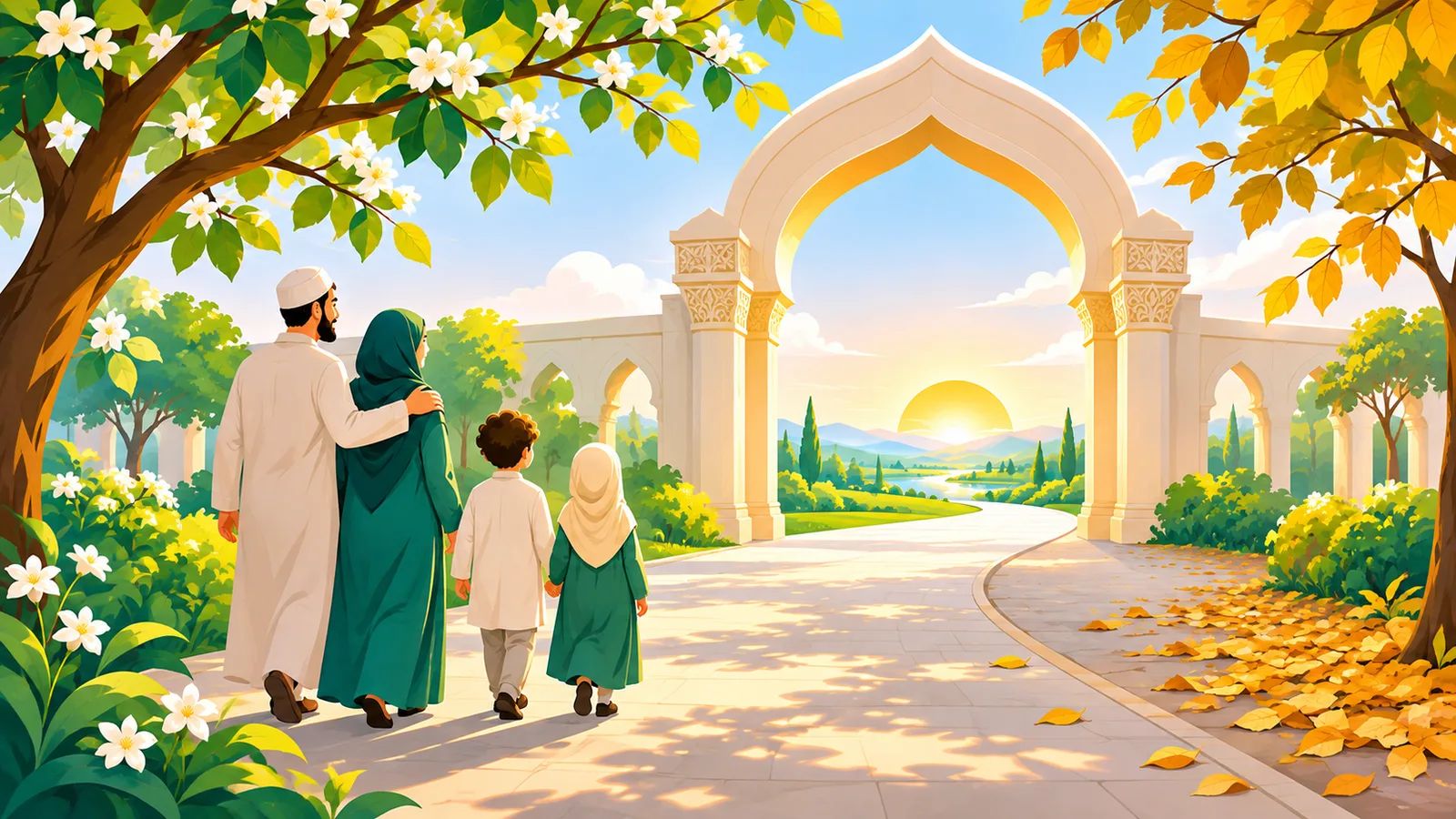
Every human being will die — it is the one thing no one can avoid. Whether we think about it often or try not to, the question remains: what comes next? Islam answers with a clear picture, one that is serious and also full of hope.
Death comes to everyone
The Qur’an reminds us that death comes to everyone, and that the real reward of our lives is not given in this world but after it:
كُلُّ نَفْسٍۢ ذَآئِقَةُ ٱلْمَوْتِ ۗ وَإِنَّمَا تُوَفَّوْنَ أُجُورَكُمْ يَوْمَ ٱلْقِيَٰمَةِ ۖ فَمَن زُحْزِحَ عَنِ ٱلنَّارِ وَأُدْخِلَ ٱلْجَنَّةَ فَقَدْ فَازَ ۗ وَمَا ٱلْحَيَوٰةُ ٱلدُّنْيَآ إِلَّا مَتَٰعُ ٱلْغُرُورِ ﴿١٨٥﴾ Every soul will taste death, and you will only be given your [full] compensation on the Day of Resurrection. So he who is drawn away from the Fire and admitted to Paradise has attained [his desire]. And what is the life of this world except the enjoyment of delusion.
Couldn't load — please try again.
For Muslims, death is not an ending but a return to the God who created us. When a Muslim hears of a death, they repeat words taught in the Qur’an, inna lillahi wa inna ilayhi raji’un, which affirm that we belong to God and that to Him we will return (Qur’an 2:156).
The grave and the in-between world
After death, the soul enters a stage the Qur’an calls the barzakh — a barrier or in-between world that lasts until the Day of Resurrection:
حَتَّىٰٓ إِذَا جَآءَ أَحَدَهُمُ ٱلْمَوْتُ قَالَ رَبِّ ٱرْجِعُونِ ﴿٩٩﴾ لَعَلِّىٓ أَعْمَلُ صَٰلِحًۭا فِيمَا تَرَكْتُ ۚ كَلَّآ ۚ إِنَّهَا كَلِمَةٌ هُوَ قَآئِلُهَا ۖ وَمِن وَرَآئِهِم بَرْزَخٌ إِلَىٰ يَوْمِ يُبْعَثُونَ ﴿١٠٠﴾ 99[For such is the state of the disbelievers], until, when death comes to one of them, he says, "My Lord, send me back 100That I might do righteousness in that which I left behind." No! It is only a word he is saying; and behind them is a barrier until the Day they are resurrected.
Couldn't load — please try again.
The Prophet ﷺ taught that soon after burial two angels come to the person and question them about their faith, including what they used to say about the Prophet ﷺ (Sahih al-Bukhari 1374). For those who lived with faith and goodness, the grave becomes a place of peace and comfort, a foretaste of Paradise. For those who rejected God and did wrong, it is a place of distress. Much about this stage is beyond what we can understand now, and Muslims accept what has been revealed about it without trying to picture every detail.
The Day of Resurrection
One day, known only to God, this world will come to an end. Then every human being who ever lived will be brought back to life — body and soul — and gathered before God.
People have always asked how this could be possible. The Qur’an answers the question directly:
وَضَرَبَ لَنَا مَثَلًۭا وَنَسِىَ خَلْقَهُۥ ۖ قَالَ مَن يُحْىِ ٱلْعِظَٰمَ وَهِىَ رَمِيمٌۭ ﴿٧٨﴾ قُلْ يُحْيِيهَا ٱلَّذِىٓ أَنشَأَهَآ أَوَّلَ مَرَّةٍۢ ۖ وَهُوَ بِكُلِّ خَلْقٍ عَلِيمٌ ﴿٧٩﴾ 78And he presents for Us an example and forgets his [own] creation. He says, "Who will give life to bones while they are disintegrated?" 79Say, "He will give them life who produced them the first time; and He is, of all creation, Knowing."
Couldn't load — please try again.
The argument is simple: the One who created us from nothing the first time can easily create us again.
The Day of Judgement
On that Day, every person will be shown the record of their life. Nothing will be hidden and nothing will be lost — not the great deeds and not the tiny ones:
فَمَن يَعْمَلْ مِثْقَالَ ذَرَّةٍ خَيْرًۭا يَرَهُۥ ﴿٧﴾ وَمَن يَعْمَلْ مِثْقَالَ ذَرَّةٍۢ شَرًّۭا يَرَهُۥ ﴿٨﴾ 7So whoever does an atom's weight of good will see it, 8And whoever does an atom's weight of evil will see it.
Couldn't load — please try again.
The Qur’an describes the scales of justice being set up so that no soul is wronged in the slightest (Qur’an 21:47). No one will carry another person’s sins (Qur’an 17:15), and God is fair to those whom His message never reached: the same verse says God does not punish a people until He has sent them a messenger.
Justice and mercy together
Islam holds two truths together. God is perfectly just: the oppressor will not escape, and the wronged will receive their rights in full. And God is overwhelmingly merciful: He multiplies good deeds many times over and forgives those who turn to Him. The Prophet ﷺ taught that God records a good deed that a person merely intended, even if they never managed to do it, while a bad deed is written as one only (Sahih al-Bukhari 6491).
The Prophet ﷺ also taught that, in the end, it is God’s mercy — not our own deeds alone — that brings anyone into Paradise:
Narrated `Aisha: The Prophet (ﷺ) said, "Do good deeds properly, sincerely and moderately, and receive good news because one's good deeds will not make him enter Paradise." They asked, "Even you, O Allah's Messenger (ﷺ)?" He said, "Even I, unless and until Allah bestows His pardon and Mercy on me
Couldn't load — please try again.
This keeps a Muslim balanced between hope and humility: working hard to do good, but never relying on their own goodness, and never giving up on God’s forgiveness.
Paradise and Hell
The Qur’an describes Paradise (Jannah) as a home of peace, joy and closeness to God, beyond anything we can imagine, with no more pain, fear or sorrow. It describes Hell (Jahannam) as a real place of punishment for those who rejected God and did evil. These descriptions are meant to move hearts: to give hope to the believer, and to warn anyone who is careless about wrongdoing.
Muslims do not decide who will go where. Only God knows what is in each person’s heart and what message reached them, and only He judges. What Muslims are asked to do is to look after their own souls, and to share the good news of God’s mercy with others.
Living with the end in mind
Belief in life after death gives meaning to this life. It means that injustice will not have the last word, that no tear shed in patience is wasted, and that every kindness counts. You can read more in What Is the Purpose of Life in Islam? — and in Why Is Islam Called a Religion of Mercy?, because, Muslims believe, the God we return to is the Most Merciful.
Key takeaways
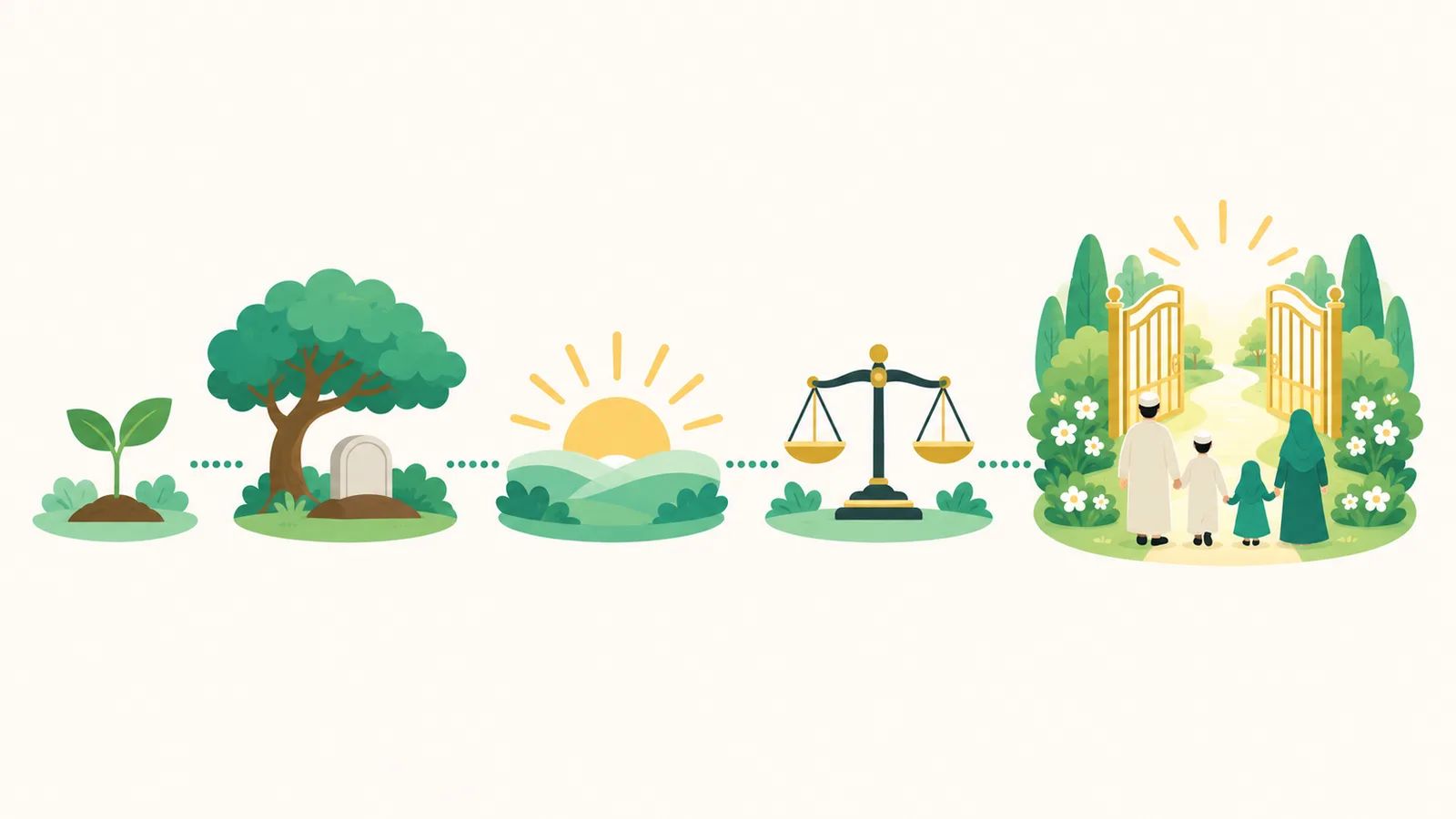
- Death is a passage to another stage of life, not the end.
- After death comes the barzakh — an in-between stage that lasts until the Day of Resurrection.
- On the Day of Judgement, every deed, however small, will be weighed with perfect justice.
- God's mercy is greater than His anger — people enter Paradise by His mercy, not by their deeds alone.