العربية
 Español
 Français
 中文
 हिन्दी
Who Wrote the Qur'an?

It is one of the most important questions anyone can ask about Islam. If Muhammad ﷺ wrote the Qur’an himself, then Islam is a human philosophy. If he did not, then the book deserves to be read as a message from God. Muslims welcome the question.
What Muslims believe
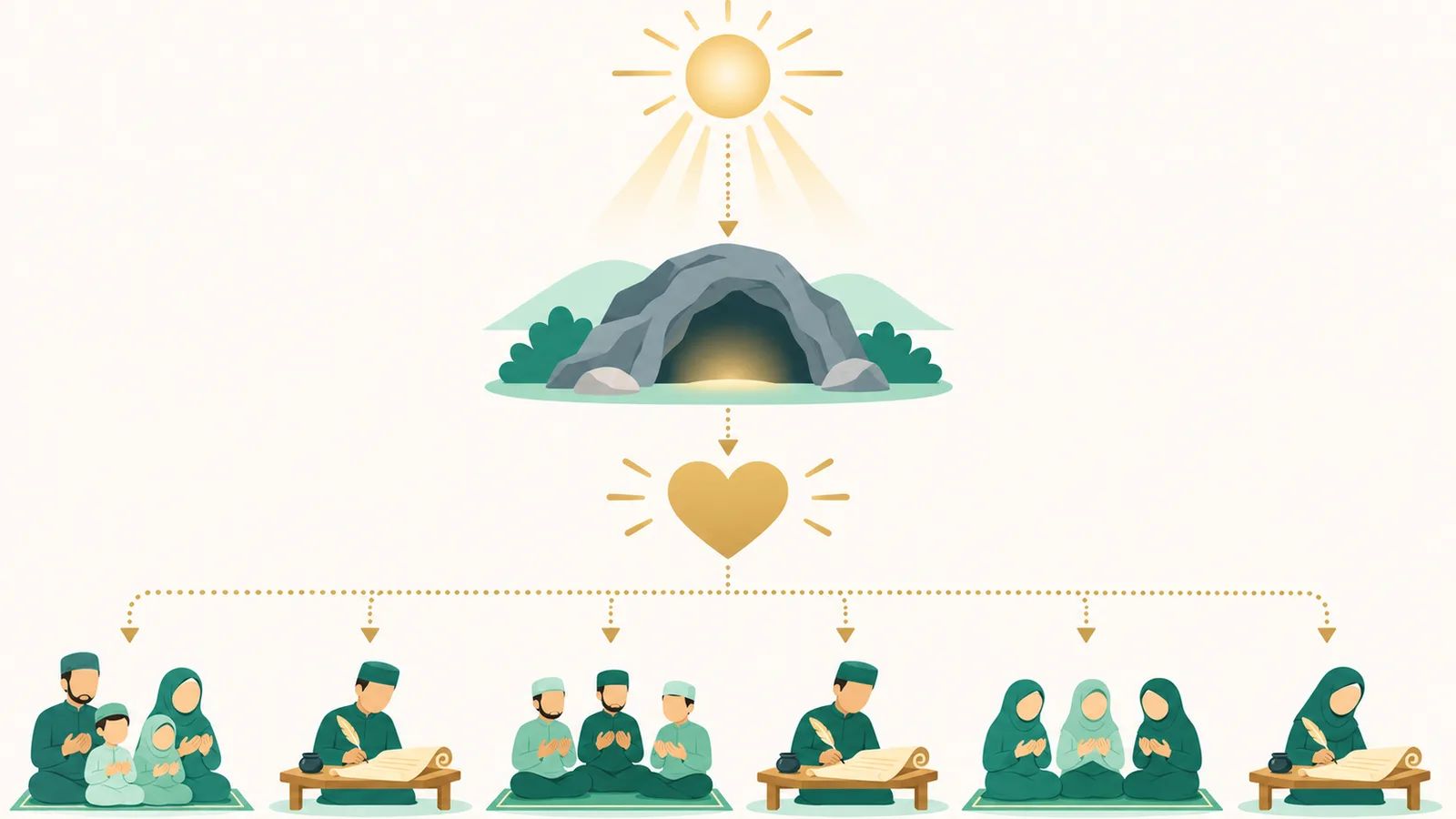
Muslims believe the Qur’an is the word of God, and that Muhammad ﷺ was its messenger, not its author. It was revealed in Arabic, piece by piece, over roughly 23 years, through the angel Gabriel (peace be upon him). The Qur’an describes it this way:
وَإِنَّهُۥ لَتَنزِيلُ رَبِّ ٱلْعَٰلَمِينَ ﴿١٩٢﴾ نَزَلَ بِهِ ٱلرُّوحُ ٱلْأَمِينُ ﴿١٩٣﴾ عَلَىٰ قَلْبِكَ لِتَكُونَ مِنَ ٱلْمُنذِرِينَ ﴿١٩٤﴾ بِلِسَانٍ عَرَبِىٍّۢ مُّبِينٍۢ ﴿١٩٥﴾ 192And indeed, the Qur'an is the revelation of the Lord of the worlds. 193The Trustworthy Spirit has brought it down 194Upon your heart, [O Muhammad] - that you may be of the warners - 195In a clear Arabic language.
Couldn't load — please try again.
The Prophet ﷺ would recite each passage as it came; his companions memorised it, and trusted scribes wrote it down. How it was then collected and preserved is explained in The Qur’an Is God’s Word, Preserved Unchanged.
A man who could not read
Muhammad ﷺ grew up in Mecca without formal schooling and could neither read nor write. The story of the first revelation, narrated by his wife Aisha, begins in a cave on a mountain outside the city:
…the Truth descended upon him while he was in the cave of Hira. The angel came to him and asked him to read.…
Couldn't load — please try again.
His reply was that he did not know how to read. The Qur’an points to this as part of the evidence:
وَمَا كُنتَ تَتْلُوا۟ مِن قَبْلِهِۦ مِن كِتَٰبٍۢ وَلَا تَخُطُّهُۥ بِيَمِينِكَ ۖ إِذًۭا لَّٱرْتَابَ ٱلْمُبْطِلُونَ ﴿٤٨﴾ And you did not recite before it any scripture, nor did you inscribe one with your right hand. Otherwise the falsifiers would have had [cause for] doubt.
Couldn't load — please try again.
A man who had never studied any scripture, recited a book that speaks about earlier prophets, law, ethics, nature and the human soul in Arabic that the masters of the language could not match. See The Inimitability of the Qur’an.
Forty years of honesty
Before the revelation began, Muhammad ﷺ had lived among his people for forty years. They called him al-Amin, “the trustworthy”, and left their valuables in his keeping. He had never been known as a poet, a preacher or a storyteller. The Qur’an asks his listeners to remember that:
قُل لَّوْ شَآءَ ٱللَّهُ مَا تَلَوْتُهُۥ عَلَيْكُمْ وَلَآ أَدْرَىٰكُم بِهِۦ ۖ فَقَدْ لَبِثْتُ فِيكُمْ عُمُرًۭا مِّن قَبْلِهِۦٓ ۚ أَفَلَا تَعْقِلُونَ ﴿١٦﴾ Say, "If Allah had willed, I would not have recited it to you, nor would He have made it known to you, for I had remained among you a lifetime before it. Then will you not reason?"
Couldn't load — please try again.
Even his fiercest opponents, who accused him of many things, did not point to a lifetime of lies. Muslims ask: why would a man known for honesty for four decades suddenly begin to lie about God — and keep it up for 23 years, through hunger, exile and war, gaining no wealth from it?
“Someone taught him”
From the beginning, some people suggested that he learned the Qur’an from others — from a Christian or Jewish acquaintance, for example. Some modern writers make similar arguments. The Qur’an itself records and answers this claim:
وَلَقَدْ نَعْلَمُ أَنَّهُمْ يَقُولُونَ إِنَّمَا يُعَلِّمُهُۥ بَشَرٌۭ ۗ لِّسَانُ ٱلَّذِى يُلْحِدُونَ إِلَيْهِ أَعْجَمِىٌّۭ وَهَٰذَا لِسَانٌ عَرَبِىٌّۭ مُّبِينٌ ﴿١٠٣﴾ And We certainly know that they say, "It is only a human being who teaches the Prophet." The tongue of the one they refer to is foreign, and this Qur'an is [in] a clear Arabic language.
Couldn't load — please try again.
The point is simple: the people his opponents named spoke little Arabic, yet the Qur’an is in Arabic of the highest quality. And the Prophet’s ﷺ life was lived in public. He was surrounded by followers and enemies alike, day and night, for 23 years; a secret teacher feeding him a book of this size and depth would have been very hard to hide.
Muslims also note that the Qur’an does not simply repeat earlier scriptures. It retells familiar stories in its own way, corrects some beliefs, and adds details found nowhere else — while keeping deep respect for Moses, Jesus and the earlier prophets.
What the Qur’an says about itself
The Qur’an even includes passages that would be strange for a man writing to promote himself. It sometimes corrects the Prophet ﷺ, and it warns that if he had invented anything in God’s name, God Himself would have seized him (Qur’an 69:44-47). And it challenges readers to look for contradictions: if it were from anyone other than God, they would have found many (Qur’an 4:82).
Reading it for yourself
In the end, the best way to answer this question is to read the Qur’an with an open mind and ask yourself whose voice you are hearing. Start with What Is the Qur’an?, and if you want to know more about the man who brought it, read Who Was Prophet Muhammad ﷺ?
Key takeaways
- Muslims believe the Qur'an is God's word, revealed to Muhammad ﷺ through the angel Gabriel.
- Muhammad ﷺ could not read or write; scribes recorded the revelation as he recited it.
- He was known as truthful for forty years before the revelation began.
- The Qur'an answers the claim that he learned it from others, and invites honest reflection.