العربية
 Español
 Français
 中文
 हिन्दी
What Does Islam Teach About Poverty and Charity?
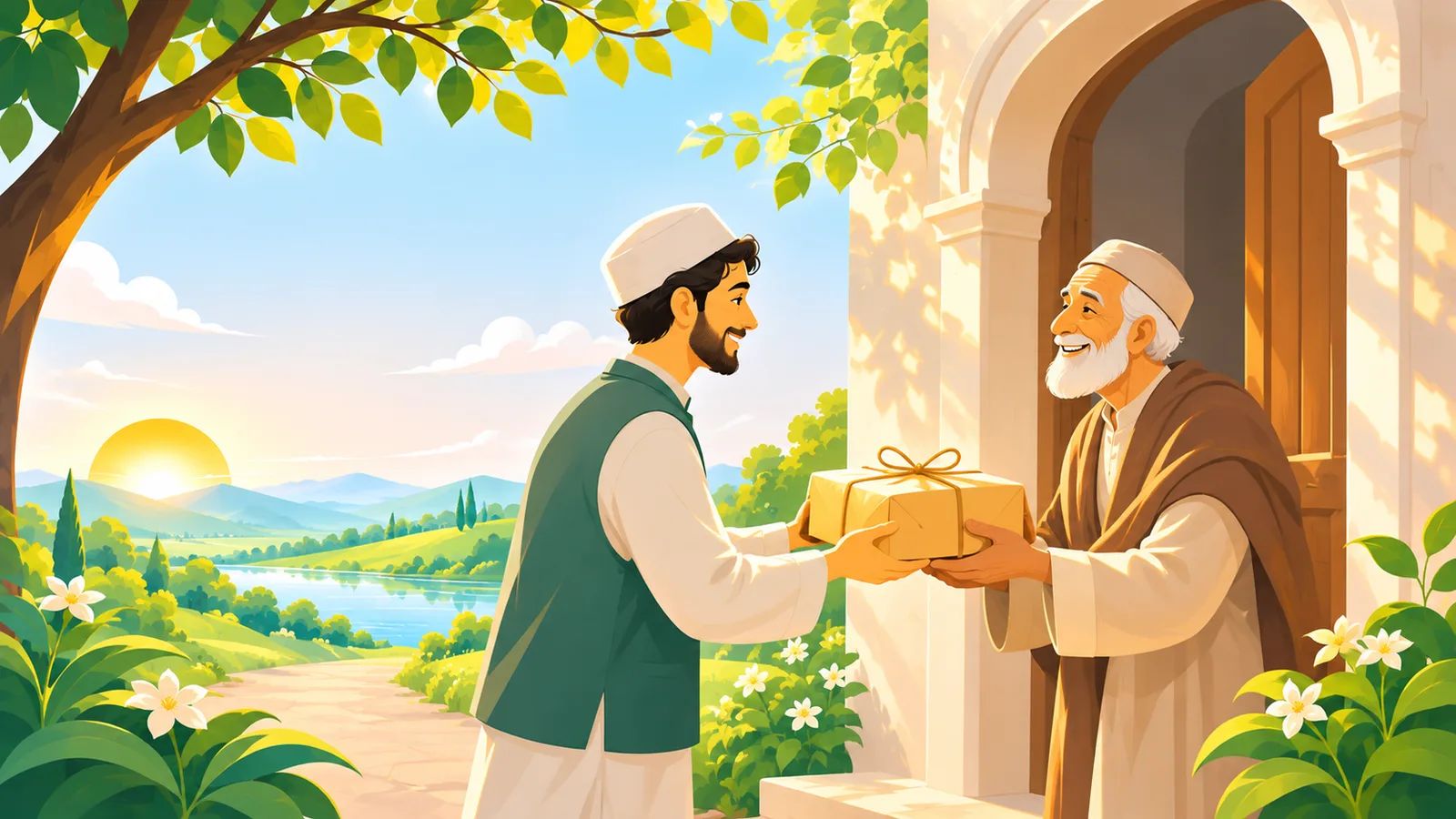
Every society has its poor. What differs is how it sees them: as a burden, as a failure, or as people with a rightful claim on everyone else. Islam firmly takes the third view — and builds charity into the heart of daily faith.
Wealth is a trust, poverty a test
In Islam, wealth ultimately belongs to God; human beings hold it in trust for a while (see wealth and money in Islam). Both wealth and poverty are tests. The rich are tested by whether they are grateful and generous, the poor by whether they stay patient and dignified. Neither is a sign of God’s love or anger in itself.
This changes how charity feels. Giving is not a favour from the strong to the weak; it is returning part of God’s provision to the people He intended it for.
Zakat: the right of the poor
Zakat is one of the five pillars of Islam. Muslims whose savings exceed a minimum threshold give a fixed portion — commonly 2.5% of qualifying wealth held for a year — to specific categories of people listed in the Qur’an, beginning with the poor and the needy (9:60). It is not optional kindness but an obligation: the Qur’an describes the believers as people in whose wealth there is a known right for those who ask and those who are deprived (70:24–25). Read more in zakat.
Sadaqah: charity without limits
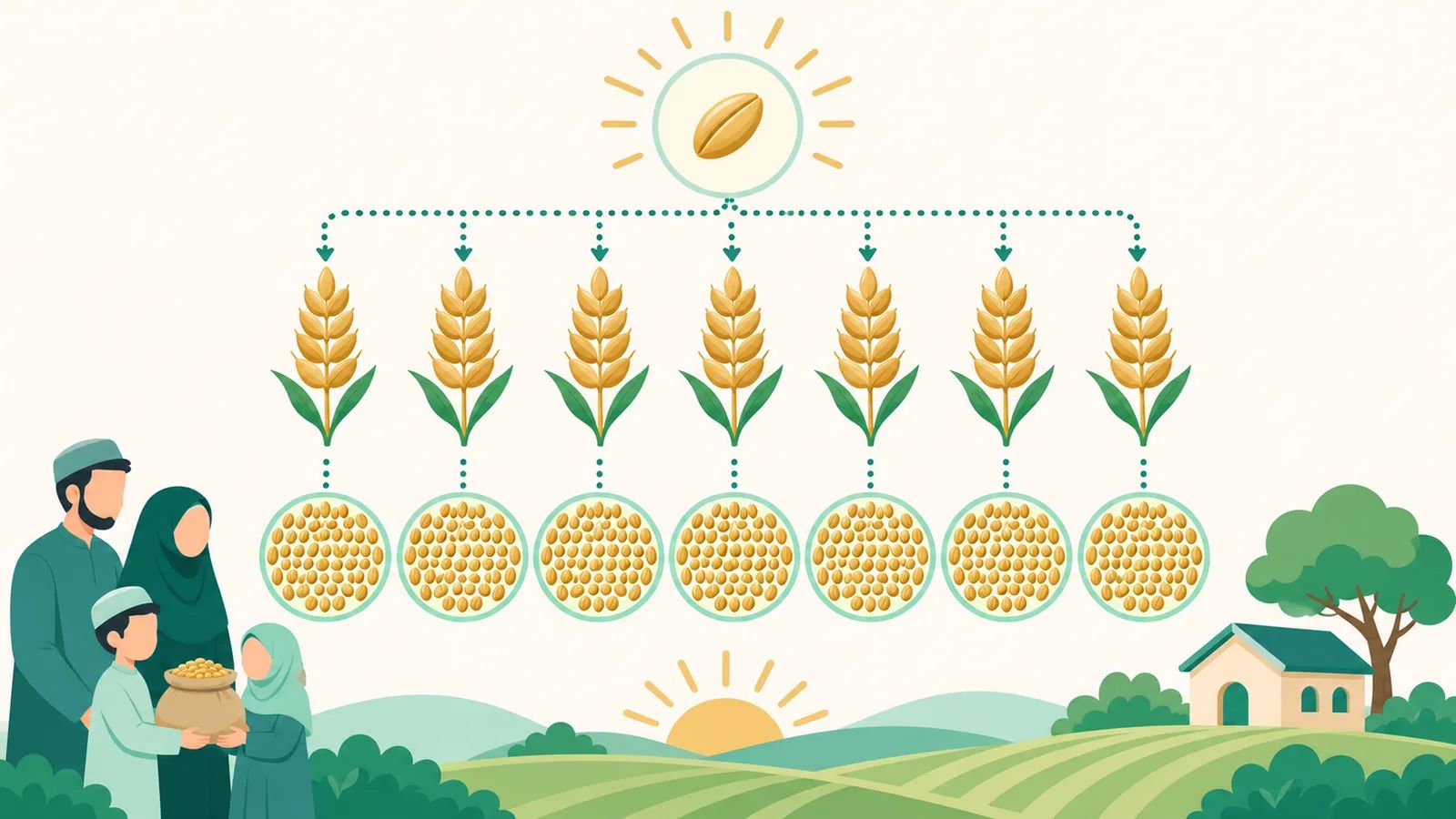
Beyond zakat lies sadaqah, voluntary charity, which can be given at any time and in any amount. The Qur’an paints a striking picture of how God multiplies it:
مَّثَلُ ٱلَّذِينَ يُنفِقُونَ أَمْوَٰلَهُمْ فِى سَبِيلِ ٱللَّهِ كَمَثَلِ حَبَّةٍ أَنۢبَتَتْ سَبْعَ سَنَابِلَ فِى كُلِّ سُنۢبُلَةٍۢ مِّا۟ئَةُ حَبَّةٍۢ ۗ وَٱللَّهُ يُضَٰعِفُ لِمَن يَشَآءُ ۗ وَٱللَّهُ وَٰسِعٌ عَلِيمٌ ﴿٢٦١﴾ ٱلَّذِينَ يُنفِقُونَ أَمْوَٰلَهُمْ فِى سَبِيلِ ٱللَّهِ ثُمَّ لَا يُتْبِعُونَ مَآ أَنفَقُوا۟ مَنًّۭا وَلَآ أَذًۭى ۙ لَّهُمْ أَجْرُهُمْ عِندَ رَبِّهِمْ وَلَا خَوْفٌ عَلَيْهِمْ وَلَا هُمْ يَحْزَنُونَ ﴿٢٦٢﴾ 261The example of those who spend their wealth in the way of Allah is like a seed [of grain] which grows seven spikes; in each spike is a hundred grains. And Allah multiplies [His reward] for whom He wills. And Allah is all-Encompassing and Knowing. 262Those who spend their wealth in the way of Allah and then do not follow up what they have spent with reminders [of it] or [other] injury will have their reward with their Lord, and there will be no fear concerning them, nor will they grieve.
Couldn't load — please try again.
No gift is too small. The Prophet Muhammad ﷺ said:
Narrated `Adi bin Hatim heard the Prophet (ﷺ) saying: "Save yourself from Hell-fire even by giving half a date-fruit in charity
Couldn't load — please try again.
And charity is not only money. The Prophet ﷺ taught that every act of kindness is charity (Sahih al-Bukhari 6021) — a smile, a helping hand, removing something harmful from a path, or sharing knowledge. Even someone with nothing to give can give.
Giving with dignity
Islam is deeply concerned with the feelings of those who receive. The Qur’an warns that kind words and forgiveness are better than charity followed by hurt (2:263), and that reminding people of one’s generosity cancels its reward (2:264). Giving in secret is praised (2:271).
The Qur’an also asks believers to notice people who are too proud to beg:
لِلْفُقَرَآءِ ٱلَّذِينَ أُحْصِرُوا۟ فِى سَبِيلِ ٱللَّهِ لَا يَسْتَطِيعُونَ ضَرْبًۭا فِى ٱلْأَرْضِ يَحْسَبُهُمُ ٱلْجَاهِلُ أَغْنِيَآءَ مِنَ ٱلتَّعَفُّفِ تَعْرِفُهُم بِسِيمَٰهُمْ لَا يَسْـَٔلُونَ ٱلنَّاسَ إِلْحَافًۭا ۗ وَمَا تُنفِقُوا۟ مِنْ خَيْرٍۢ فَإِنَّ ٱللَّهَ بِهِۦ عَلِيمٌ ﴿٢٧٣﴾ [Charity is] for the poor who have been restricted for the cause of Allah, unable to move about in the land. An ignorant [person] would think them self-sufficient because of their restraint, but you will know them by their [characteristic] sign. They do not ask people persistently [or at all]. And whatever you spend of good - indeed, Allah is Knowing of it.
Couldn't load — please try again.
This verse invites a kind of attentiveness. The poor are not always the ones who ask. Sometimes they are neighbours, students or elderly people quietly struggling — and a caring community should notice them before they have to ask.
Charity close to home
Islam encourages giving to those nearest first. Spending on one’s own family is itself rewarded as charity, and relatives in need, neighbours and orphans come high on the list. But generosity is not limited by religion: Muslims are free to give voluntary charity to people of any faith or none, and many Muslim charities today serve everyone in need, from food banks to disaster relief. In Ramadan especially, many Muslims give more, and a special charity is paid before the Eid prayer so that no one goes hungry on the day of celebration.
Working against poverty, not just relieving it
Islam does not glorify begging. The Prophet ﷺ encouraged people to work and support themselves wherever they could, saying that the giving hand is better than the receiving hand (Sahih al-Bukhari 1429). Islamic teaching on fair wages, honest trade and the prohibition of exploitative interest all aim to stop poverty before it starts — see work in Islam and why Islam forbids interest.
At the same time, those who serve the most vulnerable are honoured in the highest terms:
Narrated Abu Huraira: The Prophet (ﷺ) said, "The one who looks after a widow or a poor person is like a Mujahid (warrior) who fights for Allah's Cause, or like him who performs prayers all the night and fasts all the day
Couldn't load — please try again.
A closing thought
In Islam, a society is measured by how it treats those with the least. Zakat, sadaqah and everyday kindness turn that ideal into habit. If you would like to see how Islam frames justice more broadly, read justice in Islam.
Key takeaways
- Zakat is an obligation; sadaqah (voluntary charity) is open to everyone, every day.
- Even the smallest gift counts — and every good deed is a form of charity.
- Charity must protect the dignity of the receiver.
- Caring for widows and the poor is compared to the greatest acts of worship.
- Poverty and wealth are both tests from God.