العربية
 Español
 Français
 中文
 हिन्दी
What Does Islam Say About Work?

Some people see their job as a necessary evil — the thing they do between weekends. Islam offers a different way of looking at the working day: as a place where faith, honesty and service to others are lived out hour by hour.
Work as worship
In Islam, worship is not limited to prayer and fasting. Any lawful action done with a sincere intention to please God becomes worship — including earning a living to support oneself and one’s family. The Qur’an even links work directly to prayer. After the Friday congregational prayer, it tells believers:
فَإِذَا قُضِيَتِ ٱلصَّلَوٰةُ فَٱنتَشِرُوا۟ فِى ٱلْأَرْضِ وَٱبْتَغُوا۟ مِن فَضْلِ ٱللَّهِ وَٱذْكُرُوا۟ ٱللَّهَ كَثِيرًۭا لَّعَلَّكُمْ تُفْلِحُونَ ﴿١٠﴾ And when the prayer has been concluded, disperse within the land and seek from the bounty of Allah, and remember Allah often that you may succeed.
Couldn't load — please try again.
Prayer, then work, then remembering God throughout: the verse paints a balanced life in which the mosque and the marketplace are not enemies. The Qur’an also reminds people that their work is seen, by God and by others (9:105), which gives every task, however ordinary, a deeper meaning.
The dignity of working with your hands
Islam gives special honour to manual labour. The Prophet Muhammad ﷺ said:
Narrated Al-Miqdam: The Prophet (ﷺ) said, "Nobody has ever eaten a better meal than that which one has earned by working with one's own hands. The Prophet of Allah, David (ﷺ) used to eat from the earnings of his manual labor
Couldn't load — please try again.
David (peace be upon him) was a king and a prophet, yet he ate from what he made himself. The Prophet ﷺ also said that every prophet God sent had herded sheep — and when his companions asked about him, he replied:
…Yes, I used to shepherd the sheep of the people of Mecca for some Qirats…
Couldn't load — please try again.
Later, Muhammad ﷺ worked as a merchant, and he became known in Mecca as trustworthy and honest long before his prophethood. In Islam, no honest job is beneath anyone’s dignity — the cleaner, the farmer, the builder and the surgeon are all doing honourable work.
Better than asking others
Islam encourages people to stand on their own feet whenever they can. The Prophet ﷺ used a vivid image:
Narrated Az-Zubair bin Al-`Awwam: The Prophet (ﷺ) said, "It is better for anyone of you to take a rope (and cut) and bring a bundle of wood (from the forest) over his back and sell it and Allah will save his face (from the Hell-Fire) because of that, rather than to ask the people who may give him or not
Couldn't load — please try again.
This does not mean Islam looks down on people who cannot work — the sick, the elderly and others in genuine need have a right to support through zakat and charity (see poverty and charity in Islam). It means that those who are able should not choose dependence when they could earn.
The rights of workers
If work is honoured, so are workers. Islam is uncompromising about wages. The Prophet ﷺ reported that God said He Himself will be the opponent of three people on the Day of Resurrection, including:
…one who employs a laborer and gets the full work done by him but does not pay him his wages…
Couldn't load — please try again.
Muslim scholars drew from this and similar teachings a broader ethic: workers should be paid fairly and on time, not overburdened beyond their capacity, and treated with respect. Employers, in turn, are owed honest effort, punctuality and care for what is entrusted to employees. Cheating customers, hiding defects in goods or using false weights and measures are condemned throughout the Qur’an. Work in Islam is a contract with people and a trust before God.
Excellence matters too. Because work is done before God, a Muslim is encouraged to do it carefully and well, even when no manager is watching — the same spirit of ihsan, doing things beautifully, that Islam asks for in worship.
Halal earnings
Not every way of making money is acceptable. Income from fraud, theft, gambling, interest-based exploitation, or selling forbidden things like alcohol is not lawful, however profitable it may be (see interest in Islam). Muslims believe that lawful earnings bring blessing (barakah), and that the food and clothing of a family should come from clean sources.
Balance
Islam also warns against letting work consume life. The same verse that sends believers back to the marketplace tells them to remember God often. Family, health, rest and worship all have rights over a person. A Muslim who works hard but neglects their prayers or their children has lost the balance Islam asks for.
A closing thought
Whether you lay bricks, write code or care for patients, Islam sees your work as a chance to serve God by serving people well. To see how this connects with the wider Islamic view of money, read wealth and money in Islam.
Key takeaways
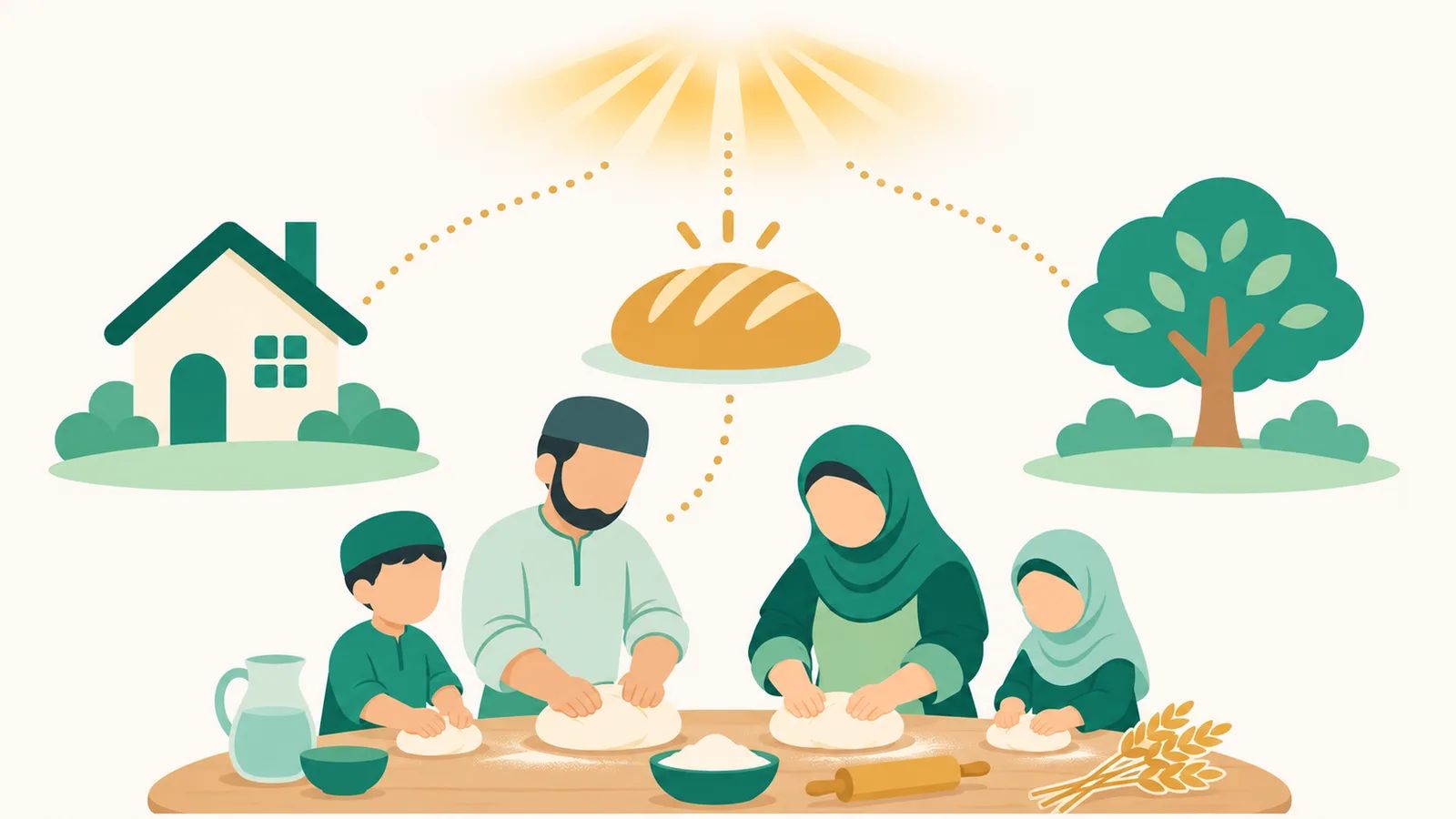
- Earning a lawful living with sincere intention is an act of worship.
- Manual labour is honoured — prophets worked as shepherds, craftsmen and traders.
- Self-reliance is better than depending on others when one is able to work.
- Employers must pay fair wages on time; cheating workers is a grave sin.
- Work should never crowd out prayer, family and rest.