العربية
 Español
 Français
 中文
 हिन्दी
What Does Islam Teach About Wealth and Money?

Money shapes almost every part of modern life — where we live, what we worry about, even how we see ourselves. Islam does not ask people to reject wealth or pretend it does not matter. Instead, it changes the question from how much do I have? to how did I earn it, and what am I doing with it?
Wealth is a trust from God
In Islam, God is the true owner of everything. What we hold, we hold for a time, and we will be asked how we used it. The Qur’an puts it this way:
ءَامِنُوا۟ بِٱللَّهِ وَرَسُولِهِۦ وَأَنفِقُوا۟ مِمَّا جَعَلَكُم مُّسْتَخْلَفِينَ فِيهِ ۖ فَٱلَّذِينَ ءَامَنُوا۟ مِنكُمْ وَأَنفَقُوا۟ لَهُمْ أَجْرٌۭ كَبِيرٌۭ ﴿٧﴾ Believe in Allah and His Messenger and spend out of that in which He has made you successors. For those who have believed among you and spent, there will be a great reward.
Couldn't load — please try again.
The verse describes people as successors or trustees over wealth that was in other hands before them and will pass to others after them. This idea changes how a Muslim relates to money: it is not a measure of personal worth, but a responsibility.
Being wealthy is not a sin in Islam. Several of the Prophet’s closest Companions were successful merchants who were known for their generosity. What matters is how wealth is earned and how it is used.
Earning honestly
Islam honours honest work. The Prophet ﷺ himself worked as a shepherd (Sahih al-Bukhari 2262) and as a trader before his prophethood, and he praised people who earn their own living:
Narrated Al-Miqdam: The Prophet (ﷺ) said, "Nobody has ever eaten a better meal than that which one has earned by working with one's own hands. The Prophet of Allah, David (ﷺ) used to eat from the earnings of his manual labor
Couldn't load — please try again.
Trade, too, must be honest. The Prophet ﷺ taught that honesty in business brings blessing:
Narrated Hakim bin Hizam: Allah's Messenger (ﷺ) said, "The seller and the buyer have the right to keep or return goods as long as they have not parted or till they part; and if both the parties spoke the truth and described the defects and qualities (of the goods), then they would be blessed in their transaction, and if they told lies or hid something, then the blessings of their transaction would be lost
Couldn't load — please try again.
The Qur’an strongly condemns those who cheat in weights and measures — taking full measure for themselves but giving others less (83:1–3). Bribery, fraud, theft and selling harmful things such as alcohol or gambling are all forbidden.
Zakat and charity: sharing what God has given
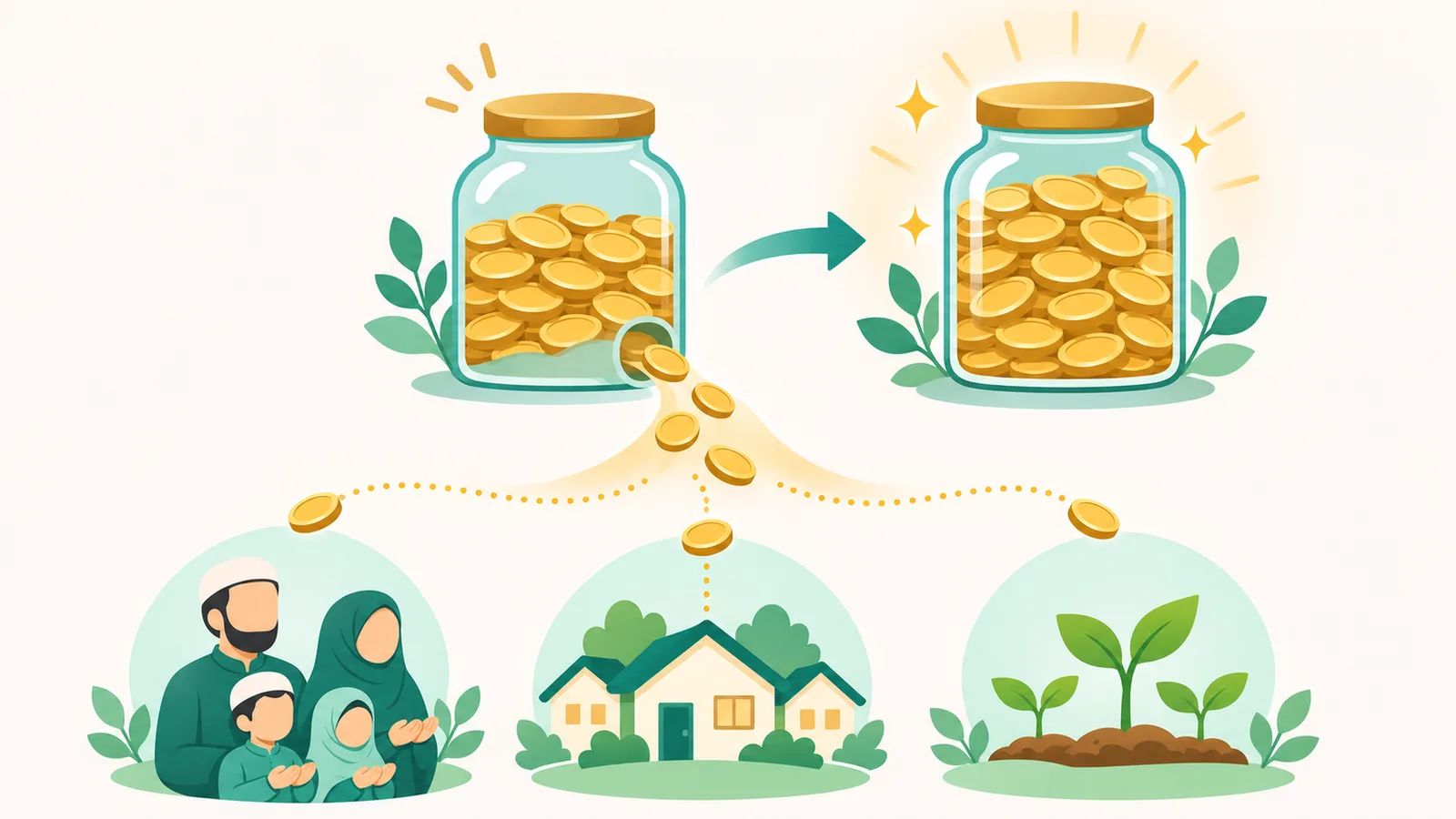
Zakat is one of the Five Pillars of Islam. Every Muslim whose savings stay above a set minimum for a full year gives a portion — usually 2.5 percent — to people in need. The word zakat carries the meaning of purification and growth: giving purifies the remaining wealth and the heart of the giver. The Qur’an names who should receive it:
۞ إِنَّمَا ٱلصَّدَقَٰتُ لِلْفُقَرَآءِ وَٱلْمَسَٰكِينِ وَٱلْعَٰمِلِينَ عَلَيْهَا وَٱلْمُؤَلَّفَةِ قُلُوبُهُمْ وَفِى ٱلرِّقَابِ وَٱلْغَٰرِمِينَ وَفِى سَبِيلِ ٱللَّهِ وَٱبْنِ ٱلسَّبِيلِ ۖ فَرِيضَةًۭ مِّنَ ٱللَّهِ ۗ وَٱللَّهُ عَلِيمٌ حَكِيمٌۭ ﴿٦٠﴾ Zakah expenditures are only for the poor and for the needy and for those employed to collect [zakah] and for bringing hearts together [for Islam] and for freeing captives [or slaves] and for those in debt and for the cause of Allah and for the [stranded] traveler - an obligation [imposed] by Allah. And Allah is Knowing and Wise.
Couldn't load — please try again.
Beyond zakat, Muslims are encouraged to give voluntary charity, called sadaqah, at any time and in any amount. Charity in Islam is not only money: the Prophet ﷺ taught that a kind word or a smile can also be charity. The Qur’an compares money spent for God’s sake to a single seed that grows seven ears of grain, each holding a hundred grains (2:261).
Riba: why interest is forbidden
The Qur’an forbids riba, usually translated as usury or interest, while making trade lawful (2:275). In a loan based on riba, the lender profits whatever happens, while the borrower carries all the risk — and debt can grow until it crushes the poor. Islam prefers financial relationships in which risk and reward are shared, such as partnerships, trade and leasing. This is the basis of modern Islamic banking and finance.
How these principles apply to modern financial products such as mortgages, insurance and pensions is a detailed area where qualified scholars sometimes reach different conclusions — see where Muslims differ.
True richness
Islam also speaks to the heart behind the wallet. Greed, envy and the constant hunger for more can make even a rich person poor inside. The Prophet ﷺ put it simply:
Narrated Abu Huraira: The Prophet (ﷺ) said, "Wealth is not in having many possessions, but rather (true) wealth is feeling sufficiency in the soul
Couldn't load — please try again.
A Muslim is encouraged to work hard, provide for their family, enjoy what is lawful, and give generously — while remembering that a contented heart is worth more than any bank balance.
A closing thought
Islam’s teaching on money can be summed up in a few words: earn it cleanly, use it wisely, share it generously, and never let it own you. To learn more about zakat and the other pillars, read the Five Pillars of Islam, or see how honesty fits into good character in Islam.
Key takeaways
- Wealth is a trust from God, not absolute ownership.
- Honest work and fair trade are praised and blessed.
- Zakat is an annual duty to share wealth with those in need.
- Cheating, hoarding and riba (interest) are forbidden.
- Real richness is contentment of the heart.