العربية
 Español
 Français
 中文
 हिन्दी
Books to Read First: A Starter Shelf for New Muslims

The very first word of the Qur’an to be revealed was a command to read (Qur’an 96:1). Islam is a faith that loves knowledge, and many new Muslims feel a strong hunger to learn. The question is where to start. Here is a short, gentle starter shelf — not a complete list, and not the only good choice, but a set of well-established, widely respected works that Muslims around the world recommend to beginners.
Why reading matters
The Qur’an teaches the Prophet ﷺ — and every believer — a simple prayer for knowledge:
فَتَعَٰلَى ٱللَّهُ ٱلْمَلِكُ ٱلْحَقُّ ۗ وَلَا تَعْجَلْ بِٱلْقُرْءَانِ مِن قَبْلِ أَن يُقْضَىٰٓ إِلَيْكَ وَحْيُهُۥ ۖ وَقُل رَّبِّ زِدْنِى عِلْمًۭا ﴿١١٤﴾ So high [above all] is Allah, the Sovereign, the Truth. And, [O Muhammad], do not hasten with [recitation of] the Qur'an before its revelation is completed to you, and say, "My Lord, increase me in knowledge."
Couldn't load — please try again.
And it asks a question that invites reflection:
أَمَّنْ هُوَ قَٰنِتٌ ءَانَآءَ ٱلَّيْلِ سَاجِدًۭا وَقَآئِمًۭا يَحْذَرُ ٱلْءَاخِرَةَ وَيَرْجُوا۟ رَحْمَةَ رَبِّهِۦ ۗ قُلْ هَلْ يَسْتَوِى ٱلَّذِينَ يَعْلَمُونَ وَٱلَّذِينَ لَا يَعْلَمُونَ ۗ إِنَّمَا يَتَذَكَّرُ أُو۟لُوا۟ ٱلْأَلْبَٰبِ ﴿٩﴾ Is one who is devoutly obedient during periods of the night, prostrating and standing [in prayer], fearing the Hereafter and hoping for the mercy of his Lord, [like one who does not]? Say, "Are those who know equal to those who do not know?" Only they will remember [who are] people of understanding.
Couldn't load — please try again.
You do not need to become a scholar. But a little reliable reading each day will make your prayer more meaningful, your faith more confident, and your answers to friends and family clearer.
1. The Qur’an in translation
The most important book for any Muslim is the Qur’an itself. Read it in a translation you understand, slowly, a few pages a day. Widely used English translations include, for example:
- The Clear Quran by Dr Mustafa Khattab — modern, very readable English.
- Saheeh International — a careful, fairly literal translation, used across this website.
- The Qur’an: A New Translation by M. A. S. Abdel Haleem — fluent English, published by Oxford University Press.
Many editions place the Arabic beside the translation, which helps as you learn. When you are ready to go deeper, an abridged edition of a classical commentary (tafsir), such as that of Ibn Kathir, explains the context and meaning of the verses. See What Is the Qur’an? for an introduction to the book.
2. The life of the Prophet ﷺ
To understand Islam, you need to know the man who lived it most fully. A biography of the Prophet ﷺ (sirah) brings the Qur’an to life. Well-known examples include:
- The Sealed Nectar (Ar-Raheeq Al-Makhtum) by Safiur Rahman al-Mubarakpuri — a clear, chronological biography that has been widely used for decades.
- Muhammad: His Life Based on the Earliest Sources by Martin Lings — a beautifully written account, popular with English readers.
Our article The Life of Prophet Muhammad ﷺ is a short overview to read first.
3. The sayings of the Prophet ﷺ
The Prophet’s teachings (hadith) are the second source of Islam after the Qur’an. Rather than diving into the large collections, start with short, classic anthologies, for example:
- The Forty Hadith of Imam al-Nawawi — about forty short sayings that summarise the core of Islam, studied by Muslims for centuries.
- Riyad as-Salihin (The Gardens of the Righteous), also by al-Nawawi — a larger collection arranged by topic: sincerity, patience, good character, family and more. It is ideal for reading a few pages at a time.
The Prophet ﷺ himself praised those who learn the Qur’an and pass it on:
Narrated `Uthman: The Prophet (ﷺ) said, "The best among you (Muslims) are those who learn the Qur'an and teach it
Couldn't load — please try again.
4. Belief and practice
For the basics of belief, prayer and everyday practice, it is best to ask your local mosque or teacher which beginner’s book they use. Practical books on prayer and purity often follow a particular school of law, and it helps to learn from the same school your community follows — a sign of the healthy, honest differences explained in Where Muslims Differ. Meanwhile, this website’s guides, such as How to Pray and What Every Muslim Believes, stick to what Muslims agree on.
How to read wisely
- Read slowly. Ten minutes a day, kept up for months, is better than an exhausting weekend.
- Read with others. A study circle at a mosque, or a patient teacher, can answer questions and stop misunderstandings before they grow.
- Check your sources. Be cautious with anonymous websites, social media clips and books by unknown authors. Prefer works that are well established and recommended by trusted scholars.
- Don’t panic over hard passages. Some verses and narrations need context. Note your questions and ask someone knowledgeable.
- Let it change you. The aim of reading is not just information, but a softer heart and better character.
Enjoy the journey
There is no exam and no deadline. Pick one book from this list — ideally the Qur’an — and begin today with just a page. Over the months, your shelf will grow, and so will your understanding. If you are wondering whether you will need Arabic for any of this, see Do I Need to Learn Arabic?
Key takeaways
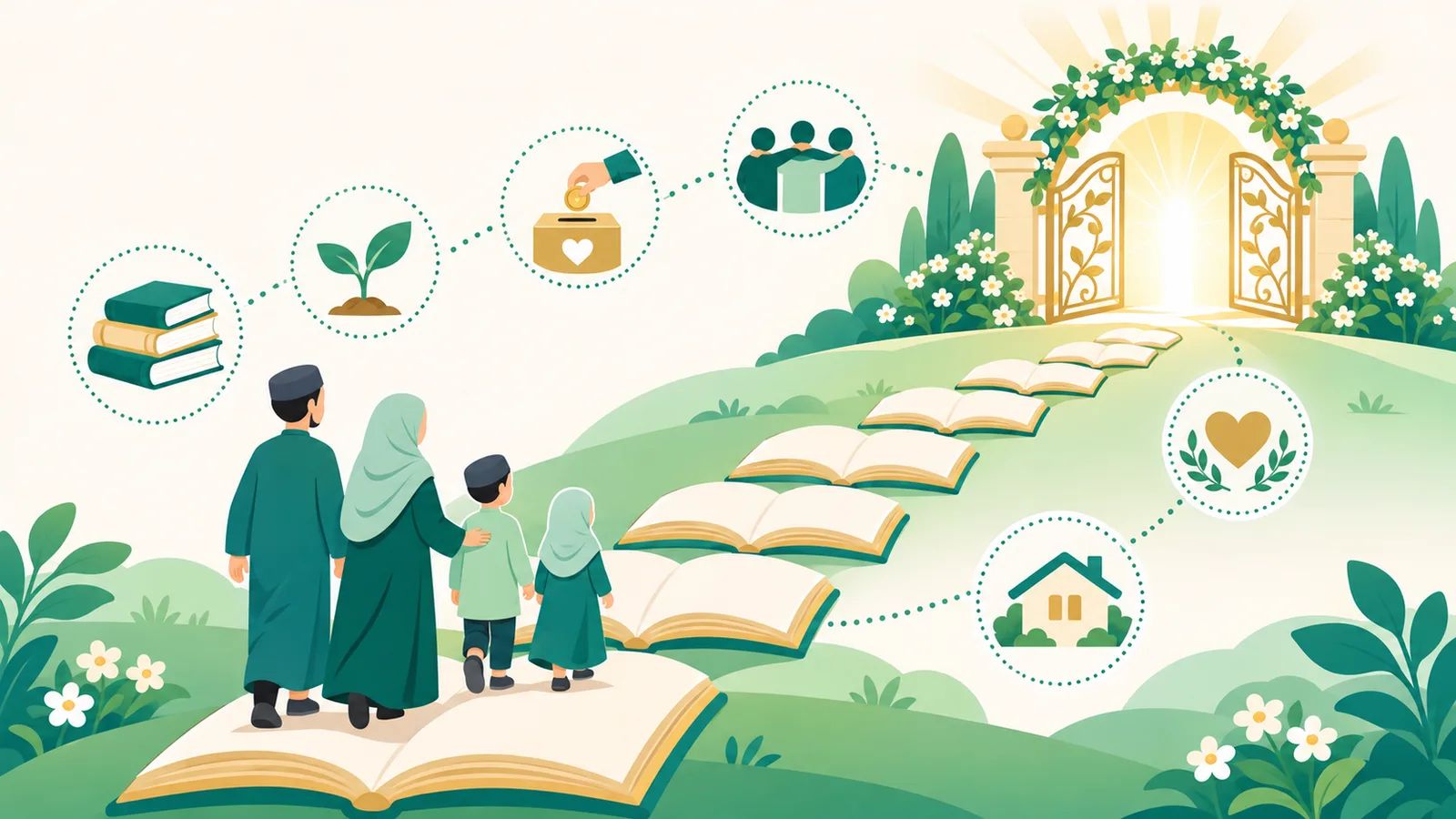
- Begin with the Qur'an itself, in a clear and reliable translation.
- Get to know the Prophet ﷺ through a trusted biography.
- Short classic hadith collections are an ideal next step.
- Read slowly, with a teacher if possible, and be careful with anonymous online sources.