العربية
 Español
 Français
 中文
 हिन्दी
Do I Need to Learn Arabic to Be Muslim?

Walk into almost any mosque and you will hear Arabic: in the call to prayer, in the recitation, in greetings. For someone who speaks only English, Polish or Swahili, that can be intimidating. Do you need to master a whole new language before you can truly be Muslim? Thankfully, no.
Islam is for every language
The great majority of Muslims in the world today are not Arabs, and most do not speak Arabic as their first language. From Indonesia to Nigeria, from Bosnia to Brazil, people live their faith in their own languages. The Qur’an even presents the variety of human languages as one of God’s signs:
وَمِنْ ءَايَٰتِهِۦ خَلْقُ ٱلسَّمَٰوَٰتِ وَٱلْأَرْضِ وَٱخْتِلَٰفُ أَلْسِنَتِكُمْ وَأَلْوَٰنِكُمْ ۚ إِنَّ فِى ذَٰلِكَ لَءَايَٰتٍۢ لِّلْعَٰلِمِينَ ﴿٢٢﴾ And of His signs is the creation of the heavens and the earth and the diversity of your languages and your colors. Indeed in that are signs for those of knowledge.
Couldn't load — please try again.
God understands every language, and every heart. When you speak to Him in your own words — asking for help, thanking Him, sharing your worries — He hears you fully. This kind of personal prayer, called du’a, can be made in any language, at any time.
What you do need: the words of the prayer
The one place where Arabic matters from the start is the formal prayer (salah). Its set words — above all the opening chapter of the Qur’an, Al-Fatiha — are recited in Arabic, as the Prophet ﷺ taught and as Muslims everywhere have done since. The good news is that the amount is small: Al-Fatiha is only seven short verses, and the other phrases of the prayer are brief, such as Allahu Akbar (God is the Greatest).
Most new Muslims learn these in a few weeks, line by line, with the help of transliteration, audio recordings or a friend. Until you have learned them, you are not left without a way to pray. The Prophet ﷺ was gentle with a man who could not yet memorise any of the Qur’an:
…I cannot memorise anything from the Qur'an: so teach me something which is sufficient for me. He said: Say Glory be to Allah, and praise be to Allah, and there is no god but Allah, and Allah is most great, and there is no might and no strength but in Allah.…
Couldn't load — please try again.
Scholars differ on some details of how a beginner should pray during this learning period, so it is worth asking at your local mosque. The step-by-step guide How to Pray explains the basics.
Understanding the Qur’an in translation
The Qur’an was revealed in Arabic, and Muslims regard only the Arabic text as the Qur’an itself; a translation is an explanation of its meanings. But a good translation lets you understand the message, and that is where most new Muslims begin. The Qur’an describes itself as made easy to take to heart:
وَلَقَدْ يَسَّرْنَا ٱلْقُرْءَانَ لِلذِّكْرِ فَهَلْ مِن مُّدَّكِرٍۢ ﴿١٧﴾ And We have certainly made the Qur'an easy for remembrance, so is there any who will remember?
Couldn't load — please try again.
Just as every earlier messenger spoke to his people in their own language (Qur’an 14:4), so today the message reaches people through translations, explanations and teachers in many languages. Read a reliable translation slowly, a little each day. Our guide Books to Read First suggests some well-respected translations, and What Is the Qur’an? explains more about the book itself.
A double reward for those who struggle
If reciting Arabic feels slow and clumsy, take heart. The Prophet ﷺ promised a special reward for exactly that struggle:
…such a person exerts himself to learn the Qur'an by heart, and recites it with great difficulty, will have a double reward…
Couldn't load — please try again.
Your stumbling recitation is not a sign of failure. In God’s eyes, it is worth twice the reward.
If you want to learn more Arabic
Many Muslims, once settled, find themselves wanting to go deeper. Learning even a little Arabic opens up the Qur’an in a new way: you begin to recognise words in the prayer, notice repeated phrases, and feel the rhythm of the text. A few gentle ways to start:
- Learn the meaning of what you already say in prayer, word by word.
- Learn to read the Arabic script. The alphabet can be learned in a few weeks, and many mosques and online courses offer beginner classes.
- Memorise short chapters from the end of the Qur’an, together with their meanings.
- Go slowly. Ten minutes a day, kept up for a year, is better than a burst of enthusiasm that fades.
There is no deadline and no exam. Some Muslims become fluent; many others live their whole lives with a modest amount of Arabic and deep, sincere faith.
Your faith is not measured by your accent
What God looks at is the heart and the effort, not the accent. Start with what you need for prayer, read the Qur’an in a language you understand, and let your Arabic grow naturally. For what else to focus on at the start, see Your First Weeks as a Muslim.
Key takeaways
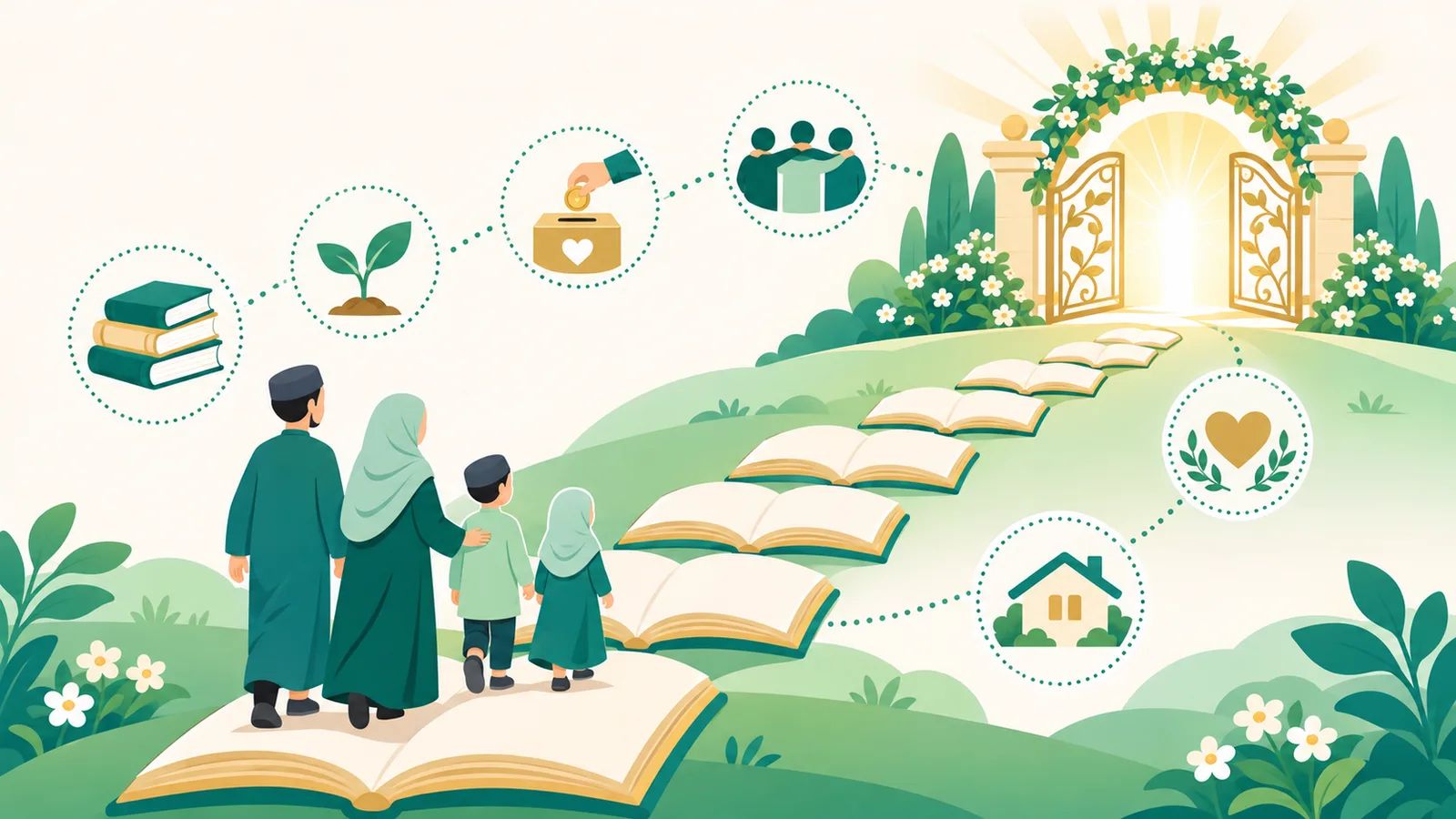
- Islam is for all peoples and languages; Arabic is not a condition of faith.
- You can make personal prayers (du'a) to God in any language.
- The set words of the five daily prayers are said in Arabic — a small amount that can be learned gradually.
- God rewards the effort of those who find the Qur'an difficult to recite.