العربية
 Español
 Français
 中文
 हिन्दी
Your First Weeks as a Muslim: A Gentle Guide

Saying the shahada can feel like stepping through a door into a large house with many rooms. You may feel joy, relief and peace — and also, a few days later, a little overwhelmed. There is so much to learn, and everyone seems to have advice. Take a breath. You do not have to explore every room this week.
Start with the essentials
When a man once came to the Prophet ﷺ asking what Islam required of him, the answer was strikingly simple:
…You have to offer prayers perfectly five times in a day and night (24 hours).…
Couldn't load — please try again.
The Prophet ﷺ went on to mention fasting in Ramadan and zakat (the yearly charity), and when the man promised to do exactly that — no more, no less — the Prophet ﷺ said he would be successful if he was true to his word. The core is clear and achievable.
So in your first weeks, put most of your energy into a few things:
- Your belief. Keep the heart of the shahada clear: one God, worshipped alone, and Muhammad ﷺ as His final messenger. What Every Muslim Believes is a good summary.
- Prayer. Learn how to make wudu and then how to pray. If you can only manage part of the words at first, pray with what you know and keep learning. Many new Muslims use a printed card or follow someone at the mosque.
- The big “don’ts”. Most people already know the main things Islam forbids, such as alcohol, pork and relationships outside marriage. Where these are part of your life, begin turning away from them sincerely, asking God for help.
Other things — fasting, the details of dress, the finer points of law, Arabic — will come in their time.
Small steps are beloved to God
New Muslims are often tempted to do too much too fast: hours of extra prayer, strict new rules, long reading lists. That enthusiasm is beautiful, but it often burns out. The Prophet ﷺ warned against it:
…the most beloved deed to Allah is the most regular and constant even if it were little…
Couldn't load — please try again.
A few minutes of Qur’an each day, said consistently, is worth more than a week of intensity followed by exhaustion. And God does not burden anyone beyond their capacity:
لَا يُكَلِّفُ ٱللَّهُ نَفْسًا إِلَّا وُسْعَهَا ۚ لَهَا مَا كَسَبَتْ وَعَلَيْهَا مَا ٱكْتَسَبَتْ ۗ رَبَّنَا لَا تُؤَاخِذْنَآ إِن نَّسِينَآ أَوْ أَخْطَأْنَا ۚ رَبَّنَا وَلَا تَحْمِلْ عَلَيْنَآ إِصْرًۭا كَمَا حَمَلْتَهُۥ عَلَى ٱلَّذِينَ مِن قَبْلِنَا ۚ رَبَّنَا وَلَا تُحَمِّلْنَا مَا لَا طَاقَةَ لَنَا بِهِۦ ۖ وَٱعْفُ عَنَّا وَٱغْفِرْ لَنَا وَٱرْحَمْنَآ ۚ أَنتَ مَوْلَىٰنَا فَٱنصُرْنَا عَلَى ٱلْقَوْمِ ٱلْكَٰفِرِينَ ﴿٢٨٦﴾ Allah does not charge a soul except [with that within] its capacity. It will have [the consequence of] what [good] it has gained, and it will bear [the consequence of] what [evil] it has earned. "Our Lord, do not impose blame upon us if we have forgotten or erred. Our Lord, and lay not upon us a burden like that which You laid upon those before us. Our Lord, and burden us not with that which we have no ability to bear. And pardon us; and forgive us; and have mercy upon us. You are our protector, so give us victory over the disbelieving people."
Couldn't load — please try again.
Find good company
Islam was never meant to be lived alone. Visit a local mosque, tell someone you are new, and ask whether they have a class or mentor for new Muslims — many do. See How to Find a Mosque for tips. Look for people who are kind, patient and knowledgeable, and who make you feel more hopeful, not more anxious. The Prophet ﷺ compared a good friend to someone carrying perfume: just being near them, you leave smelling sweet (Sahih al-Bukhari 5534).
A word of caution about the internet: you will find many voices online, some wise and some harsh or extreme. Do not let every video set your agenda. Learn from a teacher you trust, and when you come across a question on which Muslims disagree, remember that honest differences exist on many details; see Where Muslims Differ.
Family, work and everyday life
You do not need to change your name, your clothes or your friends overnight. Becoming Muslim does not mean leaving your family; Islam asks you to be kinder to them than ever. Think carefully about when and how to tell them — our guide Telling Family and Friends may help. At work, you can usually fit the prayers into breaks, and many employers are happy to give a quiet space if you ask politely.
When it feels hard
Some days your faith will feel strong; other days it may feel thin. You may slip back into an old habit, miss a prayer, or feel lonely. This is normal and does not mean you have failed. Turn back to God, ask His forgiveness, and carry on. Remember that everything before your Islam has been wiped clean (see What Happens to My Past Sins?), and the door of repentance stays open after it too.
فَإِنَّ مَعَ ٱلْعُسْرِ يُسْرًا ﴿٥﴾ إِنَّ مَعَ ٱلْعُسْرِ يُسْرًۭا ﴿٦﴾ 5For indeed, with hardship [will be] ease. 6Indeed, with hardship [will be] ease.
Couldn't load — please try again.
Welcome
The first weeks are a beginning, not a test. Be patient with yourself, keep praying, keep learning a little each day, and stay close to people who help you grow. If you would like a few trusted books to start with, see Books to Read First. You are warmly welcome — and you are not alone.
Key takeaways
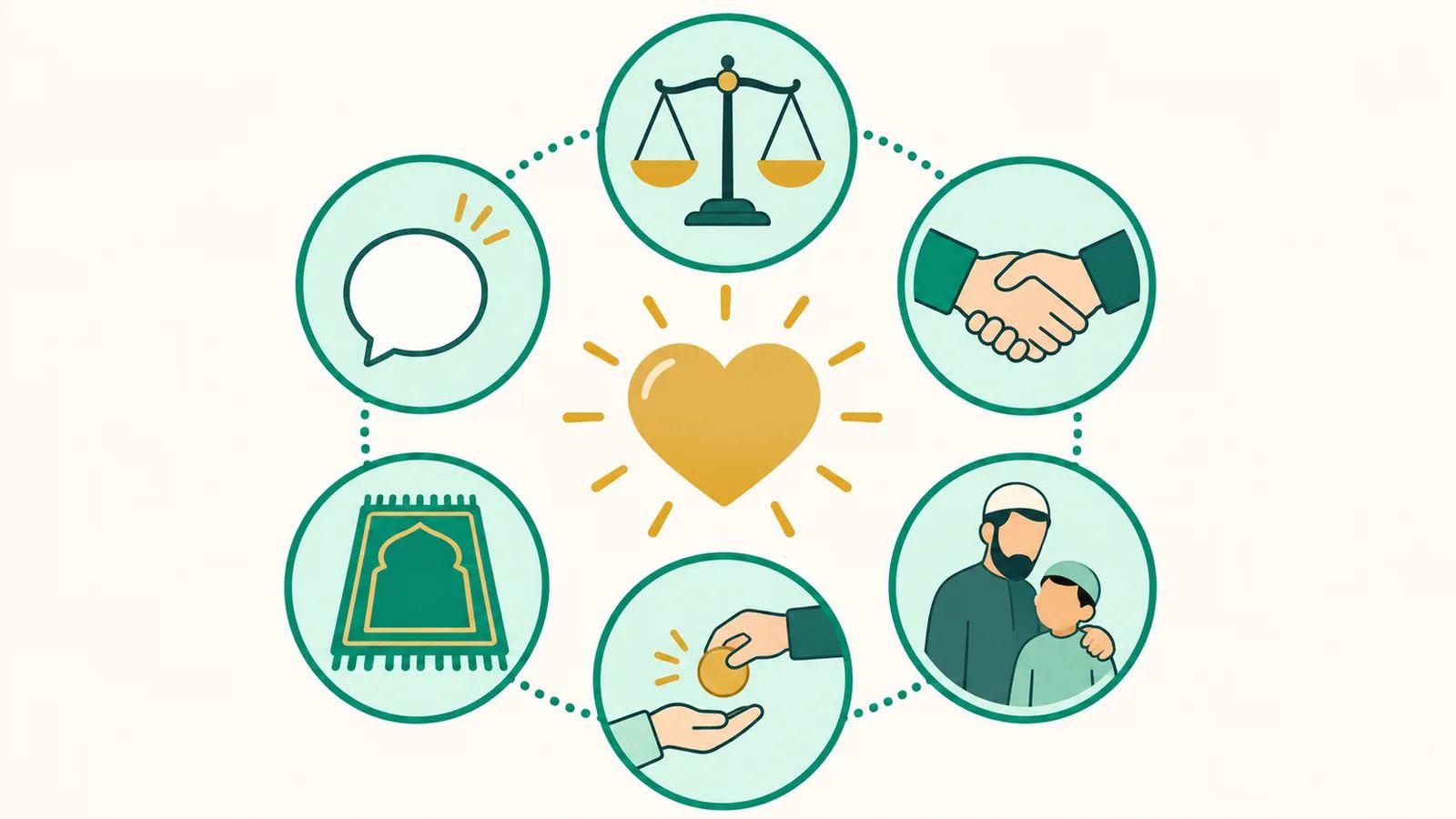
- Start with the essentials — above all, learning the five daily prayers.
- Small, steady steps matter more than doing everything at once.
- Good company and a reliable teacher make the journey much easier.
- Mistakes and ups and downs are normal; God is patient and merciful.