العربية
 Español
 Français
 中文
 हिन्दी
Your First Ramadan: A Practical Guide for New Muslims

Few experiences shape a new Muslim’s faith like their first Ramadan. Many converts say it was the month when Islam stopped feeling like something they had read about and became something they lived. It can also feel daunting: thirty days without eating or drinking in daylight? Here is what to expect, and how to make it a month of blessing rather than strain.
What Ramadan is
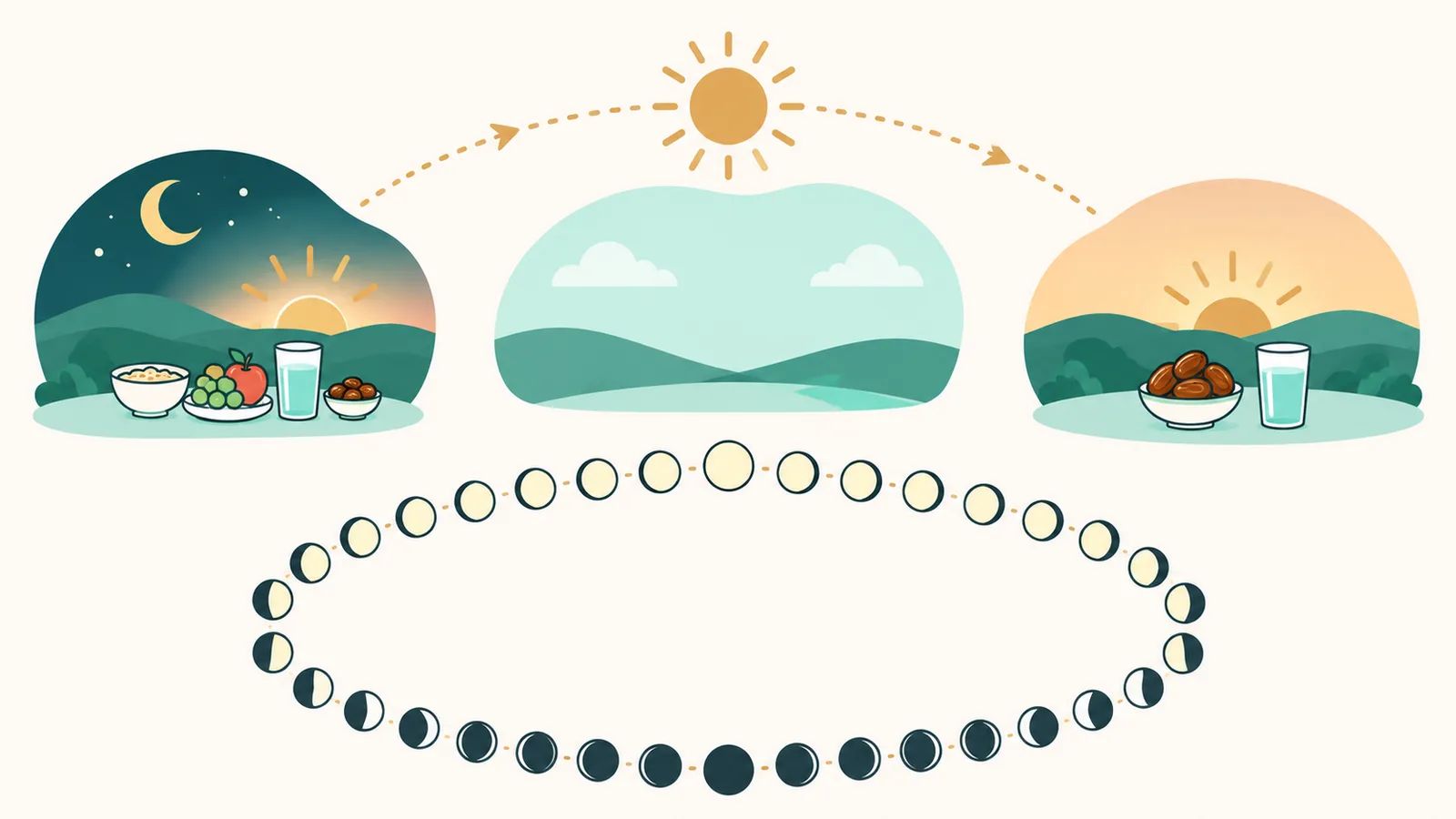
Ramadan is the ninth month of the Islamic lunar calendar, so it moves about eleven days earlier each year. Fasting it is one of the five pillars of Islam (see The Five Pillars), and the Qur’an connects it with the earlier prophets and with growing in God-consciousness:
يَٰٓأَيُّهَا ٱلَّذِينَ ءَامَنُوا۟ كُتِبَ عَلَيْكُمُ ٱلصِّيَامُ كَمَا كُتِبَ عَلَى ٱلَّذِينَ مِن قَبْلِكُمْ لَعَلَّكُمْ تَتَّقُونَ ﴿١٨٣﴾ O you who have believed, decreed upon you is fasting as it was decreed upon those before you that you may become righteous -
Couldn't load — please try again.
It is also the month in which the Qur’an began to be revealed, and the verses about it stress ease, not hardship:
شَهْرُ رَمَضَانَ ٱلَّذِىٓ أُنزِلَ فِيهِ ٱلْقُرْءَانُ هُدًۭى لِّلنَّاسِ وَبَيِّنَٰتٍۢ مِّنَ ٱلْهُدَىٰ وَٱلْفُرْقَانِ ۚ فَمَن شَهِدَ مِنكُمُ ٱلشَّهْرَ فَلْيَصُمْهُ ۖ وَمَن كَانَ مَرِيضًا أَوْ عَلَىٰ سَفَرٍۢ فَعِدَّةٌۭ مِّنْ أَيَّامٍ أُخَرَ ۗ يُرِيدُ ٱللَّهُ بِكُمُ ٱلْيُسْرَ وَلَا يُرِيدُ بِكُمُ ٱلْعُسْرَ وَلِتُكْمِلُوا۟ ٱلْعِدَّةَ وَلِتُكَبِّرُوا۟ ٱللَّهَ عَلَىٰ مَا هَدَىٰكُمْ وَلَعَلَّكُمْ تَشْكُرُونَ ﴿١٨٥﴾ The month of Ramadhan [is that] in which was revealed the Qur'an, a guidance for the people and clear proofs of guidance and criterion. So whoever sights [the new moon of] the month, let him fast it; and whoever is ill or on a journey - then an equal number of other days. Allah intends for you ease and does not intend for you hardship and [wants] for you to complete the period and to glorify Allah for that [to] which He has guided you; and perhaps you will be grateful.
Couldn't load — please try again.
The basics of the fast
- When. From the start of dawn (the time of the Fajr prayer) until sunset (the Maghrib prayer). A local mosque timetable or a prayer-time app will show the exact times.
- What. No food, no drink (including water) and no marital relations during these hours. Smoking is also avoided.
- Intention. Intend in your heart to fast. No special words are needed.
- Suhur. Eat a meal before dawn. The Prophet ﷺ encouraged it, saying there is blessing in it (Sahih al-Bukhari 1923).
- Iftar. Break the fast promptly at sunset, traditionally with dates and water, then pray Maghrib and have a meal.
If you forget and eat or drink, do not worry. The Prophet ﷺ was very clear:
Narrated Abu Huraira: The Prophet (ﷺ) said, "If somebody eats or drinks forgetfully then he should complete his fast, for what he has eaten or drunk, has been given to him by Allah
Couldn't load — please try again.
Who is excused
Fasting is a duty for adult, healthy Muslims who are able to fast. God does not want it to cause harm. Those excused include:
- People who are ill, and travellers — they make up the missed days later (Qur’an 2:184–185).
- Women during menstruation or post-natal bleeding — they do not fast during those days and make them up later.
- Pregnant and nursing women, if fasting is a risk to them or their baby.
- Elderly people and those with long-term illness who cannot fast — instead, they feed a poor person for each day missed.
Scholars differ on some details of these cases, so if you take regular medication or have a health condition, speak to your doctor and a knowledgeable imam. Never risk your health to prove something.
Practical tips for your first Ramadan
- Practise beforehand. If you can, try fasting a day or two in the weeks before Ramadan to get used to it.
- Don’t skip suhur. Even a small meal with water, protein and slow-release food makes a big difference.
- Plan your days. Move demanding tasks to the morning, rest when you can, and let your employer know — most are understanding.
- Join an iftar. Many mosques host free community iftars. It is one of the easiest ways to meet other Muslims and feel part of the community.
- Pray at night if you can. In Ramadan, mosques hold extra night prayers called tarawih. They are recommended, not obligatory; even attending a few nights is lovely.
- Read the Qur’an. Set a small, steady goal — a few pages a day in a translation you understand.
- Be kind to yourself. Headaches and tiredness in the first days are normal and usually pass.
More than hunger
Ramadan is not a diet or an endurance test. Its purpose is to draw closer to God and to become a better person. The Prophet ﷺ warned that fasting from food while carrying on with lies and wrongdoing misses the point:
Narrated Abu Huraira: The Prophet (ﷺ) said, "Whoever does not give up forged speech and evil actions, Allah is not in need of his leaving his food and drink (i.e. Allah will not accept his fasting)
Couldn't load — please try again.
So guard your tongue, be patient, be generous, and use the hunger to remember those who go without every day. The reward is immense:
Narrated Abu Huraira: Allah's Messenger (ﷺ) said, "Whoever observes fasts during the month of Ramadan out of sincere faith, and hoping to attain Allah's rewards, then all his past sins will be forgiven
Couldn't load — please try again.
In the last ten nights of the month, Muslims seek Laylat al-Qadr, the Night of Decree, which the Qur’an describes as better than a thousand months (97:3). Many spend extra time in prayer and reflection in those nights.
Eid and beyond
At the end of the month comes Eid al-Fitr, a day of prayer, family and celebration. Before the Eid prayer, each Muslim household gives zakat al-fitr, a small charity so that the poor can celebrate too; your mosque will tell you the amount.
If you live with non-Muslim family, Ramadan can be a beautiful bridge: invite them to an iftar, share the dates, explain what the month means to you. See Telling Family and Friends for more ideas.
Your first Ramadan does not need to be perfect. Fast as well as you can, pray, give, and ask God to accept it. Many Muslims look back on their first Ramadan as one of the sweetest times of their lives. May yours be the same.
Key takeaways
- The fast runs from dawn to sunset and includes food, drink and marital relations.
- The ill, travellers and some others are excused and make up the days later or, in some cases, feed the poor.
- If you eat or drink by mistake, your fast still counts.
- The heart of Ramadan is closeness to God, good character and generosity — not just hunger.