العربية
 Español
 Français
 中文
 हिन्दी
Judaism, Christianity and Islam Compared

Judaism, Christianity and Islam are often called the Abrahamic religions, because each looks back to Abraham (peace be upon him) as a father in faith. Together they are followed by more than half of humanity. This page sets their core beliefs side by side, as fairly and simply as we can.
Two notes before you read. First, each faith includes different branches — Orthodox, Conservative and Reform Judaism; Catholic, Orthodox and Protestant Christianity; Sunni and Shia Islam — so the table gives the mainstream view, and practice varies. Second, we have tried to describe Judaism and Christianity the way their own followers would.
At a glance
| Topic | Judaism | Christianity | Islam |
|---|---|---|---|
| God | One God, indivisible, without physical form. | One God in three persons: Father, Son and Holy Spirit (the Trinity). | One God (Allah), absolutely one, with no partner, child or equal (tawhid). |
| Abraham | Father of the Jewish people, with whom God made a covenant. | Father of all who believe; a model of faith. | A prophet whom God took as a close friend (Qur’an 4:125), who taught pure worship of the One God and built the Kaaba with Ishmael. |
| Moses | The greatest prophet, through whom God gave the Torah. | A great prophet and lawgiver. | One of the greatest prophets, to whom God spoke and gave the Torah. |
| Jesus | A Jewish teacher; not the Messiah, and not divine. | The Messiah and Son of God, fully God and fully human, who died for sin and rose again. | The Messiah, born of the virgin Mary, a great prophet; not divine, not crucified, and will return. |
| Muhammad ﷺ | Not accepted as a prophet. | Not accepted as a prophet. | The final prophet, sent to all humanity. |
| Scripture | The Hebrew Bible (Tanakh) and the Oral Torah, recorded in the Mishnah and Talmud. | The Bible: the Old and New Testaments. | The Qur’an, explained by the Sunnah; Muslims also believe God revealed the Torah, Psalms and Gospel. |
| Language of scripture | Mainly Hebrew. | Hebrew and Aramaic (Old Testament), Greek (New Testament). | Arabic. |
| Religious law | Halakha, covering worship, food, family and daily life. | Most churches teach that Christians are not bound by the ritual laws of the Torah; the moral law remains. | Sharia, covering worship, ethics, family and daily life. |
| Human nature | No inherited sin; people have good and bad inclinations and can repent. | Most churches teach that humanity inherits a fallen nature from Adam (original or ancestral sin). | Every child is born pure (fitrah); Adam repented and was forgiven. |
| Salvation | Living faithfully within God’s covenant, through repentance and good deeds; many teachers say the righteous of all nations have a share in the world to come. | By God’s grace, through faith in Jesus Christ; churches differ on the role of sacraments and works. | Through faith in the one God, repentance and righteous deeds — and finally by God’s mercy. |
| Daily prayer | Three set prayer services a day, facing Jerusalem. | Personal and communal prayer; set daily prayers in some traditions. | Five set prayers a day, facing the Kaaba in Mecca. |
| Weekly holy day | The Sabbath (Friday sunset to Saturday nightfall), a day of rest. | Sunday, for most Christians. | Friday midday congregational prayer (Jumu’ah). |
| Food laws | Kashrut: no pork or shellfish, ritual slaughter, meat and milk kept apart. | Generally no food laws; some fasting traditions. | Halal: no pork, alcohol or blood; ritual slaughter. |
| Main fast | Yom Kippur and other fast days. | Lent and other seasons in many churches. | The month of Ramadan, dawn to sunset. |
| Afterlife | Emphasis on this life; traditional belief in the world to come and the resurrection of the dead, understood in various ways. | Resurrection, the Last Judgment, heaven and hell. | Resurrection, the Day of Judgment, Paradise and Hell. |
| Holy places | Jerusalem, especially the Western Wall. | Jerusalem and Bethlehem, among others. | Mecca, Medina and Jerusalem. |
A family resemblance
Looking at the table, it is easy to see that these three faiths are relatives. The Hebrew Bible declares, “Hear, O Israel: The LORD our God is one LORD” (Deuteronomy 6:4, KJV), and Jesus repeated those words when asked about the greatest commandment (Mark 12:29, KJV). Muslims see their own creed as a return to that same pure oneness.
The Qur’an addresses Jews and Christians as People of the Scripture and asks Muslims to speak with them in the best way, starting from what they share:
۞ وَلَا تُجَٰدِلُوٓا۟ أَهْلَ ٱلْكِتَٰبِ إِلَّا بِٱلَّتِى هِىَ أَحْسَنُ إِلَّا ٱلَّذِينَ ظَلَمُوا۟ مِنْهُمْ ۖ وَقُولُوٓا۟ ءَامَنَّا بِٱلَّذِىٓ أُنزِلَ إِلَيْنَا وَأُنزِلَ إِلَيْكُمْ وَإِلَٰهُنَا وَإِلَٰهُكُمْ وَٰحِدٌۭ وَنَحْنُ لَهُۥ مُسْلِمُونَ ﴿٤٦﴾ And do not argue with the People of the Scripture except in a way that is best, except for those who commit injustice among them, and say, "We believe in that which has been revealed to us and revealed to you. And our God and your God is one; and we are Muslims [in submission] to Him."
Couldn't load — please try again.
It also offers a simple common word on which all three could meet:
قُلْ يَٰٓأَهْلَ ٱلْكِتَٰبِ تَعَالَوْا۟ إِلَىٰ كَلِمَةٍۢ سَوَآءٍۭ بَيْنَنَا وَبَيْنَكُمْ أَلَّا نَعْبُدَ إِلَّا ٱللَّهَ وَلَا نُشْرِكَ بِهِۦ شَيْـًۭٔا وَلَا يَتَّخِذَ بَعْضُنَا بَعْضًا أَرْبَابًۭا مِّن دُونِ ٱللَّهِ ۚ فَإِن تَوَلَّوْا۟ فَقُولُوا۟ ٱشْهَدُوا۟ بِأَنَّا مُسْلِمُونَ ﴿٦٤﴾ Say, "O People of the Scripture, come to a word that is equitable between us and you - that we will not worship except Allah and not associate anything with Him and not take one another as lords instead of Allah." But if they turn away, then say, "Bear witness that we are Muslims [submitting to Him]."
Couldn't load — please try again.
Where the real differences lie
The differences are real and important. For Islam and Judaism, the main question is whether Muhammad ﷺ was sent as a prophet. For Islam and Christianity, it is above all about Jesus: Muslims honour him as one of the greatest prophets and the Messiah, but not as God or the Son of God (see Trinity and Tawhid). Honest dialogue does not hide these questions; it explores them with respect.
Islam does not see itself as a brand-new religion that replaces the other two from outside. Muslims believe that every prophet — from Adam and Noah to Abraham, Moses and Jesus — called people to worship the one God alone, and that Muhammad ﷺ was sent to confirm that same message and complete it (see All Prophets Brought the Same Message). That is why a Muslim cannot be a Muslim without believing in Moses and Jesus. At the same time, Muslims believe that earlier scriptures were not preserved in their original form, and that the Qur’an is the final, protected revelation. Jews and Christians, naturally, see their own scriptures and history differently.
Where to go next
To look more closely at one relationship at a time, read Islam and Judaism: Common Ground and Islam vs Christianity: A Side-by-Side Comparison. Whatever your background, you are welcome here to ask questions, compare carefully and reach your own conclusions.
Key takeaways
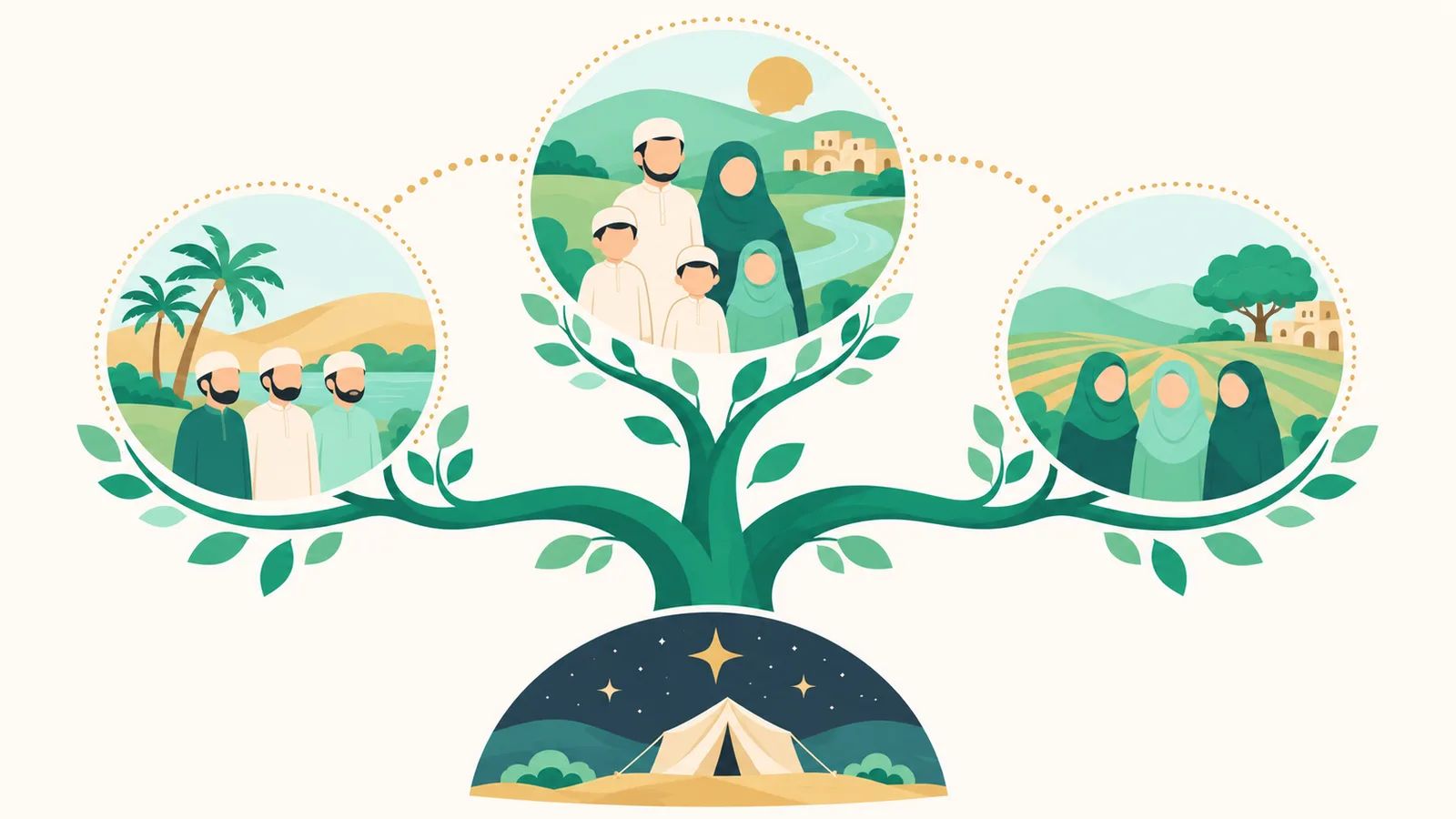
- All three faiths trace their roots to Abraham and believe in one Creator who speaks through prophets.
- The largest differences concern Jesus, the finality of scripture, and the path to salvation.
- Judaism and Islam are especially close on strict monotheism and on religious law in daily life.
- Each faith contains different denominations, so details vary within each column.