العربية
 Español
 Français
 中文
 हिन्दी
Prayer in Islam and Christianity: Bowing Before the Same Creator

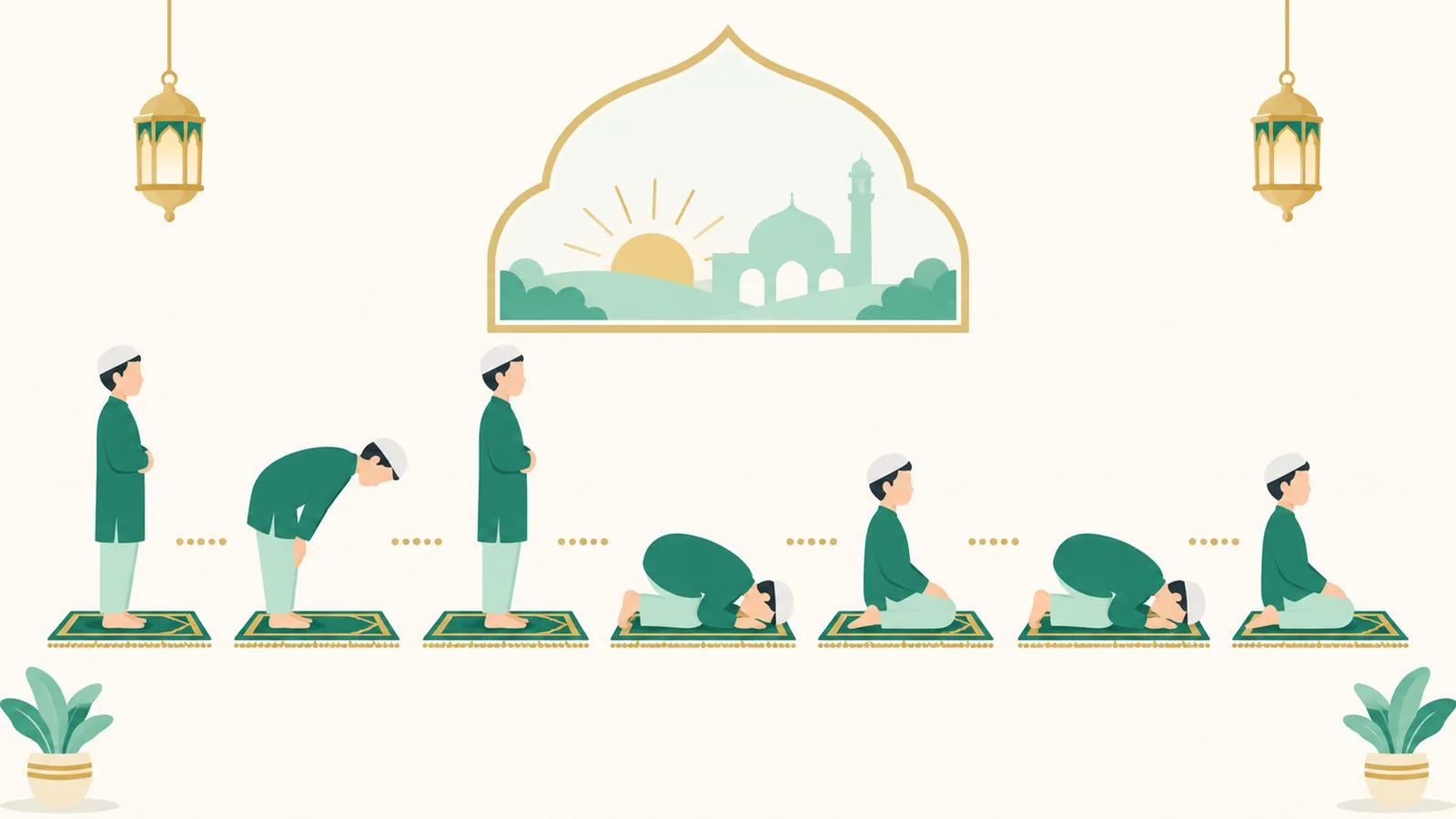
If a Christian walks into a mosque at prayer time, much of what they see may feel strange: rows of worshippers standing shoulder to shoulder, bowing in unison, foreheads to the floor. Yet the gestures, the words and the longing behind them are older than Islam — and many of them appear in the Bible itself. This article looks at prayer in both faiths: what is shared, and what is different.
Falling on one’s face before God
In the Gospels, on the night before his arrest, Jesus (peace be upon him) “went a little farther, and fell on his face, and prayed” (Matthew 26:39, KJV). Abraham, Moses and many others in the Bible also fall on their faces before God. Some Christians still prostrate in prayer, especially in the Orthodox and other Eastern churches, though many today pray standing, sitting or kneeling.
For Muslims, this posture — called sujud — is the high point of every prayer. The Qur’an tells Mary, the mother of Jesus, to prostrate and bow with those who bow (Qur’an 3:43), and the Prophet Muhammad ﷺ said:
Abu Huraira reported:The Messenger of Allah (ﷺ) said: The nearest a servant comes to his Lord is when he is prostrating himself, so make supplication (in this state)
Couldn't load — please try again.
The forehead, the most honoured part of the body, is placed on the ground. Muslims experience it as the moment of greatest closeness and humility.
Prayer at set times
The Bible describes the prophet Daniel praying at fixed times, facing Jerusalem: “he kneeled upon his knees three times a day, and prayed, and gave thanks before his God” (Daniel 6:10, KJV). Early Christians kept hours of prayer, and many monastic communities still do.
Islam makes this rhythm part of everyday life. Five prayers — at dawn, midday, afternoon, sunset and night — are a duty for every adult Muslim. The Qur’an says that prayer has been decreed upon the believers a decree of specified times (Qur’an 4:103). The Prophet ﷺ described their effect with a beautiful image:
Narrated Abu Huraira: I heard Allah's Messenger (ﷺ) saying, "If there was a river at the door of anyone of you and he took a bath in it five times a day would you notice any dirt on him?" They said, "Not a trace of dirt would be left." The Prophet (ﷺ) added, "That is the example of the five prayers with which Allah blots out (annuls) evil deeds
Couldn't load — please try again.
Purity and holy ground
Before each prayer, Muslims perform wudu, washing the hands, mouth, face, arms and feet and wiping the head, as the Qur’an describes (Qur’an 5:6). They remove their shoes in the mosque. Christian and Jewish readers will remember God’s words to Moses at the burning bush: “put off thy shoes from off thy feet, for the place whereon thou standest is holy ground” (Exodus 3:5, KJV). The Qur’an tells the same moment:
فَلَمَّآ أَتَىٰهَا نُودِىَ يَٰمُوسَىٰٓ ﴿١١﴾ إِنِّىٓ أَنَا۠ رَبُّكَ فَٱخْلَعْ نَعْلَيْكَ ۖ إِنَّكَ بِٱلْوَادِ ٱلْمُقَدَّسِ طُوًۭى ﴿١٢﴾ 11And when he came to it, he was called, "O Moses, 12Indeed, I am your Lord, so remove your sandals. Indeed, you are in the sacred valley of Tuwa.
Couldn't load — please try again.
Two prayers compared
Christians treasure the Lord’s Prayer, which begins “Our Father which art in heaven, Hallowed be thy name” (Matthew 6:9, KJV). Muslims recite the opening chapter of the Qur’an, al-Fatiha, in every unit of every prayer:
بِسْمِ ٱللَّهِ ٱلرَّحْمَٰنِ ٱلرَّحِيمِ ﴿١﴾ ٱلْحَمْدُ لِلَّهِ رَبِّ ٱلْعَٰلَمِينَ ﴿٢﴾ ٱلرَّحْمَٰنِ ٱلرَّحِيمِ ﴿٣﴾ مَٰلِكِ يَوْمِ ٱلدِّينِ ﴿٤﴾ إِيَّاكَ نَعْبُدُ وَإِيَّاكَ نَسْتَعِينُ ﴿٥﴾ ٱهْدِنَا ٱلصِّرَٰطَ ٱلْمُسْتَقِيمَ ﴿٦﴾ صِرَٰطَ ٱلَّذِينَ أَنْعَمْتَ عَلَيْهِمْ غَيْرِ ٱلْمَغْضُوبِ عَلَيْهِمْ وَلَا ٱلضَّآلِّينَ ﴿٧﴾ 1In the name of Allah, the Entirely Merciful, the Especially Merciful. 2[All] praise is [due] to Allah, Lord of the worlds - 3The Entirely Merciful, the Especially Merciful, 4Sovereign of the Day of Recompense. 5It is You we worship and You we ask for help. 6Guide us to the straight path - 7The path of those upon whom You have bestowed favor, not of those who have evoked [Your] anger or of those who are astray.
Couldn't load — please try again.
Both prayers praise God, honour His name, acknowledge His rule and ask for His guidance and protection. One difference stands out: Muslims do not address God as “Father”. The Qur’an teaches people to call on Him by His beautiful names, such as the Entirely Merciful and the Lord of the worlds.
Honest differences
- To whom Muslims pray. Muslims pray to God alone and directly. They do not pray to or through Jesus, Mary, the saints or the Prophet Muhammad ﷺ. Many Christians pray in Jesus’ name, and some also ask the saints to pray for them. For Muslims, that directness is part of tawhid, the oneness of God.
- Form and language. The five daily prayers follow a set pattern, recited in Arabic, so that Muslims anywhere in the world can pray together. Christian worship varies widely between churches, from ancient liturgy to free prayer.
- Direction. Muslims everywhere face the Ka’bah in Mecca, which they believe was built by Abraham and Ishmael as a house for the worship of the one God. Most Christian traditions do not require a direction of prayer.
Alongside the set prayers, Muslims also make du’a — personal prayer in any language, at any time, about anything. God promises:
وَإِذَا سَأَلَكَ عِبَادِى عَنِّى فَإِنِّى قَرِيبٌ ۖ أُجِيبُ دَعْوَةَ ٱلدَّاعِ إِذَا دَعَانِ ۖ فَلْيَسْتَجِيبُوا۟ لِى وَلْيُؤْمِنُوا۟ بِى لَعَلَّهُمْ يَرْشُدُونَ ﴿١٨٦﴾ And when My servants ask you, [O Muhammad], concerning Me - indeed I am near. I respond to the invocation of the supplicant when he calls upon Me. So let them respond to Me [by obedience] and believe in Me that they may be [rightly] guided.
Couldn't load — please try again.
An open invitation
Christians and Muslims both believe that God hears those who call on Him. If you are curious about what Muslim prayer actually involves, read How to Pray: A Step-by-Step Guide — or visit a mosque and watch quietly from the back. Most mosques are happy to welcome guests, and you may find more that is familiar than you expected.
Key takeaways
- Jesus, Mary and the earlier prophets are described as bowing and falling on their faces in prayer.
- Prayer at set times is an ancient practice in the Bible, and Muslims pray five set prayers each day.
- Muslims purify themselves before prayer and remove their shoes, echoing Moses at the holy ground.
- Muslims pray to God alone, directly, without praying through Jesus, saints or any intermediary.