العربية
 Español
 Français
 中文
 हिन्दी
Why Does God Allow Suffering?

A child falls ill. A flood sweeps away a village. A good person is betrayed. Believers and atheists alike ask the same question at such moments: if God is good and all-powerful, why does He allow this? It is perhaps the most serious objection to faith, and it deserves a serious, humble answer — not a slogan.
What Islam does not say
It helps to begin by clearing away some answers Islam does not give.
Islam does not say that suffering is an illusion, or that it does not really hurt. Nor does it say that every person who suffers is being punished: the prophets — the people closest to God — faced persecution, exile, illness and the death of their children. The Qur’an tells of Job (peace be upon him), who endured long years of loss and sickness and is praised as a model of patience. And Islam does not ask people to hide their grief. The Prophet Muhammad ﷺ wept openly when his infant son died (see Mental Health and Hope).
So the Islamic answer is not “it doesn’t matter”. It is that suffering, real as it is, is not meaningless and not the end of the story.
A test, not the final destination
The Qur’an describes this world as a place of testing — and the test comes through both comfort and hardship:
كُلُّ نَفْسٍۢ ذَآئِقَةُ ٱلْمَوْتِ ۗ وَنَبْلُوكُم بِٱلشَّرِّ وَٱلْخَيْرِ فِتْنَةًۭ ۖ وَإِلَيْنَا تُرْجَعُونَ ﴿٣٥﴾ Every soul will taste death. And We test you with evil and with good as trial; and to Us you will be returned.
Couldn't load — please try again.
Wealth can test us as much as poverty; health as much as illness. The question in each case is how we respond. The Qur’an speaks warmly of those who meet loss with patience and trust:
وَلَنَبْلُوَنَّكُم بِشَىْءٍۢ مِّنَ ٱلْخَوْفِ وَٱلْجُوعِ وَنَقْصٍۢ مِّنَ ٱلْأَمْوَٰلِ وَٱلْأَنفُسِ وَٱلثَّمَرَٰتِ ۗ وَبَشِّرِ ٱلصَّٰبِرِينَ ﴿١٥٥﴾ ٱلَّذِينَ إِذَآ أَصَٰبَتْهُم مُّصِيبَةٌۭ قَالُوٓا۟ إِنَّا لِلَّهِ وَإِنَّآ إِلَيْهِ رَٰجِعُونَ ﴿١٥٦﴾ أُو۟لَٰٓئِكَ عَلَيْهِمْ صَلَوَٰتٌۭ مِّن رَّبِّهِمْ وَرَحْمَةٌۭ ۖ وَأُو۟لَٰٓئِكَ هُمُ ٱلْمُهْتَدُونَ ﴿١٥٧﴾ 155And We will surely test you with something of fear and hunger and a loss of wealth and lives and fruits, but give good tidings to the patient, 156Who, when disaster strikes them, say, "Indeed we belong to Allah, and indeed to Him we will return." 157Those are the ones upon whom are blessings from their Lord and mercy. And it is those who are the [rightly] guided.
Couldn't load — please try again.
This changes the shape of the problem. If this short life were all there is, much suffering would seem senseless. But if life is a brief stage in a much longer existence, then a good God might allow hardship for a time — for the sake of goods that could not exist otherwise, and with a promise that every loss will be made good.
Human freedom and human harm
A great deal of the world’s suffering is caused by people: war, oppression, greed, cruelty and neglect. The Qur’an names this plainly:
ظَهَرَ ٱلْفَسَادُ فِى ٱلْبَرِّ وَٱلْبَحْرِ بِمَا كَسَبَتْ أَيْدِى ٱلنَّاسِ لِيُذِيقَهُم بَعْضَ ٱلَّذِى عَمِلُوا۟ لَعَلَّهُمْ يَرْجِعُونَ ﴿٤١﴾ Corruption has appeared throughout the land and sea by [reason of] what the hands of people have earned so He may let them taste part of [the consequence of] what they have done that perhaps they will return [to righteousness].
Couldn't load — please try again.
Why doesn’t God simply stop us? Because He created human beings with genuine moral freedom. A world where we could only ever choose good would be a world without real love, real honesty or real courage — those things only mean something if we could have done otherwise. God’s answer to the misuse of freedom is not to take freedom away, but to hold every person fully accountable.
What about suffering no human caused — earthquakes, disease? Here Muslims are honest: we often do not know the specific reason. The Qur’an tells the story of Moses (peace be upon him) travelling with a wise servant of God who does things that seem harmful — such as damaging a poor family’s boat — and only later reveals that a tyrant king was seizing every sound ship (Qur’an 18:65-82). The lesson is humility: we see a few frames of a very long film, while God sees the whole.
Pain that is not wasted
Islam teaches that no hardship a believer endures with patience is wasted. The Prophet ﷺ said:
Narrated Abu Sa`id Al-Khudri and Abu Huraira: The Prophet (ﷺ) said, "No fatigue, nor disease, nor sorrow, nor sadness, nor hurt, nor distress befalls a Muslim, even if it were the prick he receives from a thorn, but that Allah expiates some of his sins for that
Couldn't load — please try again.
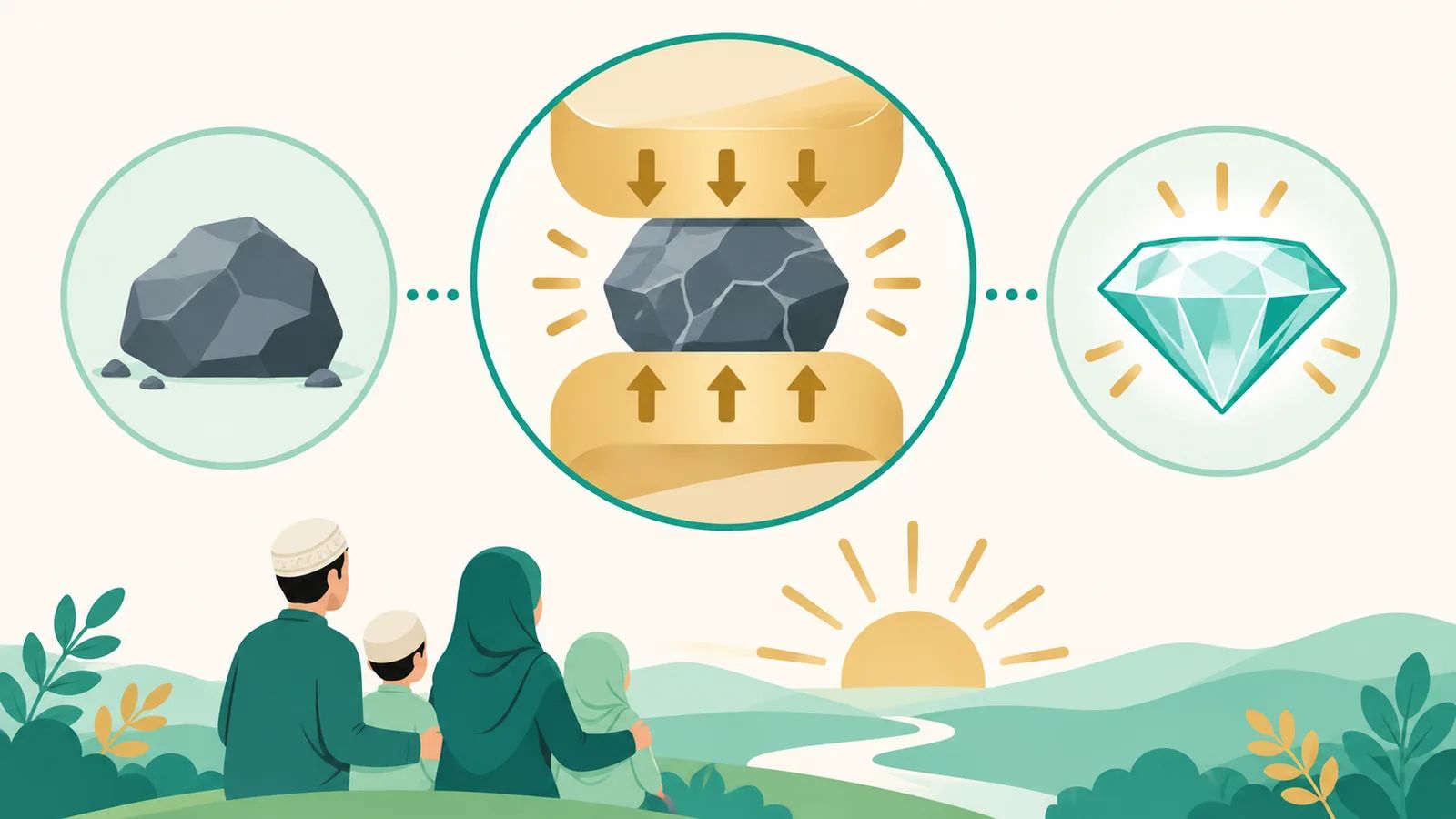
Hardship can also produce what comfort cannot: compassion for others, patience, courage, gratitude, and a turning of the heart back to God. Many people — of every faith and none — say that the hardest times of their lives were also the times they grew most. This is not a reason to seek out suffering, and Islam commands us to relieve it wherever we can. But it means that pain, even when we cannot explain it, can still bear fruit.
Justice and mercy have the last word
The deepest Islamic answer looks ahead. Every injustice that goes unpunished in this world will be answered on the Day of Judgment (see What Happens After Death?). And the joy of Paradise will be so great that it outweighs everything that came before. The Prophet ﷺ described it vividly:
Anas b. Malik reported that Allah's Messenger (ﷺ) said that one amongst the denizens of Hell who had led a life of ease and plenty amongst the people of the world would be made to dip in Fire only once on the Day of Resurrection and then it would be said to him:O, son of Adam, did you find any comfort, did you happen to get any material blessing? He would say: By Allah, no, my Lord. And then that person from amongst the persons of the world be brought who had led the most miserable life (in the world) from amongst the inmates of Paradise. and he would be made to dip once in Paradise and it would be said to him. 0, son of Adam, did you face, any hardship? Or had any distress fallen to your lot? And he would say: By Allah, no,0 my Lord, never did I face any hardship or experience any distress
Couldn't load — please try again.
Above all, Muslims trust the character of the One who allows these trials. The Prophet ﷺ once saw a mother desperately searching for her baby and holding him close when she found him:
Narrated `Umar bin Al-Khattab: Some Sabi (i.e. war prisoners, children and woman only) were brought before the Prophet (ﷺ) and behold, a woman amongst them was milking her breasts to feed and whenever she found a child amongst the captives, she took it over her chest and nursed it (she had lost her child but later she found him) the Prophet said to us, "Do you think that this lady can throw her son in the fire?" We replied, "No, if she has the power not to throw it (in the fire)." The Prophet (ﷺ) then said, "Allah is more merciful to His slaves than this lady to her son
Couldn't load — please try again.
A God who is more merciful than a mother does not allow suffering lightly, and He will not leave it unanswered.
A closing thought
Islam does not offer a formula that makes pain disappear. It offers something else: a reason to believe that pain is not pointless, a God who hears every cry, and a promise that justice and mercy will have the final word. When Muslims hear of a loss, they repeat the words taught in the verse above — that we belong to God and to Him we will return (Qur’an 2:156) — not as a way of closing the question, but as a way of carrying it.
If you are wrestling with this question, you are in good company; the prophets asked God for help in their pain too. You may also find it helpful to read Does God Exist? and our comparison Suffering in Islam and Buddhism.
Key takeaways
- Islam takes pain seriously; grief and tears are not a lack of faith.
- This life is a test with both good and bad times — not the final chapter.
- Much suffering comes from human choices; freedom is real, and so is accountability.
- No sincere patience or pain is wasted, and God's justice and mercy have the last word.
- Muslims do not claim to know every reason, but trust the wisdom of a God who is more merciful than a mother.