العربية
 Español
 Français
 中文
 हिन्दी
Why Don't Muslims Eat Pork or Drink Alcohol?
Few things make a Muslim friend’s faith more visible than a shared meal: the polite “no thanks” to the ham sandwich or the glass of wine. People are often curious, sometimes puzzled. Is it about health? About hygiene in ancient Arabia? The honest answer starts somewhere else.
The first reason: God forbade it
Islam teaches that God, who created us, knows best what is good for us. Most food is lawful (halal); the Qur’an forbids only a short list:
إِنَّمَا حَرَّمَ عَلَيْكُمُ ٱلْمَيْتَةَ وَٱلدَّمَ وَلَحْمَ ٱلْخِنزِيرِ وَمَآ أُهِلَّ بِهِۦ لِغَيْرِ ٱللَّهِ ۖ فَمَنِ ٱضْطُرَّ غَيْرَ بَاغٍۢ وَلَا عَادٍۢ فَلَآ إِثْمَ عَلَيْهِ ۚ إِنَّ ٱللَّهَ غَفُورٌۭ رَّحِيمٌ ﴿١٧٣﴾ He has only forbidden to you dead animals, blood, the flesh of swine, and that which has been dedicated to other than Allah. But whoever is forced [by necessity], neither desiring [it] nor transgressing [its limit], there is no sin upon him. Indeed, Allah is Forgiving and Merciful.
Couldn't load — please try again.
Notice two things. First, the list is short: Islam’s default is that good food is permitted, and the Qur’an even criticises people who forbid good things without reason (Qur’an 7:32). Second, the verse ends with an exception. Someone facing starvation, with nothing else to eat, commits no sin in eating what would otherwise be forbidden. The rule is firm, but it is not cruel.
For a Muslim, the core reason for avoiding pork is simple: God has said so, and obeying Him is part of worship. Muslims do not need a scientific explanation for every command, just as a child who trusts a loving parent does not need every instruction justified.
A rule shared with the Bible
Many people are surprised to learn that this is not unique to Islam. The Law of Moses (peace be upon him) contains the same prohibition: “And the swine, though he divide the hoof, and be clovenfooted, yet he cheweth not the cud; he is unclean to you” (Leviticus 11:7, KJV). Observant Jews keep it to this day. Muslims see this as a sign of the one message running through all the prophets. (See Islam and Judaism.)
People sometimes suggest health reasons, such as parasites in undercooked pork. Such benefits may exist, but Muslims do not rest the rule on them. Even if pork could be made perfectly safe, the prohibition would stand, because it rests on God’s command.
Why alcohol is forbidden
Alcohol is different: here the Qur’an itself explains the harm. Its prohibition came in stages. An early verse said that wine and gambling contain some benefit, but that their sin is greater (Qur’an 2:219). A later verse told believers not to come to prayer while intoxicated (Qur’an 4:43). Then came the final ruling:
يَٰٓأَيُّهَا ٱلَّذِينَ ءَامَنُوٓا۟ إِنَّمَا ٱلْخَمْرُ وَٱلْمَيْسِرُ وَٱلْأَنصَابُ وَٱلْأَزْلَٰمُ رِجْسٌۭ مِّنْ عَمَلِ ٱلشَّيْطَٰنِ فَٱجْتَنِبُوهُ لَعَلَّكُمْ تُفْلِحُونَ ﴿٩٠﴾ إِنَّمَا يُرِيدُ ٱلشَّيْطَٰنُ أَن يُوقِعَ بَيْنَكُمُ ٱلْعَدَٰوَةَ وَٱلْبَغْضَآءَ فِى ٱلْخَمْرِ وَٱلْمَيْسِرِ وَيَصُدَّكُمْ عَن ذِكْرِ ٱللَّهِ وَعَنِ ٱلصَّلَوٰةِ ۖ فَهَلْ أَنتُم مُّنتَهُونَ ﴿٩١﴾ 90O you who have believed, indeed, intoxicants, gambling, [sacrificing on] stone alters [to other than Allah], and divining arrows are but defilement from the work of Satan, so avoid it that you may be successful. 91Satan only wants to cause between you animosity and hatred through intoxicants and gambling and to avert you from the remembrance of Allah and from prayer. So will you not desist?
Couldn't load — please try again.
The Qur’an names the harm clearly: hostility and hatred between people, and distraction from God and prayer. When this verse was announced, the companions in Madinah poured their wine out until, as one of them recalled, it flowed in the streets of the city (Bukhari 2464).
The Prophet ﷺ made clear that the rule is about intoxication, not one particular drink:
Ibn 'Umar, through another chain of transmitters; reported Allah's Messenger (ﷺ) having said this:Every intoxicant is Khamr and every intoxicant is forbidden
Couldn't load — please try again.
And because “just one” is how harm often begins, he closed that door too:
Narrated Jabir ibn Abdullah: The Prophet (ﷺ) said: If a large amount of anything causes intoxication, a small amount of it is prohibited
Couldn't load — please try again.
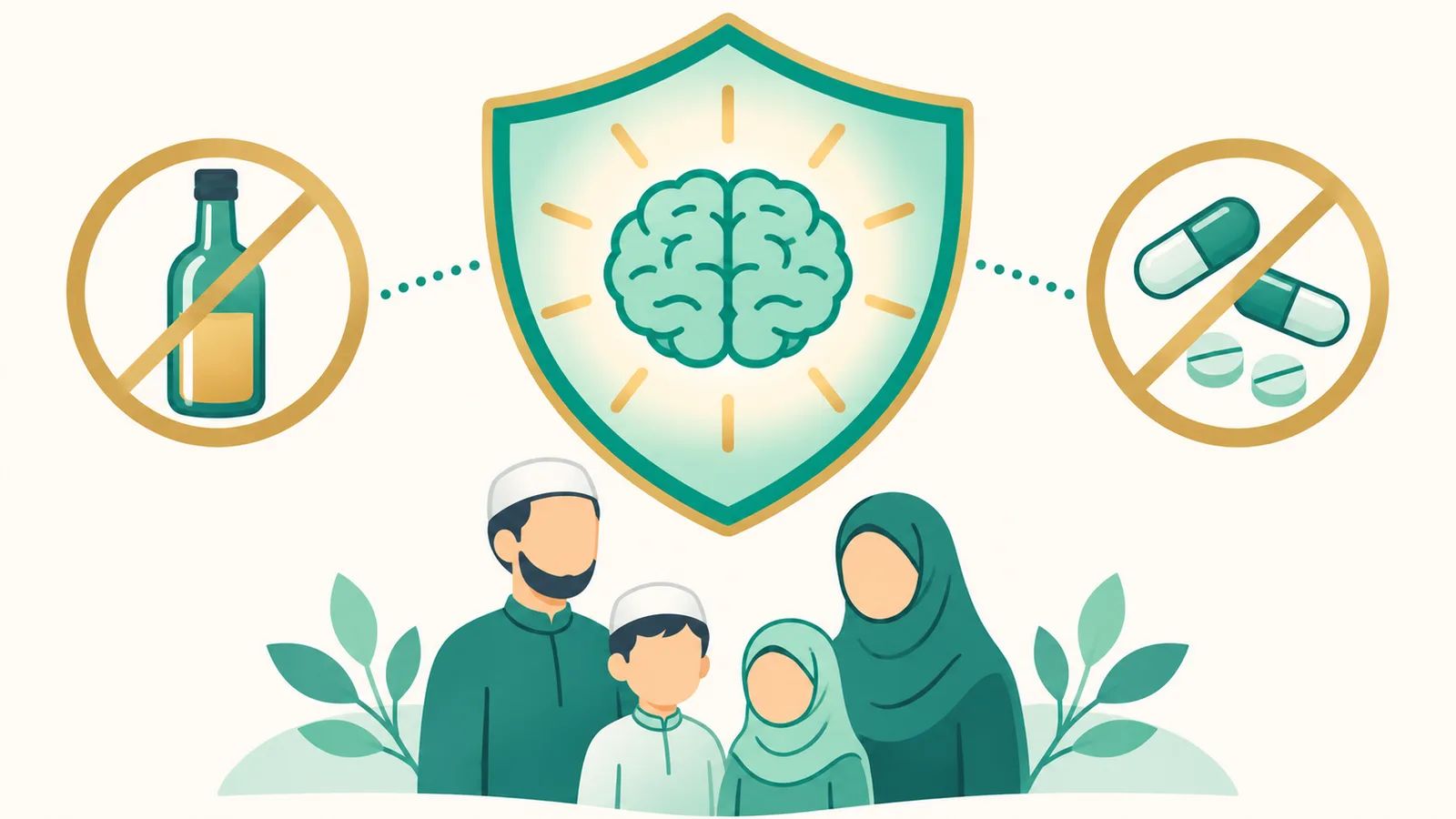
This is why Muslim scholars apply the ruling to every intoxicating substance, including recreational drugs. Islam protects the mind as one of the great trusts God has given us; anything that deliberately takes it away is treated seriously.
Is this a judgement on others?
No. These rules are for Muslims. A Muslim does not look down on a neighbour who drinks wine or eats bacon; that person has not made the same commitment. Muslims are taught to be courteous guests and hosts, and most will simply ask what is in a dish. If you invite a Muslim friend for a meal, a vegetarian or fish option and a non-alcoholic drink will usually make them feel completely at home.
The common misunderstanding
The common misunderstanding is that these are arbitrary taboos, or rules left over from ancient hygiene problems. For Muslims they are part of a much larger picture: a life lived consciously before God, in which even eating and drinking can be acts of worship. The prohibitions are few, the permitted things are many, and mercy is built in for those in need.
If you want to understand how Muslims think about what is permitted and forbidden more generally, read about halal and haram.
Key takeaways
- The Qur'an names pork among a short list of forbidden foods, alongside blood and dead animals.
- The same prohibition of pork appears in the Hebrew Bible, so Muslims share it with observant Jews.
- Alcohol was forbidden in stages, and every intoxicant, in any amount, is included.
- In real necessity, such as starvation, the prohibition is lifted.
- For Muslims, the main reason is obedience to God; health and social benefits are seen as part of the wisdom, not the whole of it.