العربية
 Español
 Français
 中文
 हिन्दी
What Does the Shahada Mean?

Some of the most important sentences in history are also the shortest. The shahada, the Muslim declaration of faith, takes only a few seconds to say. Muslims repeat it in every prayer, teach it to their children, and hope it will be their last words. Yet its meaning is deep enough to shape a whole life.
The words
أَشْهَدُ أَنْ لَا إِلَٰهَ إِلَّا اللَّهُ، وَأَشْهَدُ أَنَّ مُحَمَّدًا رَسُولُ اللَّهِ
How to say it: Ashhadu an lā ilāha illā-llāh, wa ashhadu anna Muḥammadan rasūlu-llāh
“I bear witness that there is no god but God, and I bear witness that Muhammad is the Messenger of God.”
There is no god but God: no one and nothing deserves worship except the One God, the Creator of all.
Muhammad ﷺ is the Messenger of God: we believe he is God’s final messenger, and we follow his guidance.
The word shahada means “testimony” or “bearing witness”. A witness does not merely hold an opinion; a witness states what they know to be true. That is why the shahada begins with ash-hadu — “I testify”. It is the first of the five pillars of Islam, the foundation on which the others rest:
…Al-Islam implies that you testify that there is no god but Allah and that Muhammad is the messenger of Allah, and you establish prayer, pay Zakat, observe the fast of Ramadan, and perform pilgrimage to the (House) if you are solvent enough (to bear the expense of) the journey.…
Couldn't load — please try again.
The first testimony: no god but God
The first half — la ilaha illallah — is built in two movements.
“There is no god” is a denial. It clears away everything that people have treated as divine or given ultimate devotion to: idols, spirits, powerful people, wealth, status, even one’s own desires.
“But God” is an affirmation. Once everything false is cleared away, what remains is the one true God, the Creator of all things, who alone deserves worship, love, hope and trust.
The Qur’an calls on people to know this truth deeply, not merely to repeat it:
فَٱعْلَمْ أَنَّهُۥ لَآ إِلَٰهَ إِلَّا ٱللَّهُ وَٱسْتَغْفِرْ لِذَنۢبِكَ وَلِلْمُؤْمِنِينَ وَٱلْمُؤْمِنَٰتِ ۗ وَٱللَّهُ يَعْلَمُ مُتَقَلَّبَكُمْ وَمَثْوَىٰكُمْ ﴿١٩﴾ So know, [O Muhammad], that there is no deity except Allah and ask forgiveness for your sin and for the believing men and believing women. And Allah knows of your movement and your resting place.
Couldn't load — please try again.
It also presents this testimony as something God Himself, the angels and people of knowledge bear witness to:
شَهِدَ ٱللَّهُ أَنَّهُۥ لَآ إِلَٰهَ إِلَّا هُوَ وَٱلْمَلَٰٓئِكَةُ وَأُو۟لُوا۟ ٱلْعِلْمِ قَآئِمًۢا بِٱلْقِسْطِ ۚ لَآ إِلَٰهَ إِلَّا هُوَ ٱلْعَزِيزُ ٱلْحَكِيمُ ﴿١٨﴾ Allah witnesses that there is no deity except Him, and [so do] the angels and those of knowledge - [that He is] maintaining [creation] in justice. There is no deity except Him, the Exalted in Might, the Wise.
Couldn't load — please try again.
In practice, the first testimony means that a Muslim prays to God alone, depends on Him alone, and refuses to give anything created the place that belongs only to its Creator. You can read more in God Is One: No Partner, No Son, No Equal.
The second testimony: Muhammad is the Messenger of God
The second half — Muhammadan rasulullah — answers a natural question: if we must worship God alone, how do we know how to worship Him and how He wants us to live?
Muslims believe God has always answered that question by sending messengers. To testify that Muhammad ﷺ is the Messenger of God is to accept him as the final messenger, to believe what he taught about God, and to follow his example in worship and character. See Muhammad ﷺ Is the Final Messenger.
Just as important is what the second testimony does not mean. It does not make Muhammad ﷺ divine. The Qur’an tells him to say plainly that he is a human being:
قُلْ إِنَّمَآ أَنَا۠ بَشَرٌۭ مِّثْلُكُمْ يُوحَىٰٓ إِلَىَّ أَنَّمَآ إِلَٰهُكُمْ إِلَٰهٌۭ وَٰحِدٌۭ ۖ فَمَن كَانَ يَرْجُوا۟ لِقَآءَ رَبِّهِۦ فَلْيَعْمَلْ عَمَلًۭا صَٰلِحًۭا وَلَا يُشْرِكْ بِعِبَادَةِ رَبِّهِۦٓ أَحَدًۢا ﴿١١٠﴾ Say, "I am only a man like you, to whom has been revealed that your god is one God. So whoever would hope for the meeting with his Lord - let him do righteous work and not associate in the worship of his Lord anyone."
Couldn't load — please try again.
And the Prophet ﷺ himself warned against exaggerating his status:
Narrated `Umar: I heard the Prophet (ﷺ) saying, "Do not exaggerate in praising me as the Christians praised the son of Mary, for I am only a Slave. So, call me the Slave of Allah and His Apostle
Couldn't load — please try again.
So the two halves of the shahada balance each other: the first gives all worship to God; the second gives the Prophet ﷺ his true place — honoured, loved and followed, but always as God’s servant and messenger.
A testimony that is lived
Scholars have long explained that the shahada is more than words. Saying it sincerely involves:
- Knowledge — understanding what it means.
- Certainty — holding it without doubt.
- Sincerity — saying it for God, not for show or to please others.
- Acceptance and commitment — being willing to live by it, step by step.
- Love — for God, His messenger and the truth they brought.
Nobody lives these perfectly. A new Muslim is not expected to know everything on day one. But the shahada sets a direction, and every prayer, every act of kindness and every return to God after a mistake is a way of renewing it.
Why it matters
For Muslims, the shahada is the doorway into Islam and the thread that runs through it. Every Muslim prayer includes it; Muslims hope it will be on their lips at the end of life; and anyone who sincerely says it is welcomed as a brother or sister in faith, whatever their background.
If you are thinking about saying it yourself, How to Become Muslim explains the step gently and simply. And if you are simply curious, we hope this has helped you understand the short sentence at the heart of Muslim life everywhere.
Key takeaways
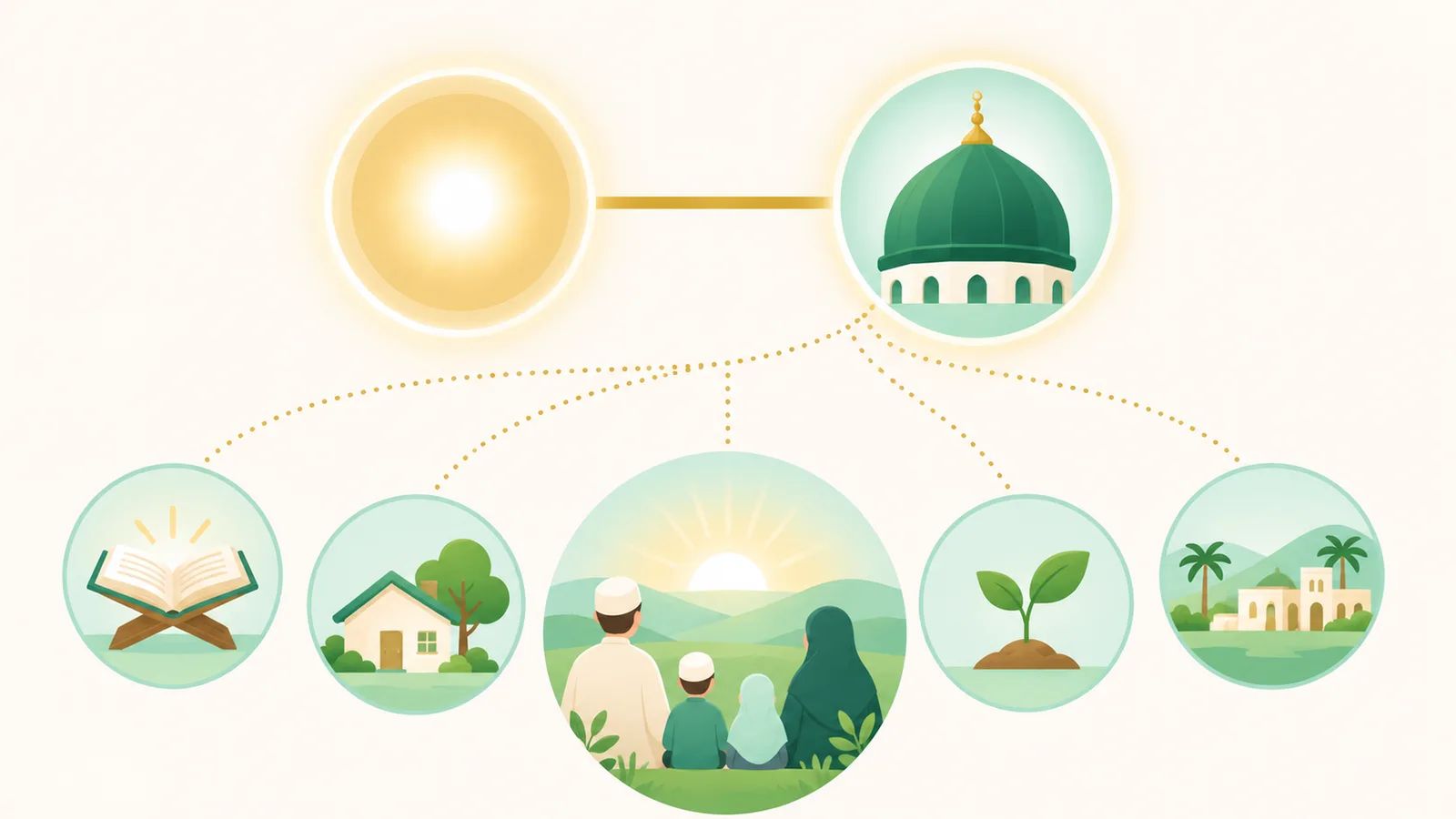
- The shahada has two parts — a testimony about God and a testimony about Muhammad ﷺ.
- The first part both denies false gods and affirms the one true God.
- The second part accepts Muhammad ﷺ as a human messenger to be followed, not worshipped.
- It is the first pillar of Islam and shapes every other part of a Muslim's life.