العربية
 Español
 Français
 中文
 हिन्दी
Why Does Islam Forbid Alcohol and Drugs?

In many cultures, drinking is woven into celebrations, business and friendship. So when people learn that most Muslims never touch alcohol at all, they often ask why. The answer says a lot about how Islam views the human mind — and about the wise, gentle way God guided the first Muslims.
A prohibition in stages
When Islam began, wine was a central part of Arabian life, celebrated in poetry and drunk at almost every gathering. Rather than forbidding it overnight, the Qur’an prepared hearts step by step.
First, it acknowledged that wine and gambling bring some benefit but declared that their harm is greater:
۞ يَسْـَٔلُونَكَ عَنِ ٱلْخَمْرِ وَٱلْمَيْسِرِ ۖ قُلْ فِيهِمَآ إِثْمٌۭ كَبِيرٌۭ وَمَنَٰفِعُ لِلنَّاسِ وَإِثْمُهُمَآ أَكْبَرُ مِن نَّفْعِهِمَا ۗ وَيَسْـَٔلُونَكَ مَاذَا يُنفِقُونَ قُلِ ٱلْعَفْوَ ۗ كَذَٰلِكَ يُبَيِّنُ ٱللَّهُ لَكُمُ ٱلْءَايَٰتِ لَعَلَّكُمْ تَتَفَكَّرُونَ ﴿٢١٩﴾ They ask you about wine and gambling. Say, "In them is great sin and [yet, some] benefit for people. But their sin is greater than their benefit." And they ask you what they should spend. Say, "The excess [beyond needs]." Thus Allah makes clear to you the verses [of revelation] that you might give thought.
Couldn't load — please try again.
Second, it told believers not to come to prayer while intoxicated (4:43). Since the five daily prayers are spread through the day, this left little room for drinking.
Finally, it declared a complete prohibition:
يَٰٓأَيُّهَا ٱلَّذِينَ ءَامَنُوٓا۟ إِنَّمَا ٱلْخَمْرُ وَٱلْمَيْسِرُ وَٱلْأَنصَابُ وَٱلْأَزْلَٰمُ رِجْسٌۭ مِّنْ عَمَلِ ٱلشَّيْطَٰنِ فَٱجْتَنِبُوهُ لَعَلَّكُمْ تُفْلِحُونَ ﴿٩٠﴾ إِنَّمَا يُرِيدُ ٱلشَّيْطَٰنُ أَن يُوقِعَ بَيْنَكُمُ ٱلْعَدَٰوَةَ وَٱلْبَغْضَآءَ فِى ٱلْخَمْرِ وَٱلْمَيْسِرِ وَيَصُدَّكُمْ عَن ذِكْرِ ٱللَّهِ وَعَنِ ٱلصَّلَوٰةِ ۖ فَهَلْ أَنتُم مُّنتَهُونَ ﴿٩١﴾ 90O you who have believed, indeed, intoxicants, gambling, [sacrificing on] stone alters [to other than Allah], and divining arrows are but defilement from the work of Satan, so avoid it that you may be successful. 91Satan only wants to cause between you animosity and hatred through intoxicants and gambling and to avert you from the remembrance of Allah and from prayer. So will you not desist?
Couldn't load — please try again.
The Prophet’s wife Aisha later explained the wisdom of this gradual approach. Speaking of the order of revelation, she said:
…If the first thing to be revealed was: 'Do not drink alcoholic drinks.' people would have said, 'We will never leave alcoholic drinks,'…
Couldn't load — please try again.
First, faith in God and the Hereafter took root; then the laws came, and people were ready to accept them.
The streets of Medina
The response of the early Muslims was remarkable. Anas ibn Malik, who was serving drinks at a gathering when the final prohibition was announced, recalled:
…Abu Talha ordered me to go out and spill the wine. I went out and spilled it, and it flowed in the streets of Medina.…
Couldn't load — please try again.
A whole community gave up a deeply rooted habit in a single day — not because of police, but because of faith.
Every intoxicant
The Qur’an uses the word khamr, which comes from a root meaning “to cover”. The Prophet ﷺ made clear that the rule is about the effect, not the particular drink:
Ibn 'Umar, through another chain of transmitters; reported Allah's Messenger (ﷺ) having said this:Every intoxicant is Khamr and every intoxicant is forbidden
Couldn't load — please try again.
On this basis, Muslim scholars agree that drugs which intoxicate — whether cannabis, cocaine, heroin or anything else used to get high — fall under the same prohibition. Medicines used under proper medical care are a different matter, and scholars discuss the details of medical use, small traces in food, and similar questions (see where Muslims differ). Trading in alcohol and serving it are also forbidden, because they help others into harm.
The wisdom: protecting the mind
The Qur’an names the reasons itself: intoxicants stir up hostility and hatred and turn people away from remembering God and from prayer. Islamic law counts the protection of the mind among its central goals, because the mind is what makes a person responsible before God (see reason and faith). Anyone who has seen the effects of drunk driving, alcohol-fuelled violence or a family torn apart by addiction will recognise the harms the Qur’an warned about. The Bible, too, warns: “Wine is a mocker, strong drink is raging: and whosoever is deceived thereby is not wise” (Proverbs 20:1, KJV).
Mercy for those who struggle
Islam’s firmness about alcohol never becomes contempt for people. In the Prophet’s time, a man was repeatedly punished for drinking, and someone cursed him. The Prophet ﷺ stopped him:
…Do not curse him, for by Allah, I know for he loves Allah and His Apostle…
Couldn't load — please try again.
This short scene teaches a great deal. The man had done wrong, and the law was applied — yet the Prophet ﷺ refused to let anyone strip him of his dignity or his place in the community. A person can be struggling with a sin and still love God. Muslims who battle addiction need support, treatment and encouragement, not shame. And for anyone who has drunk or used drugs in the past — including people who later embrace Islam — the door of repentance is wide open (see are my past sins forgiven?).
A closing thought
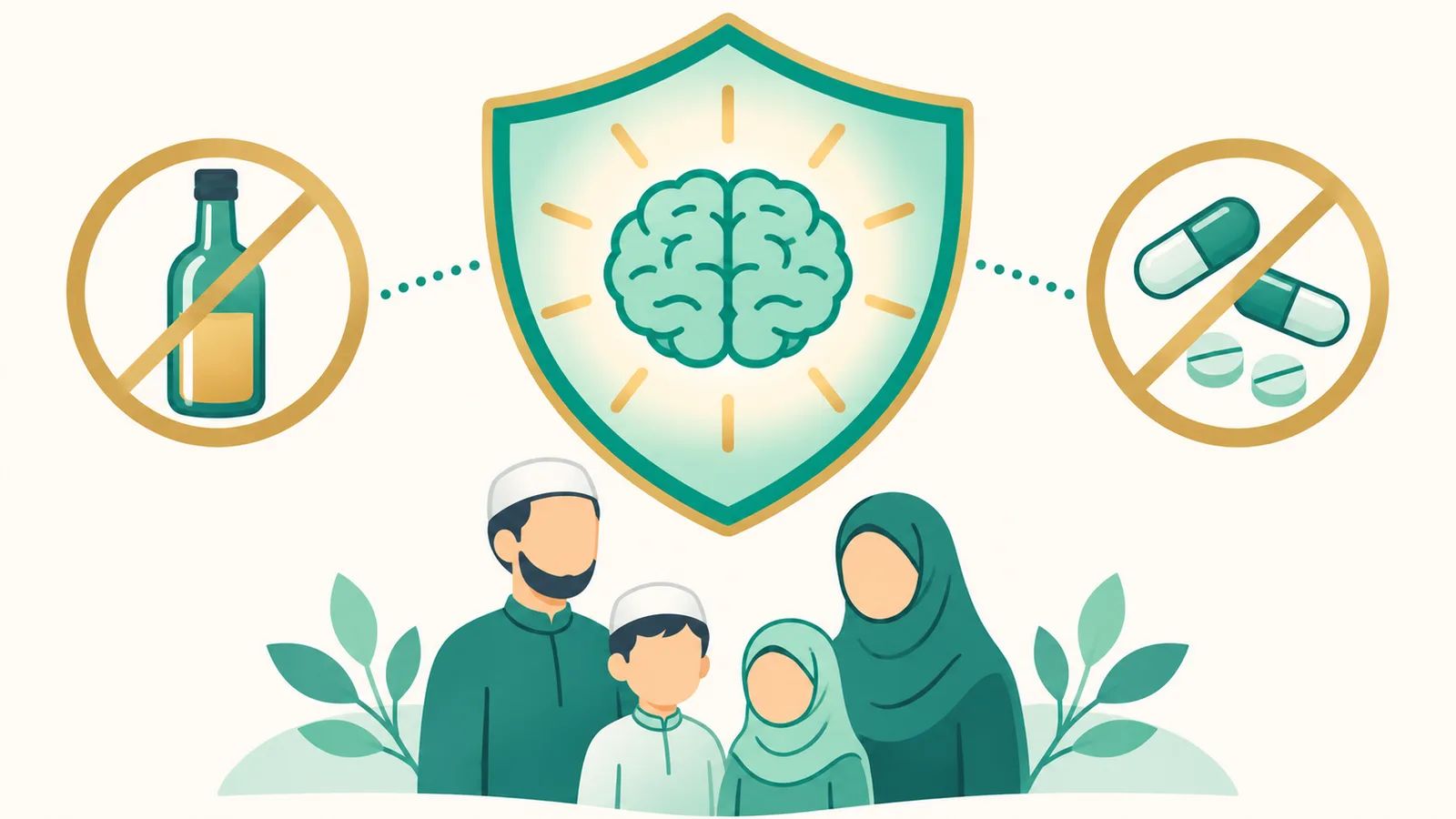
The prohibition of alcohol and drugs is, at heart, an act of care: for the mind God gave us, for the families who depend on us, and for societies that suffer when judgement is lost. To see how this fits with other food rules, read halal food.
Key takeaways
- The Qur'an prohibited alcohol in three stages, showing God's wisdom and gentleness.
- Every intoxicant is forbidden — the principle covers intoxicating drugs as well.
- The aim is to protect the mind, health, families and society.
- People struggling with addiction deserve compassion and help, and repentance is always open.