العربية
 Español
 Français
 中文
 हिन्दी
What Does Islam Teach About Forgiving Others?

Holding a grudge can feel like strength. We replay the injury, rehearse what we should have said, and wait for the other person to pay. Islam understands that instinct — and then gently invites us to put the weight down. Not because the wrong did not matter, but because there is something better than getting even.
Justice is allowed — forgiveness is better
Islam is not naïve about wrongdoing. It does not tell victims that their pain is unimportant or that justice is a sin. In fact, the Qur’an explicitly permits a fair response, and then points to a higher path:
وَجَزَٰٓؤُا۟ سَيِّئَةٍۢ سَيِّئَةٌۭ مِّثْلُهَا ۖ فَمَنْ عَفَا وَأَصْلَحَ فَأَجْرُهُۥ عَلَى ٱللَّهِ ۚ إِنَّهُۥ لَا يُحِبُّ ٱلظَّٰلِمِينَ ﴿٤٠﴾ And the retribution for an evil act is an evil one like it, but whoever pardons and makes reconciliation - his reward is [due] from Allah. Indeed, He does not like wrongdoers.
Couldn't load — please try again.
The structure of this verse is typical of the Qur’an. First, justice: a wrong may be answered with its equivalent, and no more. The Qur’an even says there is no blame on those who defend themselves after being wronged (Qur’an 42:41). Then, an invitation: whoever pardons and makes peace will be rewarded by God Himself. A few verses later, the Qur’an adds that patience and forgiveness are among the matters that require real resolve (Qur’an 42:43). Forgiveness, in other words, is not weakness. It is one of the hardest and most admirable things a person can do.
Forgive, as you hope to be forgiven
One of the most moving verses on forgiveness came down in a deeply personal situation. Abu Bakr, the Prophet’s closest friend, had for years financially supported a poor relative named Mistah. When Abu Bakr’s daughter Aisha was slandered with a false accusation of adultery, Mistah was among those who spread it. After Aisha’s innocence was declared, Abu Bakr swore he would never support Mistah again. Then God revealed:
وَلَا يَأْتَلِ أُو۟لُوا۟ ٱلْفَضْلِ مِنكُمْ وَٱلسَّعَةِ أَن يُؤْتُوٓا۟ أُو۟لِى ٱلْقُرْبَىٰ وَٱلْمَسَٰكِينَ وَٱلْمُهَٰجِرِينَ فِى سَبِيلِ ٱللَّهِ ۖ وَلْيَعْفُوا۟ وَلْيَصْفَحُوٓا۟ ۗ أَلَا تُحِبُّونَ أَن يَغْفِرَ ٱللَّهُ لَكُمْ ۗ وَٱللَّهُ غَفُورٌۭ رَّحِيمٌ ﴿٢٢﴾ And let not those of virtue among you and wealth swear not to give [aid] to their relatives and the needy and the emigrants for the cause of Allah, and let them pardon and overlook. Would you not like that Allah should forgive you? And Allah is Forgiving and Merciful.
Couldn't load — please try again.
Abu Bakr replied that he certainly did want God to forgive him — and he restored Mistah’s support, saying he would never withhold it again (Sahih al-Bukhari 4750). The lesson is profound. Every one of us needs God’s forgiveness; the forgiveness we show others is linked to the forgiveness we hope to receive. For more on how God forgives, see will my past sins be forgiven?
The example of the Prophet ﷺ
The Prophet Muhammad ﷺ lived this teaching under extreme pressure. His wife Aisha said that he never took revenge for himself over any personal wrong, acting only when the sacred limits of God were violated (Sahih al-Bukhari 3560).
After years of rejection in Mecca, he travelled to another town (traditionally identified as Ta’if) to invite its people to Islam. They rejected him harshly and drove him away. Later, he described how the angel in charge of the mountains came to him and offered to crush the people between two mountains if he wished. His answer:
…No but I hope that Allah will let them beget children who will worship Allah Alone, and will worship None besides Him…
Couldn't load — please try again.
He also described another prophet who, while wiping the blood from his own face after his people had beaten him, prayed that God would forgive his people, because they did not know what they were doing (Sahih al-Bukhari 3477). And when the Prophet ﷺ finally returned to Mecca as its leader, he pardoned the great majority of the people who had persecuted and fought him for two decades.
The Qur’an tells a similar story about the Prophet Joseph (peace be upon him). When the brothers who had thrown him into a well stood before him, powerless, he told them there would be no blame on them that day and prayed for God to forgive them (Qur’an 12:92).
Forgiveness close to home
Forgiveness is not only for dramatic moments. The Qur’an praises those who restrain their anger and pardon people, calling them doers of good whom God loves (Qur’an 3:134). It even acknowledges that friction will arise within families — between spouses, or between parents and children — and asks believers to pardon, overlook and forgive there too (Qur’an 64:14). The Prophet ﷺ promised that pardoning never lowers a person; God only increases them in honour for it (Sahih Muslim 6592).
What forgiveness does not mean
Forgiving someone does not mean pretending that wrong is right, staying in a situation where you are being harmed, or giving up rights that protect you or others. A victim of abuse can forgive in their heart and still seek safety and justice. Courts must still uphold the law; Islam’s emphasis on justice is just as strong as its emphasis on mercy. Forgiveness is a gift the wronged person chooses to give — never a demand that the powerful can make of the weak.
A closing thought
Forgiveness frees two people: the one who is pardoned, and the one who stops carrying the injury. Islam asks believers to forgive not because the hurt was small, but because God’s forgiveness is great. If anger is what makes forgiveness hard, you may find anger in Islam helpful.
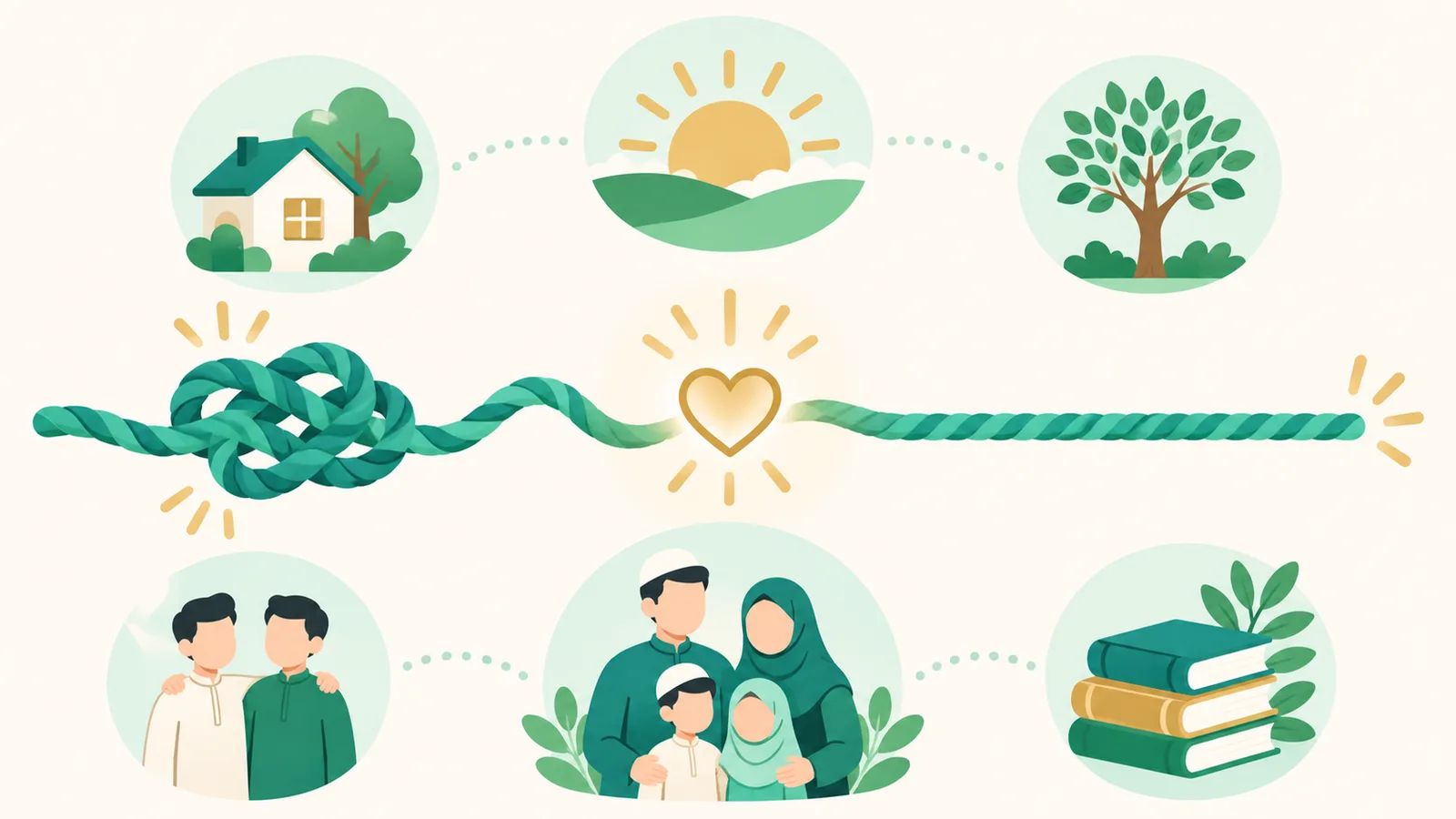
Key takeaways
- Justice is permitted, but forgiveness is praised as nobler and rewarded by God.
- We forgive others because we hope God will forgive us.
- The Prophet ﷺ never took revenge for personal wrongs.
- Forgiving does not mean accepting ongoing harm or giving up legitimate rights.