العربية
 Español
 Français
 中文
 हिन्दी
What Does Islam Say About Freedom?
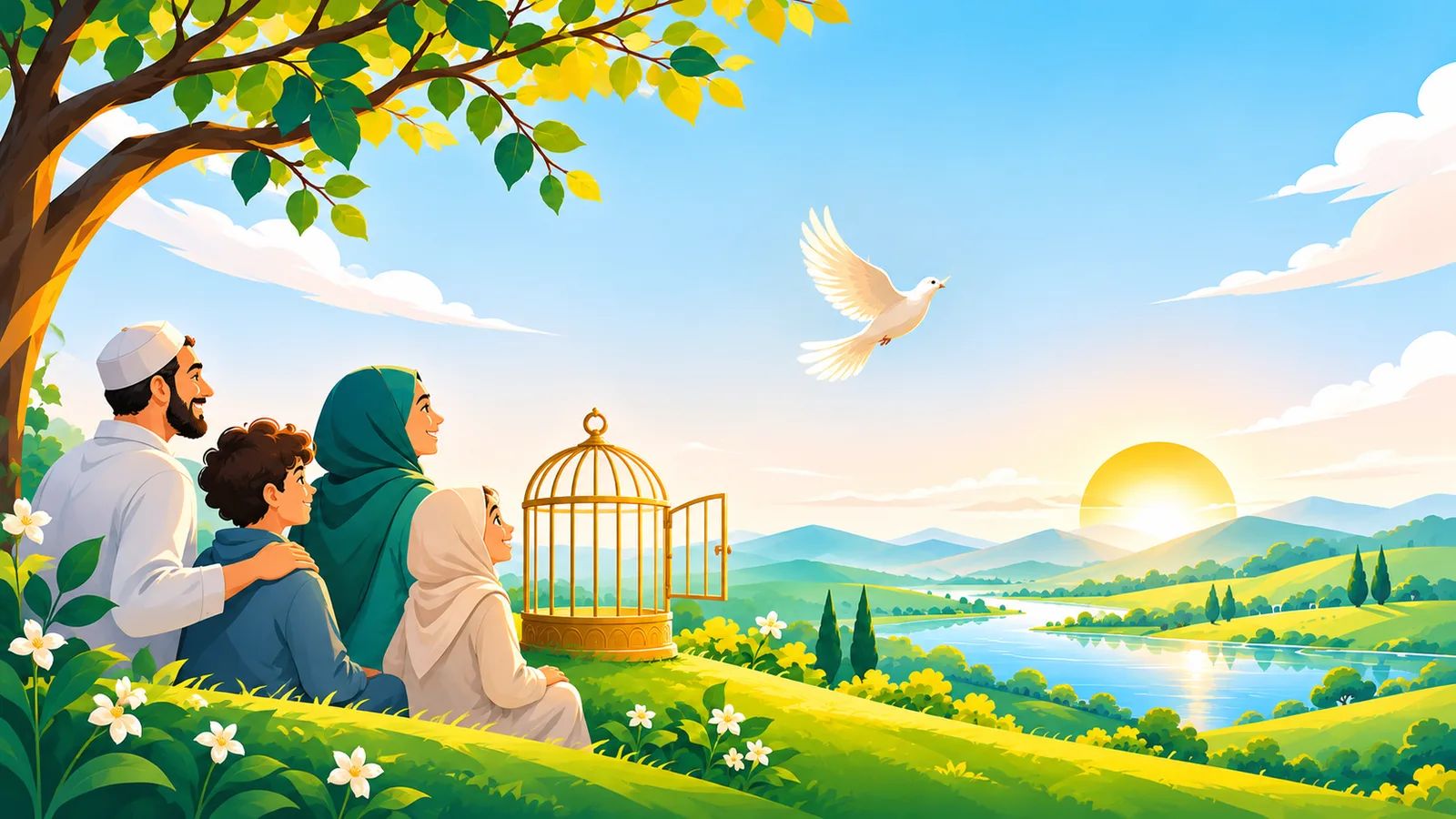
For many people, the word “religion” suggests rules, and rules suggest the opposite of freedom. Islam turns that picture around. It asks a deeper question: free from what, and free for what?
Freedom from every master but one
Everyone serves something. Some people live for money, some for the approval of others, some for a career, a political cause or their own cravings. Islam teaches that a human being was created to worship God alone (Qur’an 51:56) — and that this is exactly what sets them free. The Qur’an gives a vivid comparison:
ضَرَبَ ٱللَّهُ مَثَلًۭا رَّجُلًۭا فِيهِ شُرَكَآءُ مُتَشَٰكِسُونَ وَرَجُلًۭا سَلَمًۭا لِّرَجُلٍ هَلْ يَسْتَوِيَانِ مَثَلًا ۚ ٱلْحَمْدُ لِلَّهِ ۚ بَلْ أَكْثَرُهُمْ لَا يَعْلَمُونَ ﴿٢٩﴾ Allah presents an example: a slave owned by quarreling partners and another belonging exclusively to one man - are they equal in comparison? Praise be to Allah! But most of them do not know.
Couldn't load — please try again.
A servant pulled between quarrelling masters is never at peace; whatever he does, someone is displeased. A servant of One Master knows where he stands. This is the heart of tawhid — the oneness of God (see God is one). When God alone is worshipped, no king, priest, celebrity or bank balance can claim the whole of a person’s heart.
The Qur’an also warns against a subtler kind of slavery: turning one’s own desires into a god (Qur’an 45:23). Addiction, greed and endless comparison with others can rule a life as harshly as any tyrant. Islam’s discipline — prayer, fasting, generosity — is meant to give a person mastery over themselves, not to take freedom away.
No one can be forced to believe
Because faith is a matter of the heart, it cannot be imposed. The Qur’an states:
لَآ إِكْرَاهَ فِى ٱلدِّينِ ۖ قَد تَّبَيَّنَ ٱلرُّشْدُ مِنَ ٱلْغَىِّ ۚ فَمَن يَكْفُرْ بِٱلطَّٰغُوتِ وَيُؤْمِنۢ بِٱللَّهِ فَقَدِ ٱسْتَمْسَكَ بِٱلْعُرْوَةِ ٱلْوُثْقَىٰ لَا ٱنفِصَامَ لَهَا ۗ وَٱللَّهُ سَمِيعٌ عَلِيمٌ ﴿٢٥٦﴾ There shall be no compulsion in [acceptance of] the religion. The right course has become clear from the wrong. So whoever disbelieves in Taghut and believes in Allah has grasped the most trustworthy handhold with no break in it. And Allah is Hearing and Knowing.
Couldn't load — please try again.
The verse explains why: the right way has been made clear, so each person can see it and choose. Elsewhere God tells the Prophet ﷺ to announce that the truth has come from the Lord, and that whoever wills may believe and whoever wills may disbelieve (Qur’an 18:29). The Qur’an then speaks of what follows from that choice in the Hereafter; the freedom to choose is real, and so are its consequences. We explore this in No compulsion in religion.
Freedom comes with responsibility
In Islam, human beings are not puppets. God has shown each person the two paths of good and evil (Qur’an 90:10), and every soul is answerable for what it has earned (Qur’an 74:38). No one carries another person’s burden (Qur’an 6:164). That is what makes our choices meaningful.
Responsibility is not only for our own souls but for whatever is placed in our care:
…Surely! Everyone of you is a guardian and is responsible for his charges…
Couldn't load — please try again.
A ruler is answerable for his people, a parent for their children, an employee for what they are entrusted with. Freedom in Islam is never the freedom to harm others; it is the freedom to do good, with God as the witness.
Freeing others
Islam was revealed into a world where slavery was universal. It did not abolish it in one stroke, but it made freeing slaves one of the most praised of good deeds and opened many paths to it. The Qur’an describes it as the steep path a person should strive to climb:
وَهَدَيْنَٰهُ ٱلنَّجْدَيْنِ ﴿١٠﴾ فَلَا ٱقْتَحَمَ ٱلْعَقَبَةَ ﴿١١﴾ وَمَآ أَدْرَىٰكَ مَا ٱلْعَقَبَةُ ﴿١٢﴾ فَكُّ رَقَبَةٍ ﴿١٣﴾ 10And have shown him the two ways? 11But he has not broken through the difficult pass. 12And what can make you know what is [breaking through] the difficult pass? 13It is the freeing of a slave
Couldn't load — please try again.
Freeing captives was made a way of atoning for certain sins and one of the categories for which zakat, the obligatory charity, is spent (Qur’an 9:60). Muslims today, like everyone else, recognise slavery as abhorrent, and modern forms of it — trafficking, forced labour, debt bondage — are grave injustices that Muslims should help to end.
Honest questions and limits
Every society limits freedom somewhere: no legal system allows theft, fraud or violence in the name of liberty. Islam draws its limits from God’s guidance rather than from changing majorities, and it protects life, mind, family, property and honour (see human rights in Islam).
Some questions are genuinely debated. One is how Islamic law treats a person who leaves Islam. Classical jurists generally treated public apostasy as a crime, in an age when leaving the community was often tied to joining its enemies; a number of contemporary scholars argue that the punishment concerned treason or rebellion rather than belief itself. This is a real discussion among scholars — see where Muslims differ. What they agree on is that inner belief cannot be forced, and that each person’s faith is between them and God.
A closing thought
The Islamic idea of freedom is not “do whatever you like”, nor is it a cage. It is the freedom of a heart that bows to its Creator and therefore refuses to bow to anything less. If you want to explore what this means for a whole life, read the purpose of life.
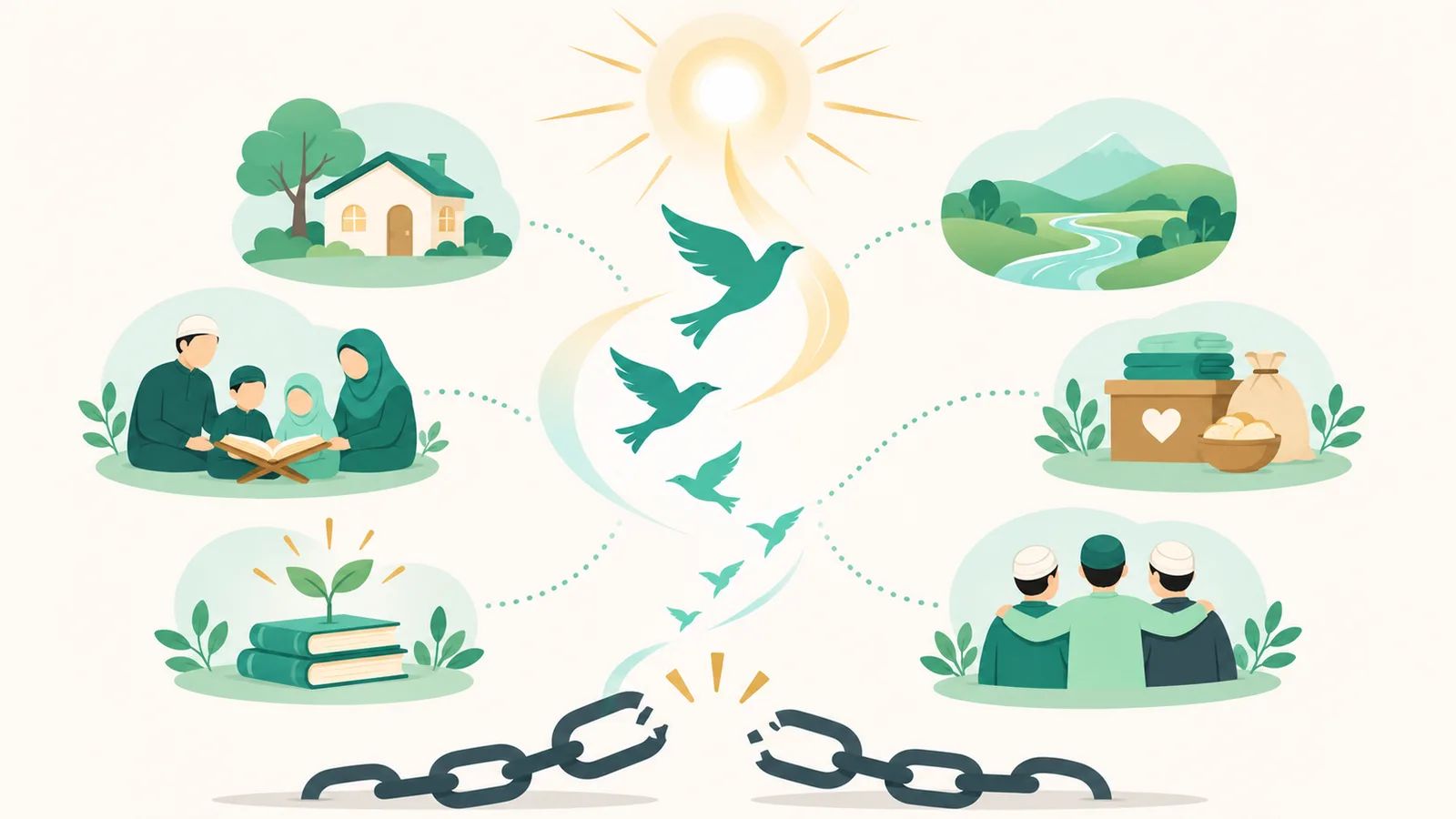
Key takeaways
- In Islam, freedom begins with worshipping God alone and no one else.
- Serving one Master frees a person from many others — money, status, other people and their own whims.
- Faith cannot be forced; there is no compulsion in religion.
- Freedom and responsibility go together; every person answers for their own choices.