العربية
 Español
 Français
 中文
 हिन्दी
Is Islam Compatible With Science?
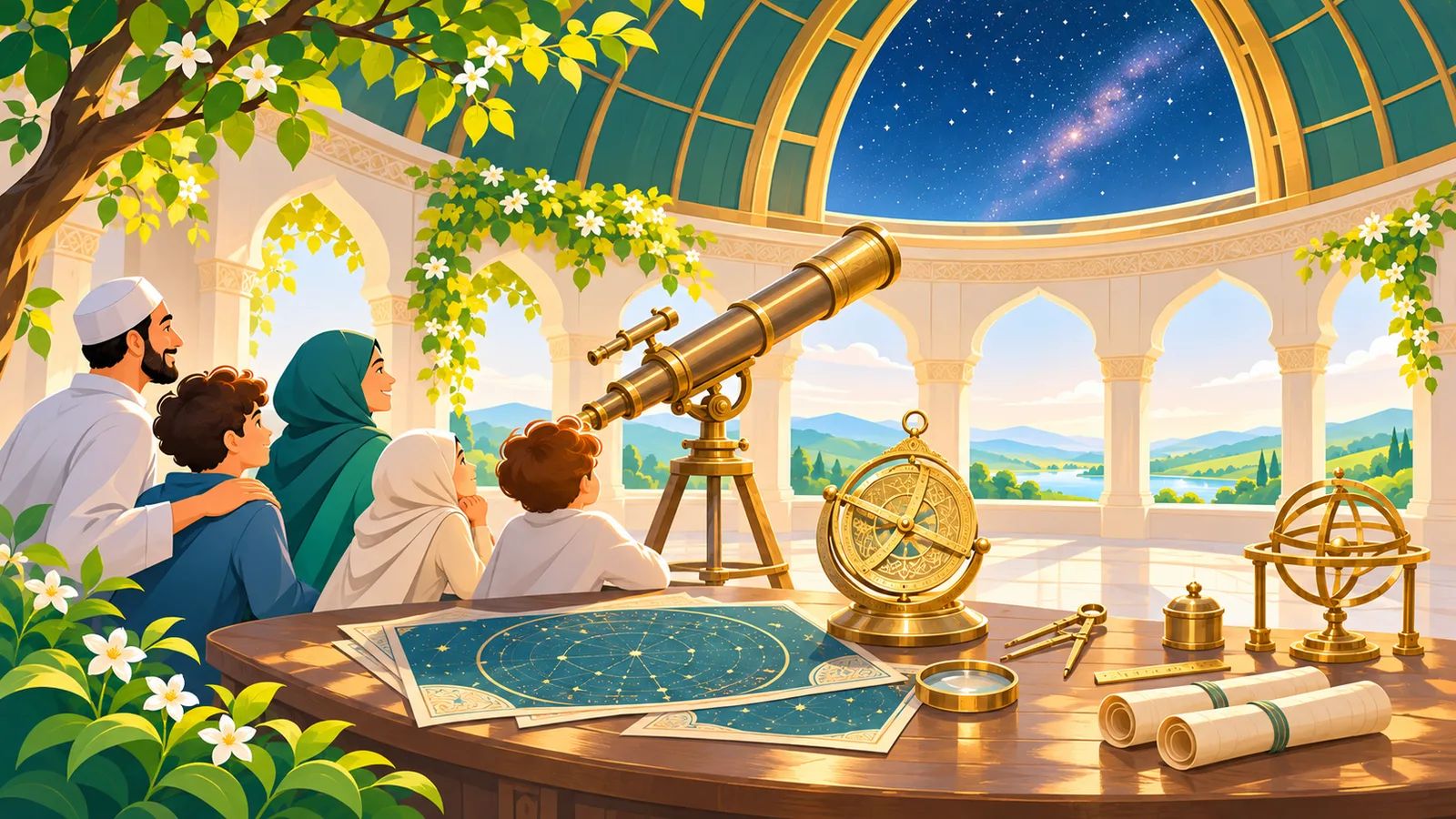
Many people assume that religion and science must be rivals: one built on faith, the other on evidence. Islam offers a different picture. In its view, the universe is God’s creation, and studying it carefully is one of the ways we come to know Him.
A religion that began with a command to read
According to Muslim belief, the very first words of the Qur’an revealed to the Prophet Muhammad ﷺ, in a cave outside Mecca, were these:
ٱقْرَأْ بِٱسْمِ رَبِّكَ ٱلَّذِى خَلَقَ ﴿١﴾ خَلَقَ ٱلْإِنسَٰنَ مِنْ عَلَقٍ ﴿٢﴾ ٱقْرَأْ وَرَبُّكَ ٱلْأَكْرَمُ ﴿٣﴾ ٱلَّذِى عَلَّمَ بِٱلْقَلَمِ ﴿٤﴾ عَلَّمَ ٱلْإِنسَٰنَ مَا لَمْ يَعْلَمْ ﴿٥﴾ 1Recite in the name of your Lord who created - 2Created man from a clinging substance. 3Recite, and your Lord is the most Generous - 4Who taught by the pen - 5Taught man that which he knew not.
Couldn't load — please try again.
It is striking that a revelation given to a man who could not read or write should begin with reading, the pen and learning. Elsewhere, the Qur’an teaches the Prophet ﷺ himself to pray for more knowledge (20:114), and asks whether those who know can be equal to those who do not (39:9).
Creation is full of signs
Again and again the Qur’an turns the reader’s attention to the natural world — the stars, the rain, the growth of plants, the development of the human embryo, the movement of ships on the sea — and calls these ayat, “signs”. It is the same word used for the verses of the Qur’an itself. Muslims often say that God has written two books: the revealed book of scripture and the open book of creation, and both point to the same Author.
إِنَّ فِى خَلْقِ ٱلسَّمَٰوَٰتِ وَٱلْأَرْضِ وَٱخْتِلَٰفِ ٱلَّيْلِ وَٱلنَّهَارِ لَءَايَٰتٍۢ لِّأُو۟لِى ٱلْأَلْبَٰبِ ﴿١٩٠﴾ ٱلَّذِينَ يَذْكُرُونَ ٱللَّهَ قِيَٰمًۭا وَقُعُودًۭا وَعَلَىٰ جُنُوبِهِمْ وَيَتَفَكَّرُونَ فِى خَلْقِ ٱلسَّمَٰوَٰتِ وَٱلْأَرْضِ رَبَّنَا مَا خَلَقْتَ هَٰذَا بَٰطِلًۭا سُبْحَٰنَكَ فَقِنَا عَذَابَ ٱلنَّارِ ﴿١٩١﴾ 190Indeed, in the creation of the heavens and the earth and the alternation of the night and the day are signs for those of understanding. 191Who remember Allah while standing or sitting or [lying] on their sides and give thought to the creation of the heavens and the earth, [saying], "Our Lord, You did not create this aimlessly; exalted are You [above such a thing]; then protect us from the punishment of the Fire.
Couldn't load — please try again.
Notice that these verses join worship and investigation. The ideal believer remembers God and thinks deeply about how the heavens and the earth were made — and concludes that the universe has meaning and purpose.
Seeking knowledge is worship
The Prophet ﷺ taught that the effort to learn is itself rewarded by God:
Narrated Abu Hurairah: that the Messenger of Allah (ﷺ) said: "Whoever takes a path upon which to obtain knowledge, Allah makes the path to Paradise easy for him
Couldn't load — please try again.
He also encouraged medicine, telling people that God has not created any illness without also creating a treatment for it:
Narrated Abu Huraira: The Prophet (ﷺ) said, "There is no disease that Allah has created, except that He also has created its treatment
Couldn't load — please try again.
Muslim scholars took this as a reason to search for cures, not to wait passively.
The golden age of science
From roughly the 8th to the 15th century, cities such as Baghdad, Cairo, Damascus, Córdoba and Samarkand became centres of learning. Scholars translated the works of Greek, Persian and Indian thinkers into Arabic, preserved them, questioned them and built on them. A few examples:
- Mathematics. Al-Khwarizmi wrote a book that gave algebra its name, and the word algorithm comes from his own name. The decimal numerals now used across the world reached Europe from India through Arabic works.
- Optics. Ibn al-Haytham studied light and vision through careful experiments, and many historians regard his work as an important step towards the modern experimental method.
- Medicine. Ibn Sina’s Canon of Medicine was studied in European universities for centuries, and cities across the Muslim world had hospitals that cared for the sick.
- Astronomy. Observatories were built to measure the movements of the heavens, partly to calculate prayer times and the direction of Mecca.
This was a shared achievement: Christians, Jews and others worked alongside Muslims in these cities. Not every scientist of the period was a religious scholar, and some of their views were debated by theologians. But the culture of learning they worked in was deeply shaped by the Qur’an’s call to reflect.
What about “scientific miracles”?
You may come across claims that the Qur’an predicted dozens of modern discoveries. Some of these claims stretch the meaning of verses far beyond what their words and their earliest interpreters support. Careful Muslim scholars warn against tying the Qur’an to the latest scientific theory, because theories change while the Qur’an does not.
The Qur’an describes itself as guidance — a book about God, the meaning of life, and how to live well. Its references to nature invite wonder and reflection; they are not meant to replace the microscope or the telescope. A Muslim can therefore study science with an open mind and see each discovery as another glimpse of the order God placed in His creation.
A closing thought
For Muslims, the laboratory and the place of prayer are not enemies. Both are places where a person can stand in wonder before the work of God. To explore further, read What is the Qur’an? or Does God exist?
Key takeaways
- The first word revealed of the Qur'an was a command to read.
- The Qur'an calls the natural world a set of signs to reflect on.
- Seeking knowledge is treated as a path to Paradise.
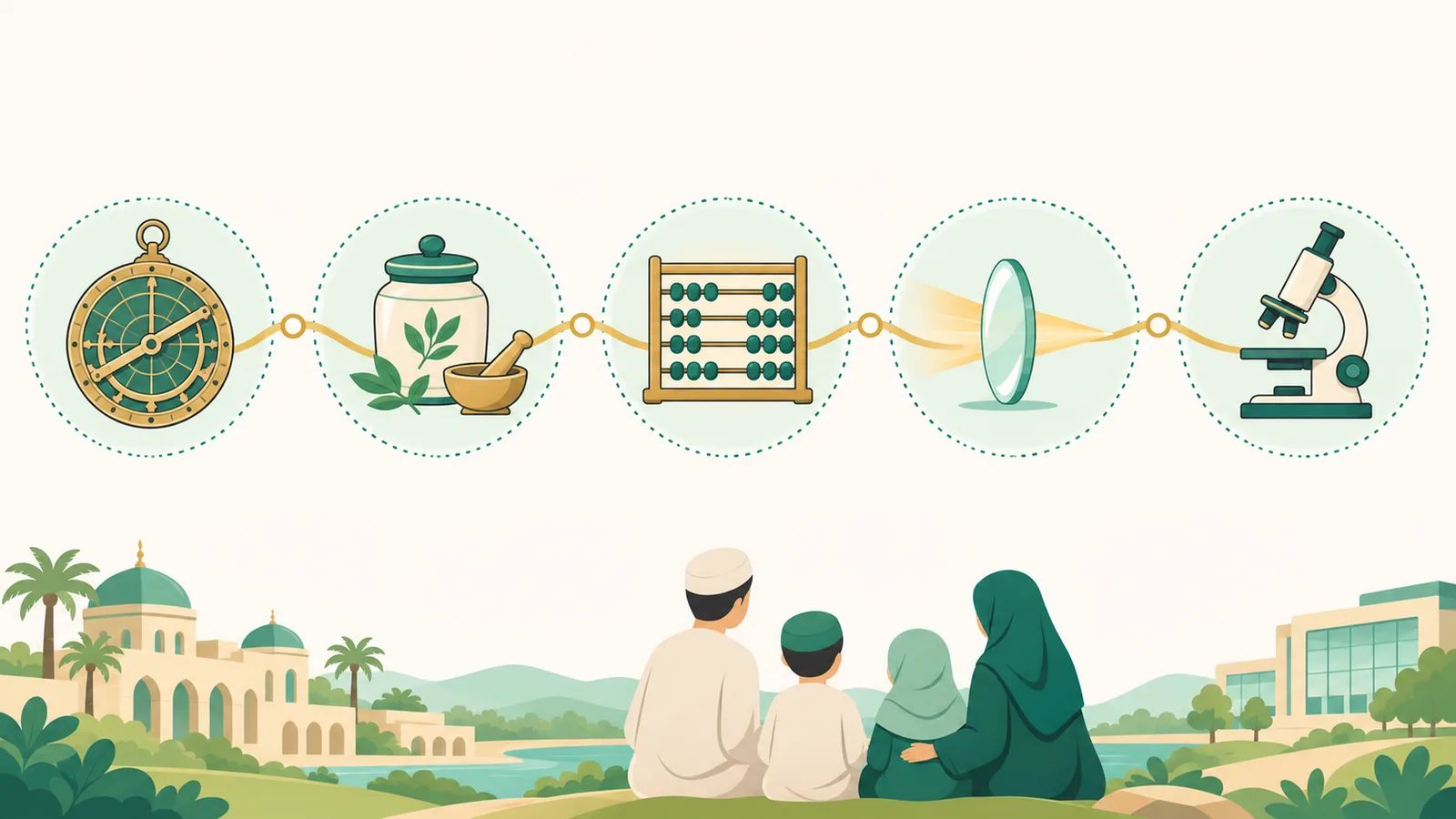
- Muslim lands were home to major advances in mathematics, medicine, optics and astronomy.
- The Qur'an is a book of guidance, and Muslims should avoid exaggerated scientific claims.