العربية
 Español
 Français
 中文
 हिन्दी
Sharia and Halakha: Islamic and Jewish Law Compared

Few words are as misunderstood in the West today as sharia. Yet many Jewish readers already know something very like it from their own tradition: halakha, Jewish religious law. Placing the two side by side can help both Jews and non-Jews see what sharia actually is — and what it is not.
Two words for “the way”
Halakha comes from a Hebrew root meaning “to walk”: it is the way a person walks through life with God. Sharia originally meant the path to a watering place — the road that leads to life-giving water in the desert (see What Does Sharia Mean?). The Qur’an uses the word when it speaks to the Prophet Muhammad ﷺ:
ثُمَّ جَعَلْنَٰكَ عَلَىٰ شَرِيعَةٍۢ مِّنَ ٱلْأَمْرِ فَٱتَّبِعْهَا وَلَا تَتَّبِعْ أَهْوَآءَ ٱلَّذِينَ لَا يَعْلَمُونَ ﴿١٨﴾ Then We put you, [O Muhammad], on an ordained way concerning the matter [of religion]; so follow it and do not follow the inclinations of those who do not know.
Couldn't load — please try again.
Both images describe the same idea that the Psalmist expressed: “Thy word is a lamp unto my feet, and a light unto my path” (Psalm 119:105, KJV). For Jews and Muslims alike, God’s law is not a cage but a road.
Scripture and living tradition
Neither system is drawn from scripture alone.
- In Judaism, the Written Torah is accompanied by the Oral Torah, which tradition traces back to Moses. It was later recorded in the Mishnah and explained in the Talmud.
- In Islam, the Qur’an is accompanied by the Sunnah — the teachings and example of the Prophet ﷺ, recorded in the hadith collections.
On top of these, both traditions use the consensus of scholars and reasoning by analogy to apply the sources to new situations. The Prophet ﷺ encouraged this careful effort, called ijtihad, and reassured those who undertake it sincerely:
Narrated `Amr bin Al-`As: That he heard Allah's Messenger (ﷺ) saying, "If a judge gives a verdict according to the best of his knowledge and his verdict is correct (i.e. agrees with Allah and His Apostle's verdict) he will receive a double reward, and if he gives a verdict according to the best of his knowledge and his verdict is wrong, (i.e. against that of Allah and His Apostle) even then he will get a reward
Couldn't load — please try again.
Rabbinic tradition likewise values honest debate among scholars: the Talmud records the opinions of the minority alongside those of the majority.
Scholars, schools and questions
Neither Judaism nor Sunni Islam has a single central authority that issues the law. Instead, scholars — rabbis in Judaism, fuqaha (jurists) and muftis in Islam — study the sources for years and guide their communities.
Both traditions grew schools of interpretation. Sunni Muslims follow four main schools of law, named after the Hanafi, Maliki, Shafi’i and Hanbali jurists, while Shia Muslims follow the Ja’fari school. Jewish law developed through great codes such as the Mishneh Torah of Maimonides and the Shulchan Arukh, and Jewish communities today differ in how they understand halakha’s authority.
Both also answer ordinary people’s questions. A Jew may send a question to a rabbi and receive a responsum; a Muslim may ask a mufti and receive a fatwa — a scholarly opinion, not a command from the state. The two traditions even met in history: Maimonides lived much of his life in Muslim lands and wrote many of his works in Arabic, set down in Hebrew letters.
More than courtrooms
Most of halakha and sharia has nothing to do with courts or punishments. Both regulate prayer and fasting, food (see Halal and Kosher), marriage and family life, charity, honest trade, the treatment of workers and animals, and even how to speak about others. A Jew who keeps the Sabbath and a Muslim who prays five times a day are both living by their sacred law. For many centuries, Jewish communities lived by halakha without a state of their own, and many Muslims today live by sharia in their personal lives in countries whose laws are not based on it.
Both traditions also contain criminal laws in their scriptures. In Islam these are bound by strict conditions of evidence and by the principle that doubt prevents punishment. We discuss common fears about this in Is Sharia Law Dangerous?
Preserving life and easing hardship
Jewish law teaches that saving a human life overrides almost every other commandment. The rabbis drew this from the verse about God’s statutes, “which if a man do, he shall live in them” (Leviticus 18:5, KJV) — to live by them, they said, not to die by them.
Islamic law teaches the same principle: what is forbidden becomes permitted in genuine necessity, as the Qur’an states about food (Qur’an 2:173). Muslim jurists such as al-Ghazali and al-Shatibi described the purposes of the sharia as protecting religion, life, intellect, family and property. And the Qur’an speaks of God’s intention plainly:
يُرِيدُ ٱللَّهُ أَن يُخَفِّفَ عَنكُمْ ۚ وَخُلِقَ ٱلْإِنسَٰنُ ضَعِيفًۭا ﴿٢٨﴾ And Allah wants to lighten for you [your difficulties]; and mankind was created weak.
Couldn't load — please try again.
Honest differences
The deepest difference concerns who the law is for. In Jewish teaching, the commandments of the Torah are binding on Jews, while people of other nations are expected to keep a smaller set of universal moral laws, known as the Noahide laws. Islam teaches that God gave each community a law and a way (Qur’an 5:48), and that the sharia brought by Muhammad ﷺ, the final prophet, is God’s guidance for all humanity. The details of the two laws also differ, as the comparison of food laws shows.
A shared path
Jews and Muslims share something many modern people have lost: the belief that God cares about every part of life, from the kitchen to the marketplace. Understanding halakha can help Jewish readers make sense of sharia, and the reverse is true too. To explore further, read about Islam and Judaism.
Key takeaways
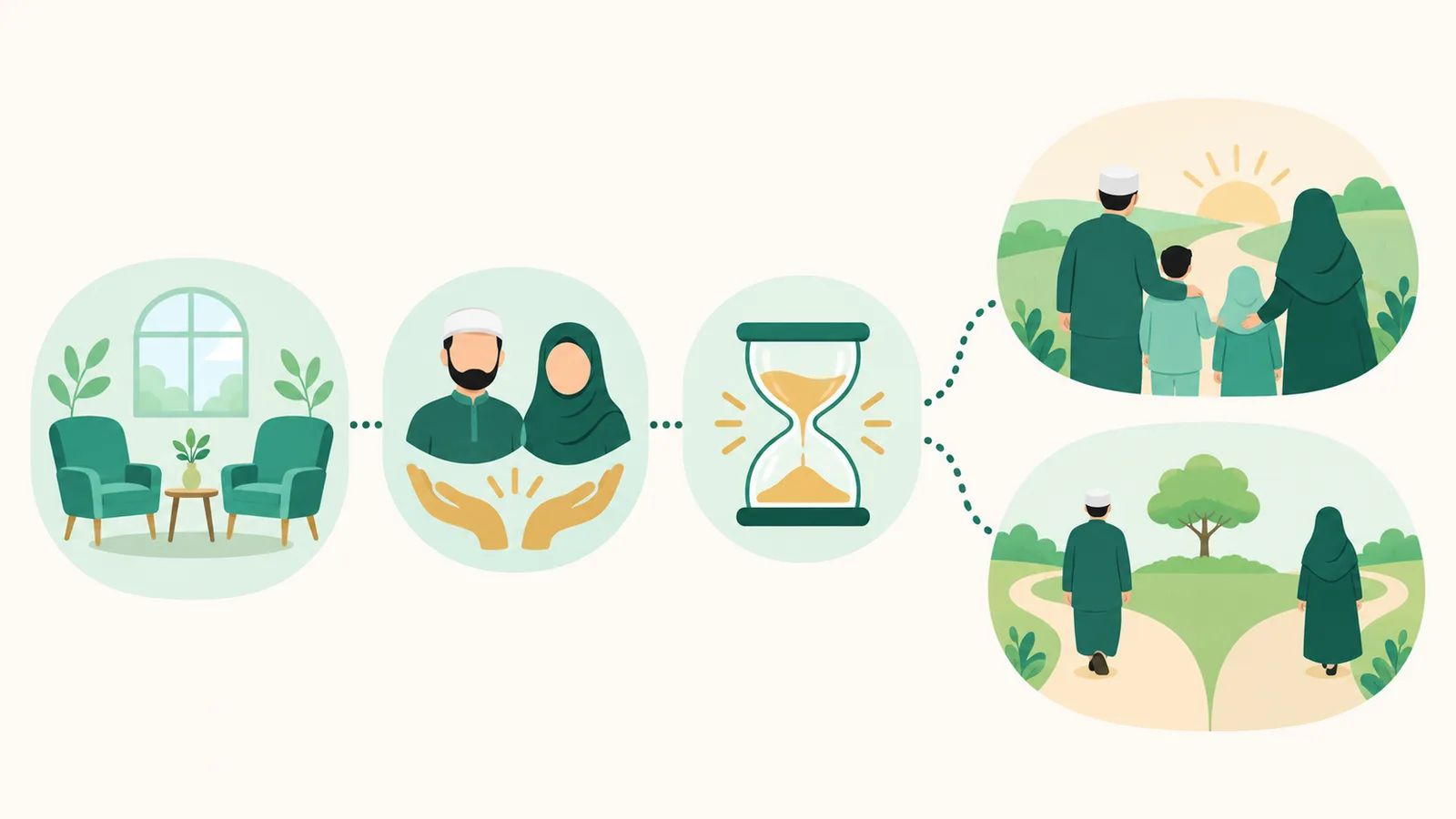
- Both "sharia" and "halakha" are words for a path or way of walking with God.
- Both rest on scripture plus an authoritative tradition — the Torah and the oral law; the Qur'an and the Sunnah.
- Both are developed by scholars, have schools of interpretation, and answer new questions through responsa or fatwas.
- Both place great value on preserving life and easing hardship, though they differ on who the law is for.