العربية
 Español
 Français
 中文
 हिन्दी
What Does Islam Clearly Forbid?

People sometimes imagine Islam as a long list of rules. In fact, Muslim scholars have long taught the reverse: in everyday matters — food, drink, work, clothing, trade — the starting point is that everything is permitted, unless a clear text forbids it. The list of prohibitions is short. But the items on that list are taken very seriously, and on the major ones there is no disagreement among Muslims anywhere.
The Arabic word for what is forbidden is haram (see Haram). Below are the clearest examples, each with its source and the wisdom Muslims see in it.
A list from the Qur’an itself
The Qur’an gathers several of the great prohibitions in one passage, introduced as a summary of what God has forbidden:
۞ قُلْ تَعَالَوْا۟ أَتْلُ مَا حَرَّمَ رَبُّكُمْ عَلَيْكُمْ ۖ أَلَّا تُشْرِكُوا۟ بِهِۦ شَيْـًۭٔا ۖ وَبِٱلْوَٰلِدَيْنِ إِحْسَٰنًۭا ۖ وَلَا تَقْتُلُوٓا۟ أَوْلَٰدَكُم مِّنْ إِمْلَٰقٍۢ ۖ نَّحْنُ نَرْزُقُكُمْ وَإِيَّاهُمْ ۖ وَلَا تَقْرَبُوا۟ ٱلْفَوَٰحِشَ مَا ظَهَرَ مِنْهَا وَمَا بَطَنَ ۖ وَلَا تَقْتُلُوا۟ ٱلنَّفْسَ ٱلَّتِى حَرَّمَ ٱللَّهُ إِلَّا بِٱلْحَقِّ ۚ ذَٰلِكُمْ وَصَّىٰكُم بِهِۦ لَعَلَّكُمْ تَعْقِلُونَ ﴿١٥١﴾ Say, "Come, I will recite what your Lord has prohibited to you. [He commands] that you not associate anything with Him, and to parents, good treatment, and do not kill your children out of poverty; We will provide for you and them. And do not approach immoralities - what is apparent of them and what is concealed. And do not kill the soul which Allah has forbidden [to be killed] except by [legal] right. This has He instructed you that you may use reason."
Couldn't load — please try again.
Notice how the list mixes duties to God with duties to people: no partners with God, kindness to parents, the protection of children, the avoidance of immorality and the sanctity of human life. In Islam, these belong together.
Against God: shirk
The gravest sin in Islam is shirk: worshipping anything or anyone alongside God, or giving to created things what belongs to God alone. The Qur’an teaches that God forgives anything less than this for whom He wills (Qur’an 4:48), and describes it as the greatest injustice:
وَإِذْ قَالَ لُقْمَٰنُ لِٱبْنِهِۦ وَهُوَ يَعِظُهُۥ يَٰبُنَىَّ لَا تُشْرِكْ بِٱللَّهِ ۖ إِنَّ ٱلشِّرْكَ لَظُلْمٌ عَظِيمٌۭ ﴿١٣﴾ And [mention, O Muhammad], when Luqman said to his son while he was instructing him, "O my son, do not associate [anything] with Allah. Indeed, association [with him] is great injustice."
Couldn't load — please try again.
The wisdom is simple: to worship what cannot create, hear or save is to wrong oneself and to deny God His due. Turning away from shirk at any point in life, though, is always accepted — this prohibition concerns those who die upon it. See God Is One.
Against life: murder
Taking an innocent life is among the most serious crimes in Islam. The Qur’an compares killing one innocent person to killing all of humanity:
مِنْ أَجْلِ ذَٰلِكَ كَتَبْنَا عَلَىٰ بَنِىٓ إِسْرَٰٓءِيلَ أَنَّهُۥ مَن قَتَلَ نَفْسًۢا بِغَيْرِ نَفْسٍ أَوْ فَسَادٍۢ فِى ٱلْأَرْضِ فَكَأَنَّمَا قَتَلَ ٱلنَّاسَ جَمِيعًۭا وَمَنْ أَحْيَاهَا فَكَأَنَّمَآ أَحْيَا ٱلنَّاسَ جَمِيعًۭا ۚ وَلَقَدْ جَآءَتْهُمْ رُسُلُنَا بِٱلْبَيِّنَٰتِ ثُمَّ إِنَّ كَثِيرًۭا مِّنْهُم بَعْدَ ذَٰلِكَ فِى ٱلْأَرْضِ لَمُسْرِفُونَ ﴿٣٢﴾ Because of that, We decreed upon the Children of Israel that whoever kills a soul unless for a soul or for corruption [done] in the land - it is as if he had slain mankind entirely. And whoever saves one - it is as if he had saved mankind entirely. And our messengers had certainly come to them with clear proofs. Then indeed many of them, [even] after that, throughout the land, were transgressors.
Couldn't load — please try again.
The Prophet ﷺ counted unjust killing among the seven great destructive sins (Bukhari 2766). This is why terrorism and the killing of civilians are utterly condemned in Islam; see Islam and Terrorism.
Against property and trust: theft, fraud and interest
Islam forbids taking anyone’s wealth unjustly, whether by theft, cheating in trade or deception; trade must be fair and by mutual consent (Qur’an 4:29). In his farewell sermon the Prophet ﷺ declared that people’s lives, property and honour are sacred (Bukhari 67).
Islam also forbids riba — interest or usury on loans. The Qur’an plainly contrasts trade, which God allows, with interest, which He prohibits (Qur’an 2:275). The wisdom Muslims see here is fairness: a lender should share in risk, not profit from someone else’s need. See Interest (Riba).
Against the family: adultery
Sexual relations outside marriage are forbidden, and the Qur’an commands believers not even to approach them:
وَلَا تَقْرَبُوا۟ ٱلزِّنَىٰٓ ۖ إِنَّهُۥ كَانَ فَٰحِشَةًۭ وَسَآءَ سَبِيلًۭا ﴿٣٢﴾ And do not approach unlawful sexual intercourse. Indeed, it is ever an immorality and is evil as a way.
Couldn't load — please try again.
The aim is to protect marriage, children and lineage, and the trust on which families are built. By forbidding even approaching it, the verse also closes the paths that lead to it. See Marriage in Islam.
Some of these crimes carry legal penalties in Islamic law. Those penalties belong only to a lawful court, with very strict standards of proof — never to individuals taking the law into their own hands.
Against the mind and body: alcohol and pork
The Qur’an calls intoxicants, along with gambling, the work of Satan, because they sow enmity between people and turn them away from remembering God and from prayer (Qur’an 5:90-91). All intoxicating drugs are included by the same reasoning: anything that clouds the mind is forbidden.
Pork is forbidden by name, together with blood, carrion and what is sacrificed to other than God. Yet the very same verse shows the mercy of the law, lifting the prohibition from anyone forced by necessity:
إِنَّمَا حَرَّمَ عَلَيْكُمُ ٱلْمَيْتَةَ وَٱلدَّمَ وَلَحْمَ ٱلْخِنزِيرِ وَمَآ أُهِلَّ بِهِۦ لِغَيْرِ ٱللَّهِ ۖ فَمَنِ ٱضْطُرَّ غَيْرَ بَاغٍۢ وَلَا عَادٍۢ فَلَآ إِثْمَ عَلَيْهِ ۚ إِنَّ ٱللَّهَ غَفُورٌۭ رَّحِيمٌ ﴿١٧٣﴾ He has only forbidden to you dead animals, blood, the flesh of swine, and that which has been dedicated to other than Allah. But whoever is forced [by necessity], neither desiring [it] nor transgressing [its limit], there is no sin upon him. Indeed, Allah is Forgiving and Merciful.
Couldn't load — please try again.
See Why Muslims Avoid Pork and Alcohol.
Against truth and justice: lying and oppression
Lying, false testimony and breaking one’s word are forbidden; the Qur’an commands believers to avoid false speech (Qur’an 22:30). Above all, Islam forbids zulm — oppression and injustice of every kind. In a sacred saying the Prophet ﷺ conveyed from God:
…O My servants, I have forbidden oppression for Myself and have made it forbidden amongst you, so do not oppress one another.…
Couldn't load — please try again.
This prohibition protects everyone — Muslim or not, friend or stranger.
Boundaries with an open door
On these major prohibitions Muslims agree. On many finer questions, scholars have reached different conclusions, and Muslims follow the guidance of their trusted scholars; see Where Muslims Differ, and Why It’s Okay.
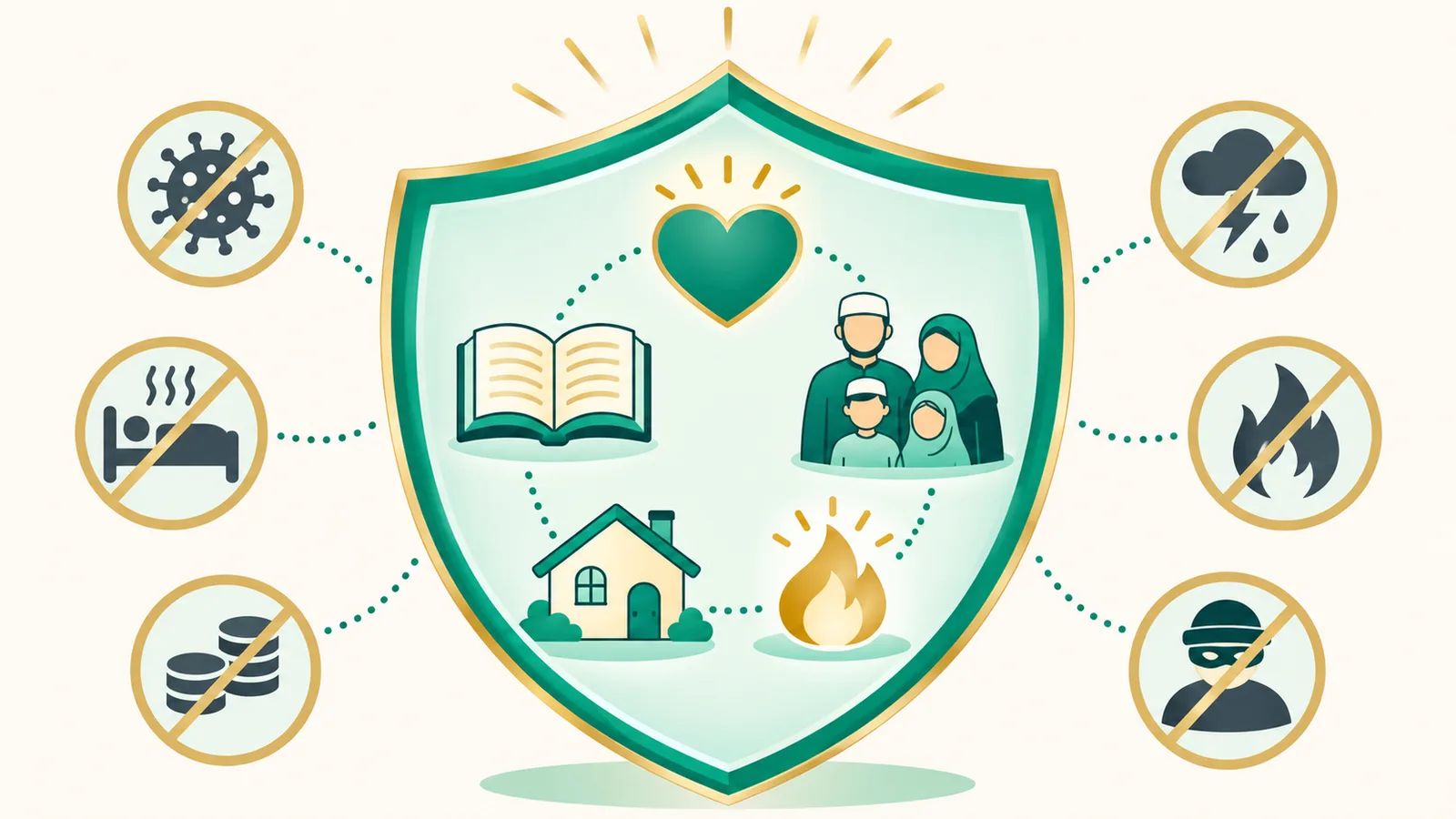
Islam’s prohibitions are not meant to make life narrow. Each one guards something precious: faith, life, the mind, the family, property and human dignity. And because every person falls short at times, the boundaries come with a door that never closes. Anyone who has crossed them can turn back to God, who forgives those who sincerely repent. We explain how in Repentance and Forgiveness, and look at the positive side of the picture in What Islam Commands.
Key takeaways
- In Islam the default is that things are permitted; only a limited list is forbidden.
- The clear prohibitions — shirk, murder, theft, adultery, alcohol, pork, interest, lying and oppression — are agreed by all Muslims.
- Each prohibition protects something precious, such as life, family, wealth or the mind.
- Real necessity lifts a prohibition, and repentance is always open to those who fall.