العربية
 Español
 Français
 中文
 हिन्दी
Is Islam Compatible with Modern Life?

Smartphones, airline travel, organ transplants, online banking, remote work: none of these existed in seventh-century Arabia. So it is fair to ask whether a religion revealed then can guide people today, or whether it belongs to the past. Muslims around the world answer this question every day simply by living, but it is worth explaining how.
What never changes
Some things in Islam are fixed. Belief in one God, the prophethood of Muhammad ﷺ, the five daily prayers, fasting in Ramadan, charity, pilgrimage, and core moral commands such as honesty, justice, kindness to parents and the protection of life do not change with fashion. Muslims see this as a strength, not a weakness. Human nature does not change: people still need meaning, forgiveness, family, justice and hope, as they always have.
A wide space of what is permitted
Beyond these fixed points lies a very large space. Muslim jurists formulated a basic principle: in everyday matters such as food, clothing, trade, technology and customs, the default is that things are permitted, unless there is clear evidence forbidding them. The Qur’an even rebukes those who forbid good things without warrant:
قُلْ مَنْ حَرَّمَ زِينَةَ ٱللَّهِ ٱلَّتِىٓ أَخْرَجَ لِعِبَادِهِۦ وَٱلطَّيِّبَٰتِ مِنَ ٱلرِّزْقِ ۚ قُلْ هِىَ لِلَّذِينَ ءَامَنُوا۟ فِى ٱلْحَيَوٰةِ ٱلدُّنْيَا خَالِصَةًۭ يَوْمَ ٱلْقِيَٰمَةِ ۗ كَذَٰلِكَ نُفَصِّلُ ٱلْءَايَٰتِ لِقَوْمٍۢ يَعْلَمُونَ ﴿٣٢﴾ Say, "Who has forbidden the adornment of Allah which He has produced for His servants and the good [lawful] things of provision?" Say, "They are for those who believe during the worldly life [but] exclusively for them on the Day of Resurrection." Thus do We detail the verses for a people who know.
Couldn't load — please try again.
This is why there is no Islamic objection to cars, computers, vaccines or space travel. New things are judged by their use and their effects, not by their newness. The Prophet ﷺ himself made this distinction. When he gave a passing suggestion about pollinating date palms and the harvest suffered, he told the farmers:
…You have better knowledge (of a technical skill) in the affairs of the world…
Couldn't load — please try again.
Scholars drew an important lesson from this: in worldly, technical matters, expertise and experience have their proper place.
Ease is part of the religion
Islamic law is designed to be livable. The Qur’an, speaking about fasting, states a principle that scholars applied far beyond it: God intends ease for people and does not intend hardship (Qur’an 2:185). Elsewhere it says that God has not placed any hardship upon people in the religion (Qur’an 22:78). The Prophet ﷺ warned against making religion harder than it is:
Narrated Abu Huraira: The Prophet (ﷺ) said, "Religion is very easy and whoever overburdens himself in his religion will not be able to continue in that way. So you should not be extremists, but try to be near to perfection and receive the good tidings that you will be rewarded; and gain strength by worshipping in the mornings, the afternoons, and during the last hours of the nights." (See Fath-ul-Bari, Page 102, Vol)
Couldn't load — please try again.
This is why the sick may pray sitting down, travellers may shorten their prayers, and those for whom fasting is harmful are excused. The same spirit guides how Islam is applied to modern circumstances.
How new questions are answered
When genuinely new questions arise, such as on IVF, organ donation, cryptocurrency or artificial intelligence, Muslims do not improvise. Qualified scholars, often working together in councils of jurists and specialists, apply the principles of the Qur’an and Sunnah to the facts, taking expert advice from doctors, economists and engineers. This process, called ijtihad (careful reasoning by qualified scholars), has been part of Islam since its earliest days. Scholars sometimes reach different conclusions, and Islam has always allowed room for that (see where Muslims differ).
Where tensions are real
It would not be honest to say there are no tensions. Some aspects of modern culture conflict with Islamic teaching: the drinking culture, interest-based finance, pressures around sexuality and modesty, and a consumerism that leaves little room for God. Muslims navigate these as people of faith in every tradition do: by making choices, sometimes costly ones, and by finding alternatives such as Islamic finance. Islam does not ask Muslims to withdraw from society, but to live in it with integrity.
Good in this world and the next
Islam does not ask people to choose between faith and a full life. One of the prayers the Qur’an teaches is a request for both:
وَمِنْهُم مَّن يَقُولُ رَبَّنَآ ءَاتِنَا فِى ٱلدُّنْيَا حَسَنَةًۭ وَفِى ٱلْءَاخِرَةِ حَسَنَةًۭ وَقِنَا عَذَابَ ٱلنَّارِ ﴿٢٠١﴾ But among them is he who says, "Our Lord, give us in this world [that which is] good and in the Hereafter [that which is] good and protect us from the punishment of the Fire."
Couldn't load — please try again.
Muslims have been physicians, astronomers, merchants and inventors throughout history, and they are today. Work, study and family life, done with the right intention, are themselves forms of worship.
The common misunderstanding
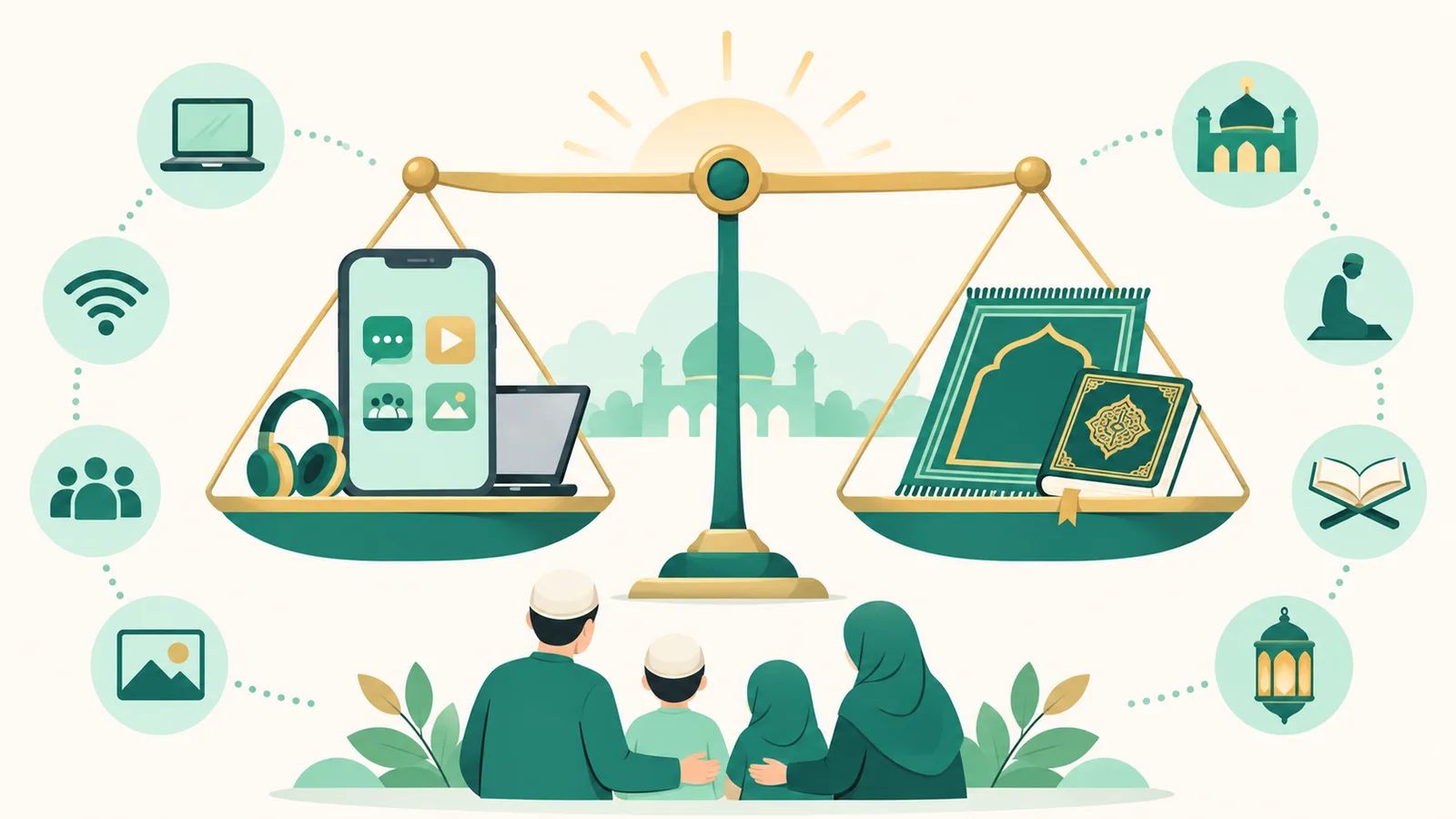
The common misunderstanding is that Islam is a frozen set of seventh-century customs. In fact, it combines a small number of fixed principles with a large, flexible space for life, and a scholarly tradition built to apply those principles to new realities. Its aim is the same in every age: to help human beings live well before God. For more, read Islam and science and the purpose of life.
Key takeaways
- Islam's core beliefs, acts of worship and moral principles do not change with time.
- In everyday matters such as technology, work and customs, the default rule is that things are permitted unless a clear text forbids them.
- Ease is a deliberate principle of Islamic law; God wants ease for people, not hardship.
- Qualified scholars apply fixed principles to new questions, from medicine to finance.
- Islam asks Muslims to seek good in this world and the next, not to choose between them.